1. Home
  2. Phones
  3. Mobile
  4. News

The iPhone 16 just beat the Galaxy S24 in a 5G speed test. Here are the results

Add as a preferred source on Google
A person holding the Apple iPhone 16 Pro Max.
Apple iPhone 16 Pro Max Andy Boxall / Digital Trends

Ookla recently conducted 5G speed and latency tests for the iPhone 16 series. The results showed that these phones performed exceptionally well compared to their predecessors and major competitors — even outperforming the Samsung Galaxy S24 series.

According to Speedtest data collected from 11 selected countries worldwide, the iPhone 16 series surpassed the earlier iPhone 14 and iPhone 15 series in terms of speed and latency. Compared to competitors like the Samsung Galaxy S24, the iPhone 16 achieved mixed results, yet still scored well overall.

Recommended Videos

The iPhone 16 series exhibited a statistically significant advantage in median 5G download speeds in five of the 11 countries studied. In contrast, the Samsung Galaxy S24 family achieved the best median 5G multiserver latency in eight countries, while the iPhone 16 lineup led in 5G latency in only one market.
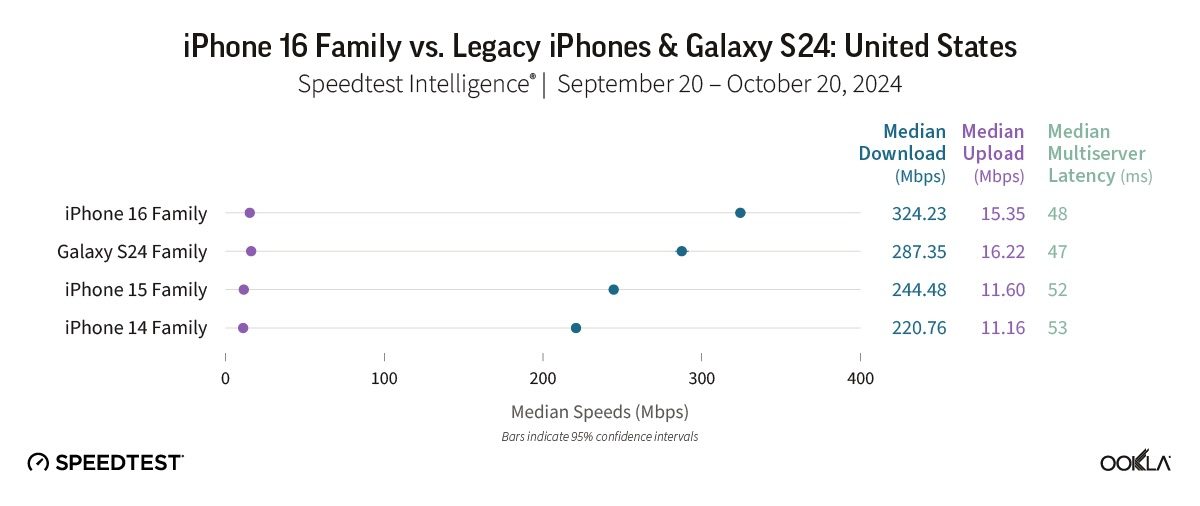
Furthermore, the Galaxy S24 family excelled in median 5G upload speeds in eight of the 11 countries, while the iPhone 14 and 15 models typically showed the slowest upload speeds.

Overall, the iPhone 16 models demonstrated significant speed advantages over previous-generation Apple and Samsung devices in markets such as Canada, France, Taiwan, and — most importantly for most of you reading this — the U.S. In the U.S., the iPhone 16 had a median download speed of 324Mbps, while the Galaxy S24 trailed at 287Mbps. It’s a similar story in Canada, where the iPhone 16 had an 182Mbps download speed while the Galaxy S24 has a median speed of 156Mbps.

The speed and latency tests were performed from September 20, the first day of the iPhone 16 release, through October 20. They were performed in the U.S., India, Taiwan, Belgium, France, Germany, Canada, Mexico, the Phillippines, Colombia, and Brazil.
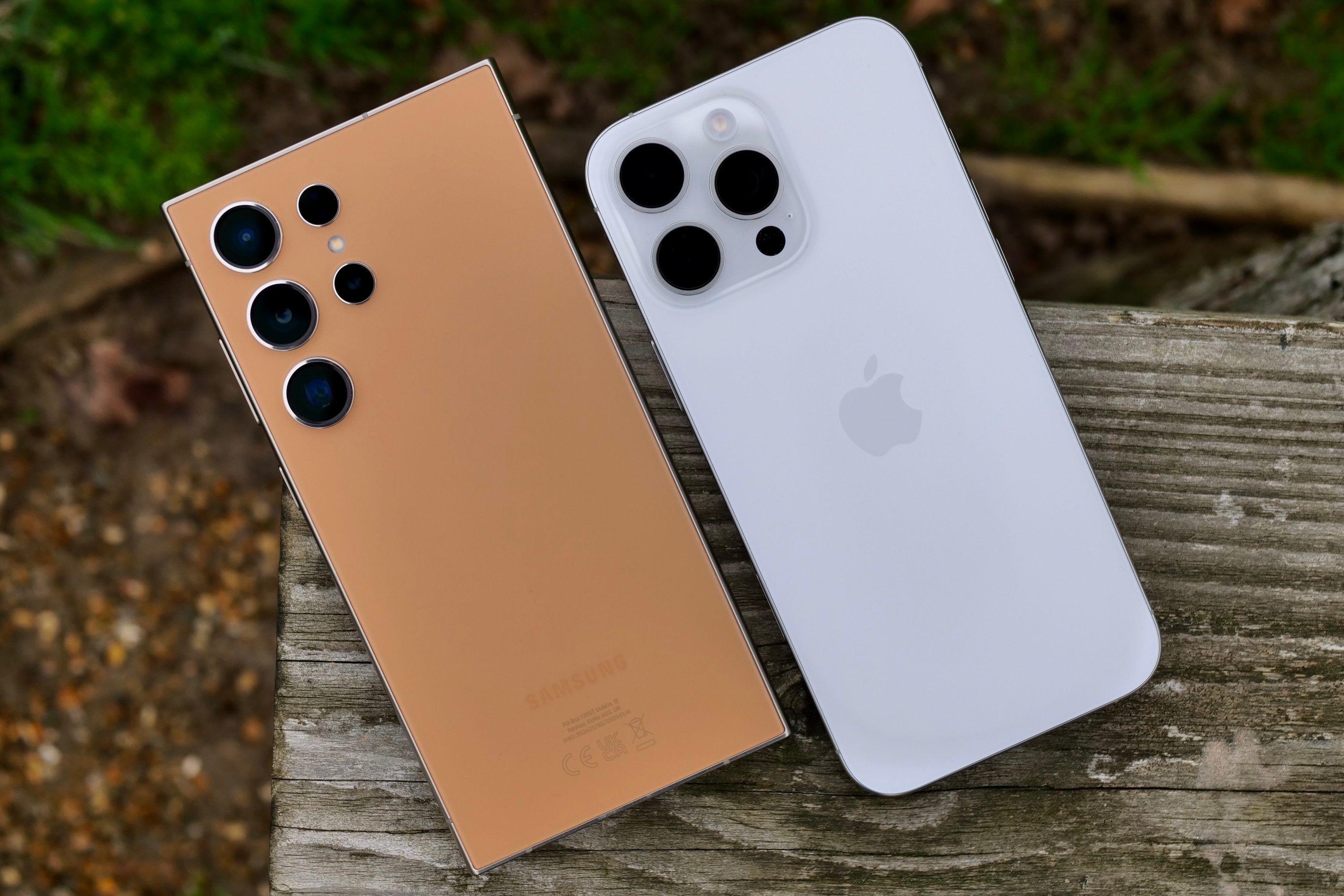
The back of the Samsung Galaxy S24 Ultra and Apple iPhone 16 Pro Max.
The Samsung Galaxy S24 Ultra (left) and Apple iPhone 16 Pro Max Andy Boxall / Digital Trends

With Black Friday just days away, Ookla suggests these results prove upgrading from an earlier iPhone is worthwhile for anyone who wants the best 5G has to offer— at least in some countries. It notes that the “iPhone 16’s standout performance is hard to ignore and makes a strong case for upgrading.”

Further, it explains: “Does that mean users in those locations should upgrade immediately? Not necessarily. The decision to upgrade depends on factors other than network performance, from price to new features and plenty of other things. However, our initial data on the 5G capabilities of the iPhone 16 series is encouraging in its early days of release.”

The iPhone 16 series comprises the iPhone 16, iPhone 16 Plus, iPhone 16 Pro, and iPhone 16 Pro Max. The phones are noted for being the first iPhone series to support Apple Intelligence. All four models also offer the company’s new Camera Control and more.

Bryan M. Wolfe
Former Mobile and A/V Freelancer
Bryan M. Wolfe has over a decade of experience as a technology writer. He writes about mobile.
RISION’s new pocket-sized cameras turns your phone into a nitfty thermal imaging tool
This tiny $119 camera gives your phone Predator vision
RISION Magic Pro in action

If you've ever had to look for any sort of heat leaks or hot wires, chances are that you've probably used a dedicated handheld camera. But RISION has just launched a tiny new camera tool to make the job easier (and more pocketable). It reminds me of the InfiRay we checked out a while back.

RISION has introduced the Magic and Magic Pro, two compact thermal cameras that plug directly into supported USB-C phones, tablets, and Windows computers. Each module weighs 24 grams, draws power from the connected device, and requires no separate battery. Support covers compatible iPhones, Android devices, and Windows PCs.

Read more
Samsung may finally kill the foldable crease next year, and make the screen stronger while it’s at it
The Galaxy Z Fold 9 could attack the crease from inside the glass
The Galaxy Z Fold 4's screen crease.

Samsung has spent generations refining hinges, reinforcing display layers, and promising increasingly subtle creases. But soon, it might eliminate the crease by physically carving away part of the glass where the screen folds.

Samsung Display is developing a foldable OLED cover layer known as Center-Etched Thin Glass, or CTG, alongside its suppliers. The technology selectively etches the central folding section of the ultra-thin glass, leaving that area thinner than the rest of the panel. Industry sources believe it could appear in some Galaxy Z9 foldables as early as 2027. It is also known as Hybrid UTG, since a single glass layer would carry two different thicknesses.

Read more
DuckDuckGo’s new iPhone feature stops tracking IDs from hitching a ride in shared links
Copy Clean Link removes unnecessary URL parameters before you paste a page into a message, email, or post
The DuckDuckGo logo.

DuckDuckGo has added a small iPhone feature that can stop tracking identifiers from following links into your chats, emails and social posts.

The browser’s new Copy Clean Link option strips unnecessary parameters before placing an address on the clipboard. It arrived in a July iOS update and appears when users hold the address bar. The supplied report shows it working with pages from X, Reddit and YouTube.

Read more