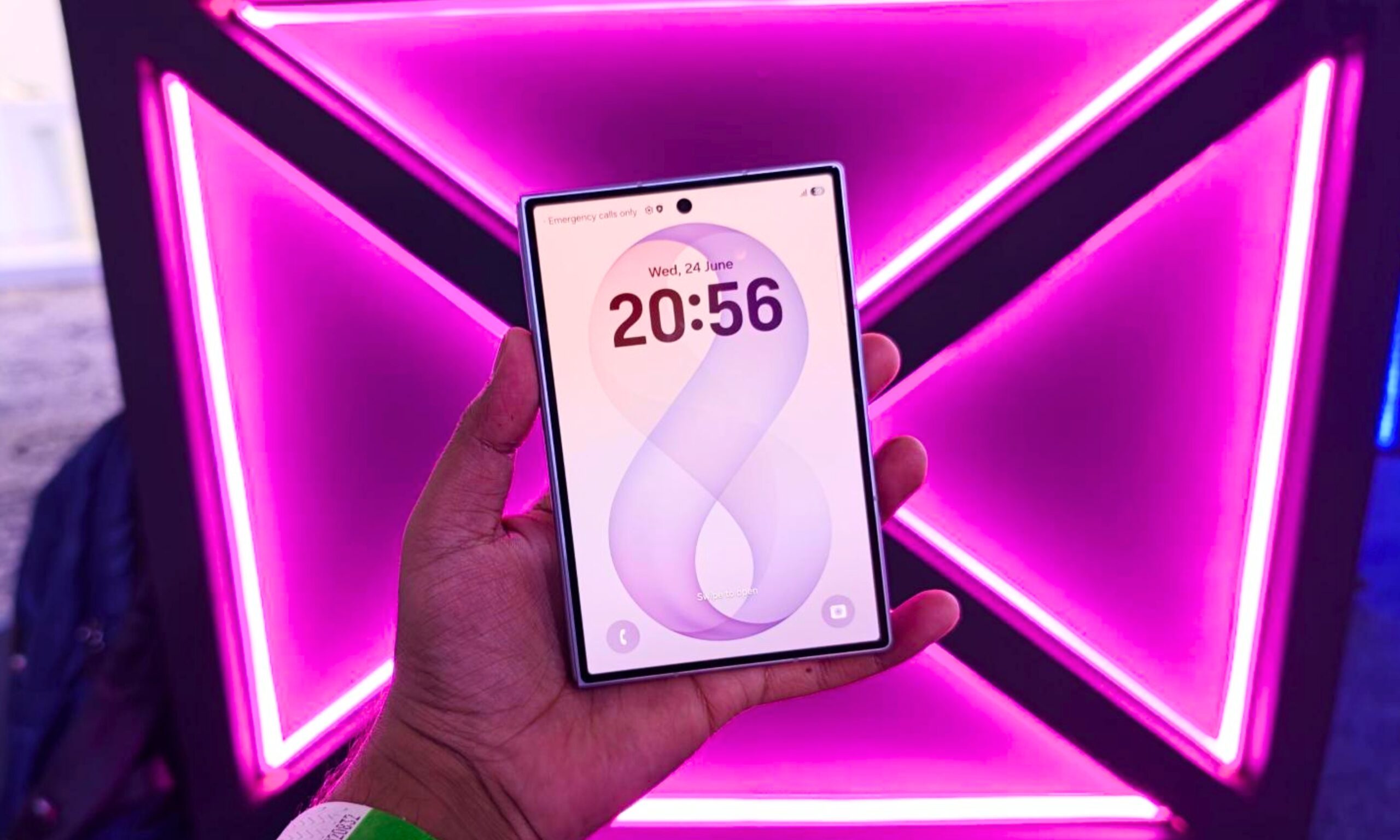
The iPhone 16 is not the only recently released smartphone with a separate camera control system, as the Oppo Find X8 Pro also has a similar alternate way to interact with the camera on the side of the device.
However, they both approach it in very different ways. While using them, I thought a lot about the merits of physical versus virtual controls and how pressing and not just touching a button helps us connect more with taking photographs on our phones.
The camera controls

The iPhone 16 series’ Camera Control is a physical button covered in sapphire crystal on the side of the phone. Press it twice to open the camera app from the lock screen, lightly swipe across it to engage a capacitive gesture to adjust the zoom level, press it again to take a photo, or combine different gestures to access other camera features. It’s recessed into the body, so the surface is flush with the iPhone’s chassis, but a clever design means you can find its location without actually looking for it.
Oppo has a similar control on the side of the Find X8 Pro called the Quick Button, but the name is rather misleading as it’s not really a button as such at all. There’s no physical element to it, and it instead uses haptic feedback when you touch a certain part of the phone’s chassis to let you know it’s working. Double-press from the lock screen to open the camera app, press again to take a photo or hold for burst mode, and swipe left and right to adjust the zoom.

It works like the AirTriggers on the Asus ROG Phone 9 Pro’s shoulders, but with a less pronounced vibration. It’s also practically impossible to locate without looking for it, even though the activation area is quite large, so it does require thinking about it before you use it. Despite the different approaches, both basically do the same thing — introduce an alternative shutter release control for when you hold the phone like you would a regular camera.
Is one better than the other?

I’ve taken a lot of photos with the iPhone 16 Pro Max, iPhone 16 Plus, and the Oppo Find X8 Pro, with plenty of opportunities to use the special camera controls on them all. But during all that time, I’ve thought less about whether they enhanced my use of the camera and more about what the two different approaches said about the manufacturers, how I feel about buttons and touchscreens — and whether either truly engaged me more when taking photos.
Maybe I was thinking deeply about this because it came right after I spent a week with an electric car where I was flung into a world where almost everything was controlled and activated using a big touchscreen or capacitive buttons and sliders. The conversation around touchscreens versus physical buttons and controls in cars has raged for years, but this was the first time I’d come face-to-face with a similar situation on a smartphone.
Touchscreens in cars allow manufacturers to provide greater functionality without the need to increase (and pay to develop) the number of buttons and knobs required to control it all, but conversely, the Find X8 Pro’s capacitive Quick Button does less than the iPhone 16’s physical Camera Control, so did this mean I used it less? No, but I did forget about it more often. The Camera Control is obvious and doesn’t require searching for, even if the location on the chassis isn’t perfect. The Find X8 Pro’s Quick Button blends in with the smooth chassis of the phone, and I often only remember it after it grazed against my hand when I picked the X8 Pro up.
Futuristic or luxurious?

I love how Oppo’s Quick Button fools my brain into thinking I’m pressing an actual button, even though I’m not. It feels futuristic, in the same way touchscreens felt like the future when they were introduced on smartphones, and it makes the Find X8 Pro very modern and exciting. Similar controls like Google’s Active Edge and Asus’ AirTriggers do the same, and the various button-less devices imagined by brands are intriguing because of them.
The iPhone’s Camera Control is different. It combines the convenient haptics of a capacitive control with the physicality of an actual button you have to press. By rights, this should mean it doesn’t feel quite as modern as the Oppo’s Quick Control and, therefore, should be considered inferior. In reality, the iPhone’s Camera Control increases functionality and engagement and, in turn, feels luxurious, like you’re interacting with a highly engineered, precise piece of equipment. It’s very different from the cold, yet futuristic Quick Button.
This won’t have been an accident on Apple’s part. “The ability to manipulate a physical thing, a button, has become a premium feature,” Drew Millard wrote in a piece for The Atlantic in early 2023 entitled Buttons are Bougie Now. Car makers are beginning to treat physical controls as luxury items, too. Also in 2023, The Smoking Tire’s Matt Farah told Slate, “As [car makers] reject the screens, it could over time be seen as luxurious to have buttons instead.”
Perhaps the most ostentatious example of what’s happening comes with the Bugatti Tourbillon hypercar, which costs at least $4 million, and its almost entirely analog, dial-and-gear-filled interior inspired by mechanical watch design. Designer Frank Heyl told Car and Driver, “We’re trapped in the technology of our time, so how do we make a car relevant at a concours in 2075 without looking silly in a time that will have holographic displays or augmented-reality contact lenses? Give the entire interior an analog way that you can interact with it.”
Capturing the emotion of photography

There you have it, a high-tech, futuristic virtual button versus a timeless, luxurious real button. The Oppo Find X8 Pro’s capacitive button always feels “of its time,” and when using it, I never felt like it was there to make me enjoy using the phone more. It performs its intended function very effectively, but I’d never use it and feel like I’d engaged with the device in a new way because, at a tactile level, it’s no different from pressing the virtual shutter release on the touchscreen. It worked every time without fault, but there’s no nuance or subtlety in its action.
Conversely, there is something more to using the Camera Control on an iPhone 16. Cameras have actual buttons, big rotating knobs, and accessories that screw or slide onto the body. They’re interactive, physical items, and so is the Camera Control. Blair Neal, vice president of creative technology at Deeplocal, a company that designs and makes interactive experiences, wrote the following in a piece about why physical elements in interactive exhibits matter: “Simply put, pushing buttons is fun. Our brains are wired to love tangible cause and effect, and adding physicality to interactive experiences makes them more memorable.”

I think this explains why there’s something more to the Camera Control. I create or augment memories by taking photos, and linking them with a physical action, no matter how minor, has to have an impact on the way my brain processes the moment. Oppo isn’t completely blind to this, and even though the Quick Button isn’t “real,” both Oppo and OnePlus use a digital version of Hasselblad’s iconic shutter sound in an effort to “create a more immersive Hasselblad shooting experience.”
Photographs are timeless reminders of the past, whether they’re physical or digital, and when I look back, I often remember the moment I took them. I wonder, in years to come, if I’ll look back and recall whether I pressed a button on the screen or the side of my phone to capture it. If I do, the iPhone 16’s Camera Control has a far better chance of being memorable because it actually went click and not bzzz when I pressed it.