1. Home
  2. Audio / Video
  3. News

Digital Trends may earn a commission when you buy through links on our site. Why trust us?

LG has hired will.i.am to relaunch its Xboom-branded audio products

Add as a preferred source on Google
Will.i.am wearing a new xboom by will.i.am earbuds.
LG Electronics

LG has chosen will.i.am as its new “Experiential Architect,” and the Black Eyed Peas frontman’s first project will be to launch a rebranded set of Xboom products at CES 2025. The new lineup will include wireless earbuds and Bluetooth speakers, and they’ll sport a new name: “xboom by will.i.am.”

LG says the partnership “aims to transform xboom into a culture-forward brand with an urban aesthetic, providing an all-new audio experience.”

Recommended Videos

That new experience will include several will.i.am-developed characteristics, like “rich bass with a balanced and warm tone.” According to LG, there will be two “modes” for listening. One is described as stimulating, with powerful bass, while the second mode is soothing, with harmonious tones.

Will.i.am holding a new xboom by will.i.am speaker.
LG Electronics

Easy-to-hold straps and interactive, music-synced lighting will also feature prominently, but perhaps the most will.i.am aspect is the integration of the musician’s Raidio.fyi (styled as RAiDiO.FYI), an AI-powered interactive audio experience built into his FYI AI messaging app. With Raidio.fyi, you can ask an AI music curator to dish up real-time playlists on the fly, and interrupt it at any time to ask music-related questions like, “Can you tell me about the artist that’s playing,” or almost anything else that’s on your mind, like, “What’s the weather like in LA?”

Will.i.am in the studio.
LG Electronics

Will.i.am has a long history as a player in the tech space, though not all of his efforts have been a success.

In 2012, he developed a bizarre and expensive iPhone case called the foto.sosho that combined a slide-out QWERTY keyboard with a 14-megapixel camera.

In 2014, shortly before the Apple Watch made its debut, he launched the i.amPULS, a wrist-worn computer. It was panned by one journalist as the worst product they’d ever reviewed, and was offered up as prime evidence by a Digital Trends contributor as to why celebs shouldn’t design tech.

Unsurprisingly, audio products seem to be a better fit. In 2018, his company I.am+ acquired wireless earbud pioneer Earin, and subsequently launched a set of tethered wireless earbuds called the I.am+ Buttons, which Digital Trends’ Andy Boxall hailed as some of the most comfortable he’d ever tried.

We’ll have to wait until next year to see if xboom by will.i.am follows this trajectory.

LG’s previous Xboom audio products include the Xboom XL7 party speaker, Xboom 360 portable, and Xboom ThinQ WK9 smart display.


Simon Cohen
Former Contributing Editor, A/V
Simon Cohen obsesses over the latest wireless headphones, earbuds, soundbars, and all manner of related devices and…
I desperately want a new classic Walkman, but Sony probably can’t give me one
Tech minimalism is begging for a new Walkman. Though rebuilding it may be close to impossible
Sony Walkman WM2011

Every few months, another piece of tech that seems obsolete crawls out of a drawer and becomes cool again. The age of minimalism has revived the popularity of iPods among younger buyers. Dumbphones have become an escape hatch from endless notifications. Similarly, digital cameras are dangling from bags again. Physical media keeps attracting people who want something they can actually hold instead of another frustrating subscription.

All of this makes it the perfect time for Sony to bring back the classic Walkman, which was a phenomenon during the 80s and 90s. I would love one. Give me a compact cassette player, physical buttons, and wired headphones. Keep the apps, notifications, and algorithms that shape your taste of music. No more AI assistants or personalzied feeds, just you and your Walkman. There is only one problem though. Recreating the Walkman that people love and remember, would be far harder than putting an old design back into production.

Read more
Proton reveals how smart TVs track you and the escape situation is pretty grim 
Modern smart TVs fingerprint your screen content at the chipset level.
Google TV applications on the Sony A95K TV.

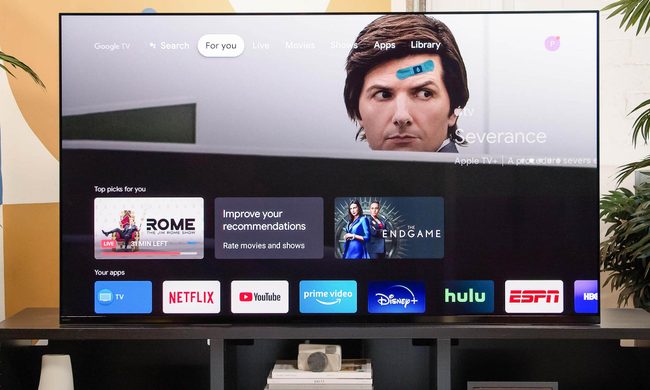
Your smart TV may know far more about your viewing habits than you realize, even if you rarely use its smart features. In a new privacy explainer, Proton warns that many modern TVs quietly collect data about everything displayed on the screen and share it with manufacturers, advertisers, and analytics companies.

The worrying part is that escaping this tracking is becoming increasingly difficult because many privacy controls are buried deep in settings or enabled by default. Proton argues that buying a smart TV today often means accepting a level of surveillance that most people never knowingly signed up for.

Read more
LG is cracking down on smart TV apps that quietly turn your TV into a secret proxy
LG OLED Settings

If you own an LG smart TV, there's a chance one of your harmless-looking apps has been moonlighting as an internet relay for someone else's traffic. According to a report from KrebsOnSecurity, LG says it's finally stepping in to stop this menace. This week, the company confirmed it plans to suspend any webOS app that turns a TV into what's called a residential proxy node.

The move follows a report from security firm Spur, which found that more than 42 percent of apps on LG's webOS store include SDKs that quietly reroute internet traffic through your TV, indefinitely. Samsung isn't spared either, with over a quarter of Tizen apps carrying similar code.

Read more