1. Home
  2. Audio / Video
  3. News

Digital Trends may earn a commission when you buy through links on our site. Why trust us?

This AirPod Pro 2 upgrade is going to be heard worldwide

Add as a preferred source on Google
A test mannequin is fitted with Apple AirPods Pro 2. The mannequin is used to evaluate the hearing assistance capabilities of the AirPods Pro 2.
HearAdvisor

Apple’s AirPods 2 Pro hearing health features are expanding to users in Australia, Brazil, Colombia and Saudi Arabia.

The company said in a press release (via MacRumors) on Tuesday that it will allow AirPods Pro 2 users in the aforementioned countries to take a hearing test, use the clinical hearing aid feature and Loud Sound Reduction in the iOS 18.4 update. The hearing health features have already launched in Australia, and they will be available in the last three countries soon after. Nicky Chong-White, principal engineer at National Acoustic Laboratories in Australia, welcomes the expansion of the hearing health features to the region.

Recommended Videos

“Hearing loss can impact more than a person’s hearing. It can impact their communication at work, their social life, and their overall wellbeing,” Chong-White said. “The new hearing features in AirPods Pro are an exciting advancement — they give people a way to check their hearing and set up hearing assistance at home using familiar devices.”

Apple introduced the hearing health features to AirPods Pro 2 in October 2024, after it noticed that the popular earbuds have been used as over-the-counter hearing aids. We tested the hearing test on the AirPods Pro 2, and the audiogram results generated at home are just as accurate as the results from hearing tests taken at the doctor’s office, provided the hearing test is taken in a quiet room.

To refresh your memory, if the hearing test detects mild to moderate hearing loss, AirPods Pro 2 users can switch on the hearing aid to enhance their sound intake. However, the hearing aid feature isn’t available for those whose tests found no hearing loss or determined that their hearing loss is too severe. Loud Sound Reduction can be used in conjunction with the hearing aid to reduce loud noises at 48,000 times per second, which is useful in loud environments like concerts or parties.

Cristina Alexander
Gaming/Mobile Writer
Cristina Alexander is a gaming and mobile writer at Digital Trends. She blends fair coverage of games industry topics that…
I desperately want a new classic Walkman, but Sony probably can’t give me one
Tech minimalism is begging for a new Walkman. Though rebuilding it may be close to impossible
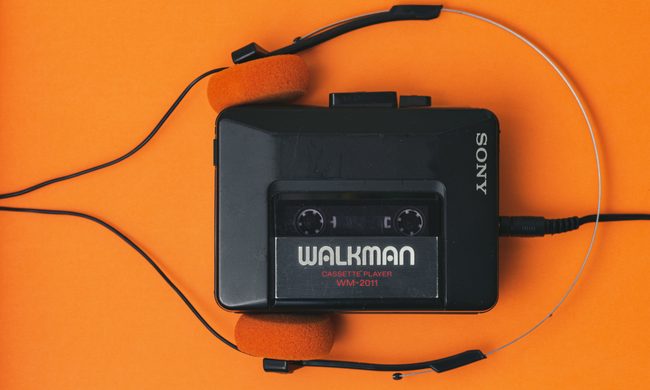
Sony Walkman WM2011

Every few months, another piece of tech that seems obsolete crawls out of a drawer and becomes cool again. The age of minimalism has revived the popularity of iPods among younger buyers. Dumbphones have become an escape hatch from endless notifications. Similarly, digital cameras are dangling from bags again. Physical media keeps attracting people who want something they can actually hold instead of another frustrating subscription.

All of this makes it the perfect time for Sony to bring back the classic Walkman, which was a phenomenon during the 80s and 90s. I would love one. Give me a compact cassette player, physical buttons, and wired headphones. Keep the apps, notifications, and algorithms that shape your taste of music. No more AI assistants or personalzied feeds, just you and your Walkman. There is only one problem though. Recreating the Walkman that people love and remember, would be far harder than putting an old design back into production.

Read more
Proton reveals how smart TVs track you and the escape situation is pretty grim 
Modern smart TVs fingerprint your screen content at the chipset level.
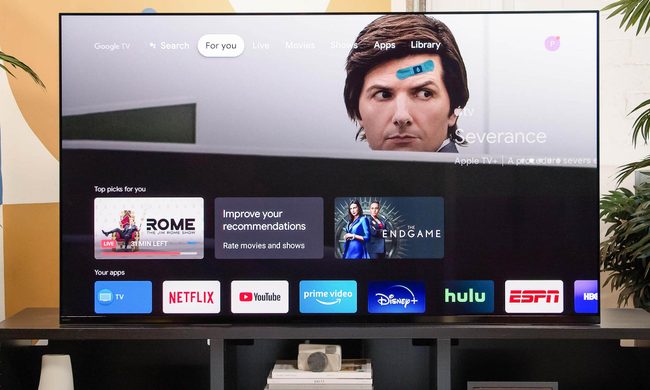
Google TV applications on the Sony A95K TV.

Your smart TV may know far more about your viewing habits than you realize, even if you rarely use its smart features. In a new privacy explainer, Proton warns that many modern TVs quietly collect data about everything displayed on the screen and share it with manufacturers, advertisers, and analytics companies.

The worrying part is that escaping this tracking is becoming increasingly difficult because many privacy controls are buried deep in settings or enabled by default. Proton argues that buying a smart TV today often means accepting a level of surveillance that most people never knowingly signed up for.

Read more
LG is cracking down on smart TV apps that quietly turn your TV into a secret proxy
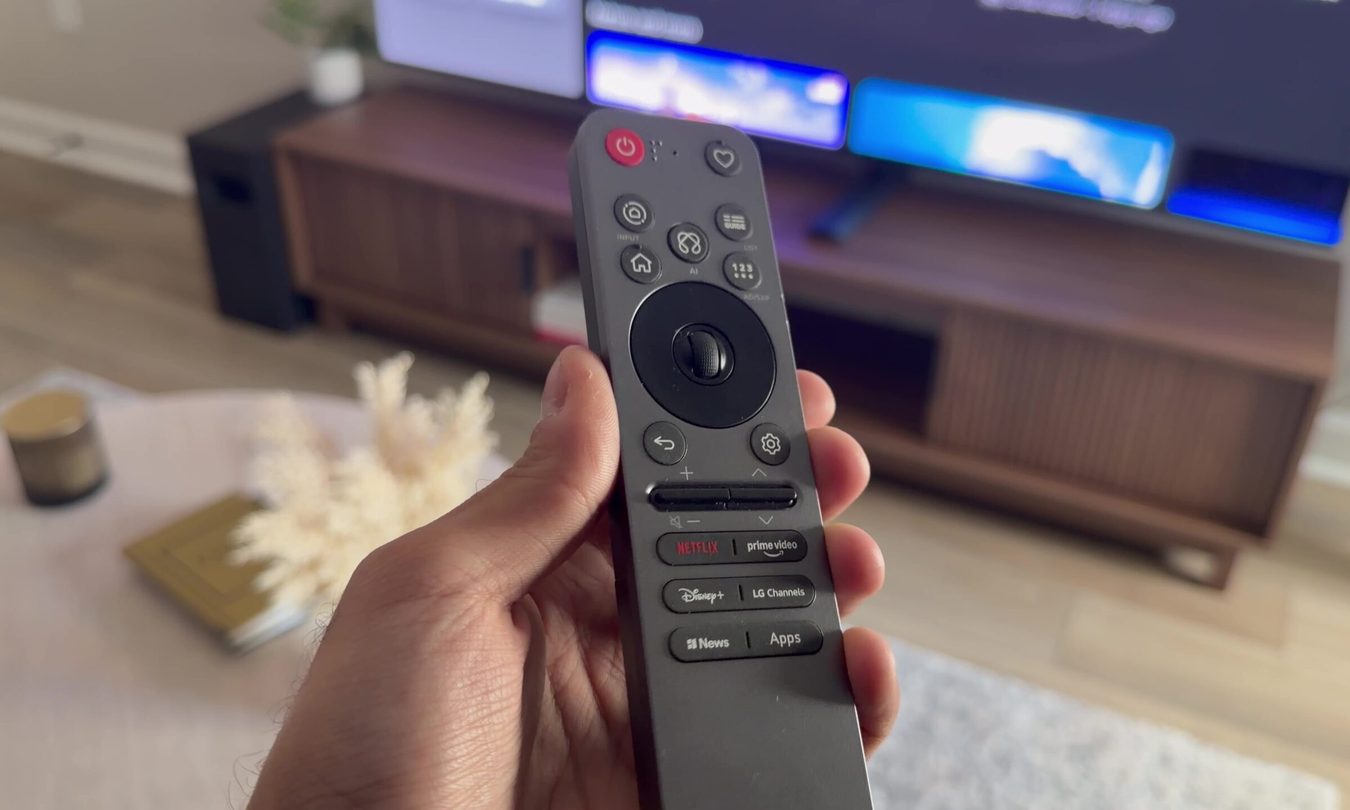
LG OLED Settings

If you own an LG smart TV, there's a chance one of your harmless-looking apps has been moonlighting as an internet relay for someone else's traffic. According to a report from KrebsOnSecurity, LG says it's finally stepping in to stop this menace. This week, the company confirmed it plans to suspend any webOS app that turns a TV into what's called a residential proxy node.

The move follows a report from security firm Spur, which found that more than 42 percent of apps on LG's webOS store include SDKs that quietly reroute internet traffic through your TV, indefinitely. Samsung isn't spared either, with over a quarter of Tizen apps carrying similar code.

Read more