It’s been feeling like the end of the physical media era for a little while now, what with Best Buy taking discs off its shelves and manufacturers stopping production of Blu-ray disc players. The move to streaming-only content is somewhat understandable, at least from the view that those discs take up a lot of space. But there are significant issues with relying solely on streaming content, especially for videophiles, as the visual and audio quality of streaming doesn’t match what you get from a disc. That’s where a movie player from Kaleidescape comes in.
The company has been making movie players and servers for years that allow you to store content with reference quality video and lossless audio on a local device. The new Strato M is a 1080p movie player — we’ll get to that — that supports Dolby Vision, HDR10, BT.2020, and 4:2:2 chroma subsampling. It has a 480GB internal solid state hard drive capable of storing up to six high-bitrate movies downloaded from the Kaleidescape store. In addition, the Strato M supports lossless spatial audio, including Dolby Atmos and DTS:X.
Kaleidescape suggests the Strato M for someone either using a 2K TV or projector, or sitting more than 1.5 times the screen diagonal away from their display. The idea being that if you’re that far from a 1080p image, your eyes can’t see the difference between 1080p and 4K, as Kaleidescape posts about on the Strato M product info page.
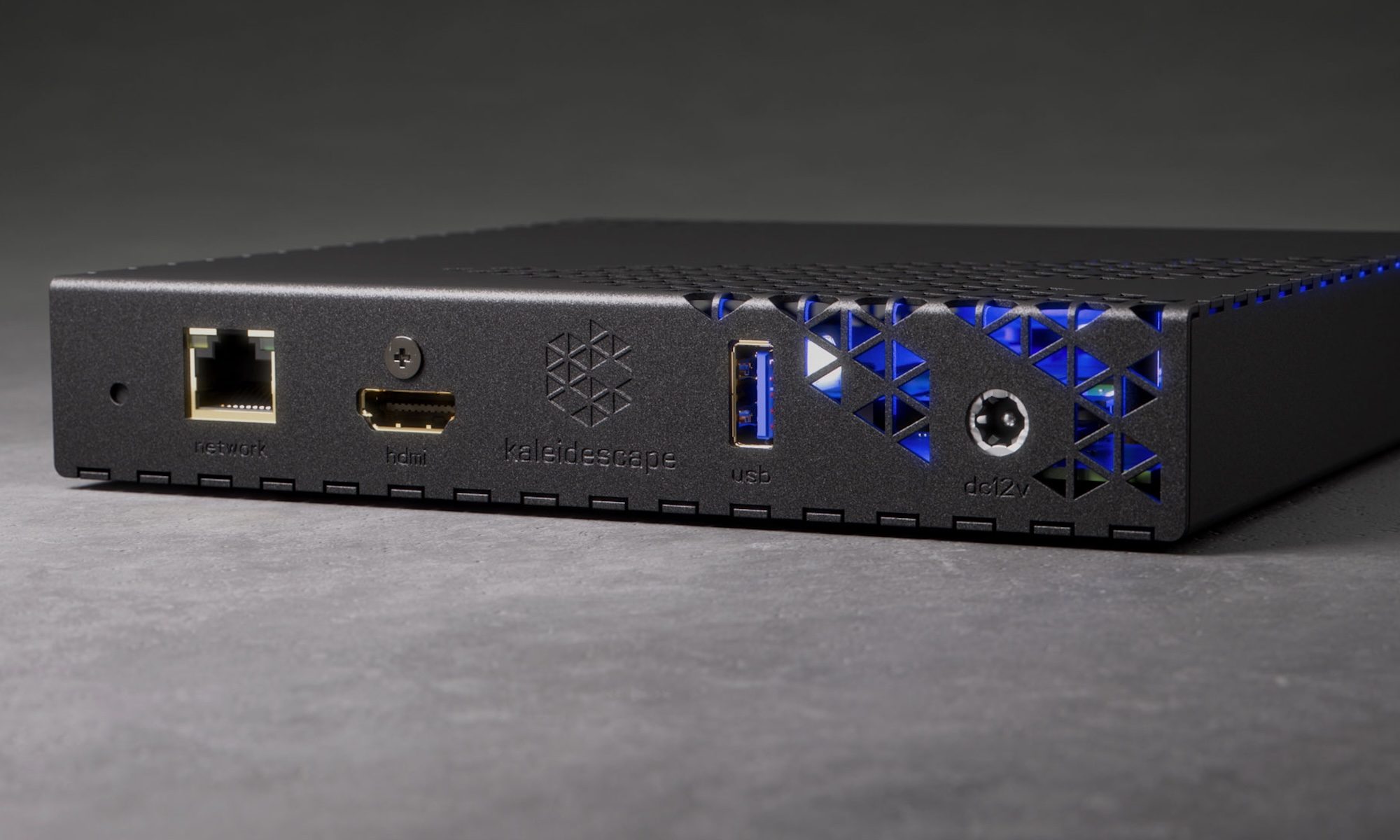
Content bought from the Kaleidescape store will be the highest quality available. So the 4K Dolby Vision movie bought for your catalogue will be downloaded to the Strato M, but will be downscaled to 1080p. If you expand your Kaleidescape system to include a 4K player, that content can be played from the 4K device. When the internal hard drive is full, you can remove an already watched movie and replace it with a new purchase or another movie from your library. Downloading a movie from the Kaleidescape server takes about 10 minutes over gigabit Ethernet.
“Strato M opens up the Kaleidescape experience to a broader range of movie enthusiasts,” said Tayloe Stansbury, chairman & CEO of Kaleidescape. “And in larger systems, Strato M is great for secondary rooms, while reserving the flagship Strato V for main viewing areas.”
We haven’t seen the Strato M yet so cannot speak to the visual quality, but 1080p HDR content with 4:2:2 chroma subsampling can look amazing on a great display.
The Strato M is now Kaleidescape’s least expensive player — half the price of the Strato V (look for an upcoming review here at Digital Trends) — available at $1,995 through distributors. For a 1080p player, that’s still a high cost for some, but for anyone looking to get into the Kaleidescape world (and a pretty slick and quality world it is), the Strato M is a viable option. Especially when paired with one of the best TVs available to do the upscaling of the 1080p 4:2:2 signal to 4K.
Editor’s note: This post has been updated to change a typo saying your “eyes can see the difference between 1080p and 4K” to “your eyes can’t see the difference between 1080p and 4K” and to remove reference that Kaleidescape requires a gigabit Ethernet — that requirement is for local network.