1. Home
  2. Cars
  3. Emerging Tech
  4. News

Toyota unveils 2026 bZ: A smarter, longer-range electric SUV

Add as a preferred source on Google
toyota bz improved bz4x 2026 0002 1500x1112
Toyota bZ/Toyota USA Image used with permission by copyright holder

Toyota is back in the electric SUV game with the 2026 bZ, a major refresh of its bZ4X that finally delivers on two of the biggest demands from EV drivers: more range and faster charging.

The headline news is the improved driving range. Toyota now estimates up to 314 miles on a single charge for the front-wheel-drive model with the larger 74.7-kWh battery—about 60 miles more than the outgoing bZ4X. All-wheel-drive variants also get a boost, with up to 288 miles of range depending on trim.

Recommended Videos

Charging speeds haven’t increased in terms of raw kilowatts (still capped at 150 kW for DC fast charging), but Toyota has significantly improved how long peak speeds are sustained. With preconditioning enabled—especially helpful in colder weather—the new bZ can charge from 10% to 80% in about 30 minutes. Also new: Plug and Charge support for automatic payment at compatible stations and full adoption of the North American Charging Standard (NACS), meaning access to Tesla Superchargers will be standard by 2026.

Under the hood, or rather the floor, Toyota has swapped in higher-performance silicon carbide components to improve efficiency and power delivery. The AWD version now produces up to 338 horsepower and sprints from 0–60 mph in a brisk 4.9 seconds.

Toyota didn’t stop at just the powertrain. The exterior has been cleaned up, with body-colored wheel arches replacing the black cladding, and a sleeker front fascia. Inside, a larger 14-inch touchscreen now houses climate controls, giving the dash a more refined and less cluttered appearance. There’s also more usable storage thanks to a redesigned center console.

With the 2026 bZ, Toyota seems to be responding directly to critiques of the bZ4X. It’s faster, more efficient, and more driver-friendly—finally bringing Toyota’s EV efforts up to speed.

Nick Godt
Former Freelance reporter
Nick Godt has covered global business news on three continents for over 25 years.
Your next car’s software update could become its biggest security risk
Your next car could receive updates like your smartphone. That's also becoming a cybersecurity nightmare.
OTA technology allows manufacturers to remotely deliver software updates.

Modern cars are no longer machines that stay the same after they leave the showroom. Increasingly, they're becoming software-defined vehicles that receive new features, bug fixes, and security patches wirelessly, much like smartphones. But while over-the-air (OTA) updates have made vehicle maintenance easier and cheaper, cybersecurity experts are warning that the same technology could also become one of the automotive industry's biggest security challenges.

Researchers and policymakers are now calling for stronger oversight as connected vehicles become increasingly dependent on remote software updates. Their concern isn't just about hackers stealing personal data. It's about someone potentially interfering with the operation of a moving vehicle.

Read more
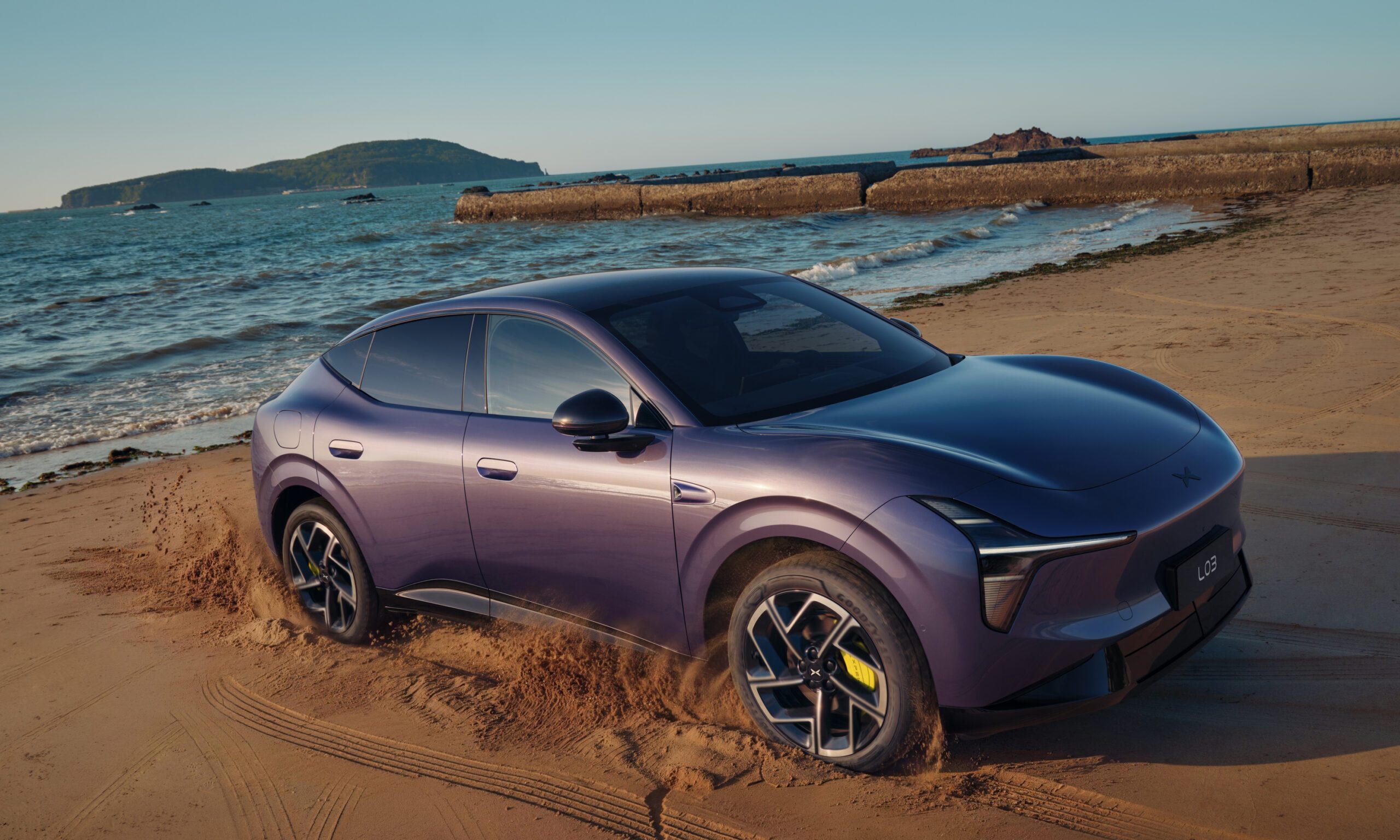
This sleek Chinese EV pairs supercar styling with three AI brains
The Xpeng L03 is an AI supercomputer disguised as a stylish family SUV
Xpeng L03

Xpeng’s latest electric vehicle carries enough processing power to make the term "smart car" actually sound more realistic than it actually is. The new Xpeng L03 debuted simultaneously in Europe and China on July 16, with the company presenting it across 65 markets. Available as a fully electric vehicle and an L03 Power X range-extender, the coupe-SUV is Xpeng’s most internationally focused model so far. Market-specific prices and sales dates remain unannounced.

Three AI chips and Google Maps built right in

Read more
A new sodium battery posts wild four-minute charging numbers, but don’t expect it in an EV yet
The breakthrough could improve fast charging and battery life, but the study hasn’t demonstrated those results in a production-sized pack
EV Charger

A new sodium-metal battery has posted a charging number that makes today’s EVs look painfully slow. In laboratory testing, the cell operated at a 15C rate, equivalent to completing a charge or discharge in roughly four minutes.

That doesn’t mean researchers plugged in an electric car and watched it fill up before the driver finished buying coffee. The result came from a small experimental cell using a new quasi-solid electrolyte, while the larger pouch-cell prototype delivered far less dramatic performance.

Read more