
  1. Home
  2. Emerging Tech
  3. Web
  4. Legacy Archives

Crapject, hat tip, and more tech lingo you need to know

Add as a preferred source on Google

3d-printed wasteOh, hello, and welcome back to this week’s tech lingo watch. Today we talk about how you properly credit a source on Twitter, how to ask someone to send you an Instant Message, and more ways to refer to various subjects on the Web.

Hat Tip

A recognition or acknowledgment to a source from which you’ve found content. On Twitter, this is often shorthanded as “H/T” followed by a proper name or Twitter handle. The same can be done at the end of a news post, where the author credits the news outlet or person who tipped the story.

Recommended Videos

“@nattgarun .@burgerking got hacked! (h/t @AndrewCouts) pic.twitter.com/2b9OYVnn“

Crapject

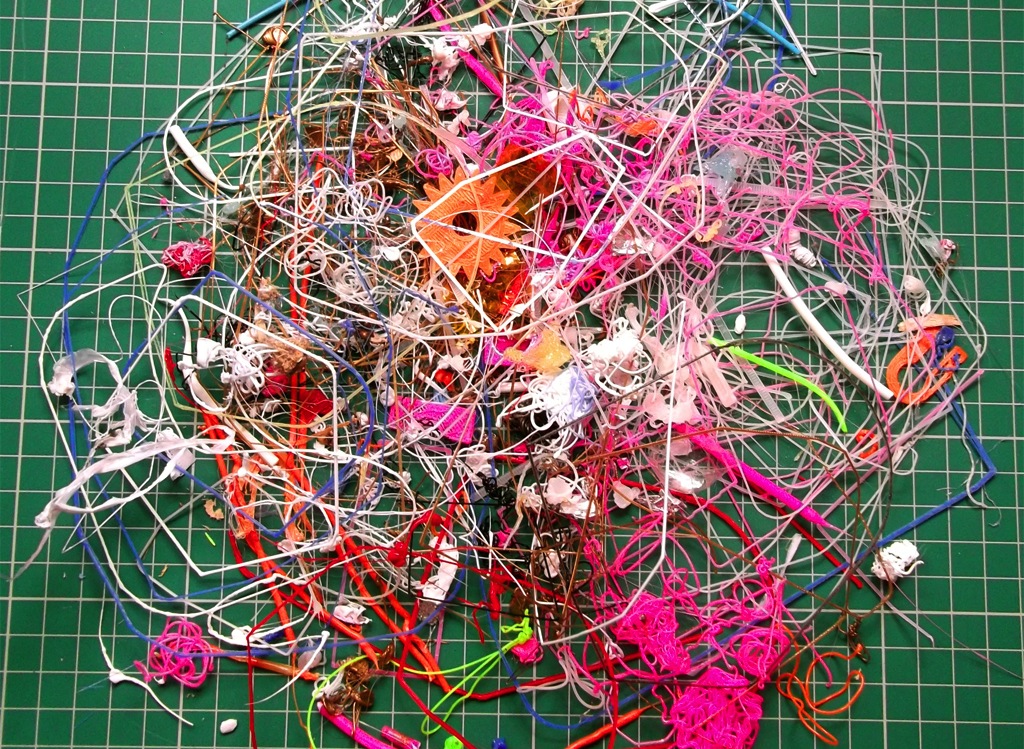
Useless, non-biodegradable objects created by 3D printers. The rise of 3D printing and wide availability to the general market has spawn some great inventions. At the same time, many environmentally unfriendly items are also being spewed out, creating what’s essentially plastic scraps and giving rise to a whole new market of waste. The term “Crapject” first spread around on a Changeist.com article before it got picked up by other publications, such as The New Inquiry and Vice Magazine’s Motherboard blog.

“The more 3D printers we put in scientist wannabe’s hands, the more crapjects they’re going to produce.”

Ping

Ping originally refers to the act of sending a signal to a network to test whether the address is live. Nowadays, the term is used in a chatting context. When someone wants you to contact them via Instant Messaging, they will likely ask you to ping them – as one would to a network to (hopefully) get a quick response.

“Writer: Can we talk about today’s assignments?
Editor: Sure, ping me in five minutes.”

Big Data

A really big set of data. Like, ginormous. Large enough for companies like HP and Microsoft to spend billions of dollars on software firms to help analyze various data sets instead of running them through a regular program or human research team. The catch-all term “Big Data” can be used in various contexts, from science data sets to social data. For example, think about the data currently bring processed by the Library of Congress’ Twitter archive. With live, incoming tweets every second, the LoC has a long way to go before it will completely save every tweet that ever hit the Web.

“Bing needs to refine its big data accumulation to provide the best search results if it truly wants to compete with Google.”

Check back next Monday for more of our weekly jargon lesson!

Natt Garun
An avid gadgets and Internet culture enthusiast, Natt Garun spends her days bringing you the funniest, coolest, and strangest…
A new startup wants to fix the military’s working-dog shortage with cloning and gene editing
Promising pitch, plenty of unanswered questions about the dogs.
a new startup wants to fix the militarys working dog shortage with cloning and gene editing warhound featured image

Military working dogs charge into places the rest of us would flee. So, I understand why anyone would want to breed tougher, healthier dogs for the job.

Warhound, a new startup from Colossal Biosciences co-founder Ben Lamm and Anduril co-founder Palmer Luckey, has stepped out of stealth with $200 million to clone and gene-edit working dogs for American troops, police departments, and emergency services (via TechCrunch).

Read more
AI can describe a picture, but it still struggles to understand blind users
A University of Maryland study finds that Be My AI often buries useful answers in lengthy descriptions, leaving blind users to work harder to get the information they need.
Blind Man using walking stick

AI can describe a picture, identify objects, and answer questions about what a camera sees. But when a blind user needs a quick answer, getting an entire spoken essay about the scene isn't exactly helpful. Researchers at the University of Maryland (UMD) have found that AI-powered visual assistance can leave blind users doing too much work to get the information they actually need.

The study, titled Say It My Way: Exploring Control in Conversational Visual Question Answering with Blind Users, examined how people interact with Be My AI, an AI-powered feature of the Be My Eyes app. The researchers found that users often received lengthy descriptions that didn't adequately address their immediate goals, forcing them to ask follow-up questions or find ways to steer the AI towards a more useful answer.

Read more
Etsy cracks down on AI slop listings. Everyone else needs to take note.
Now every platform must decide what counts as handmade.
Etsy featured image

Platforms tend to shrug off AI clutter until it threatens what they sell. For Etsy, that thing is trust in the maker.

To protect that, Etsy has banned AI-generated how-to guides and listings made entirely by bots. Most sellers must show at least one unretouched photo of the item (via Etsy Seller Handbook).

Read more