  1. Home
  2. Cars
  3. Legacy Archives

MIT tech evaluation: Audi’s movin’ and shakin’

Add as a preferred source on Google

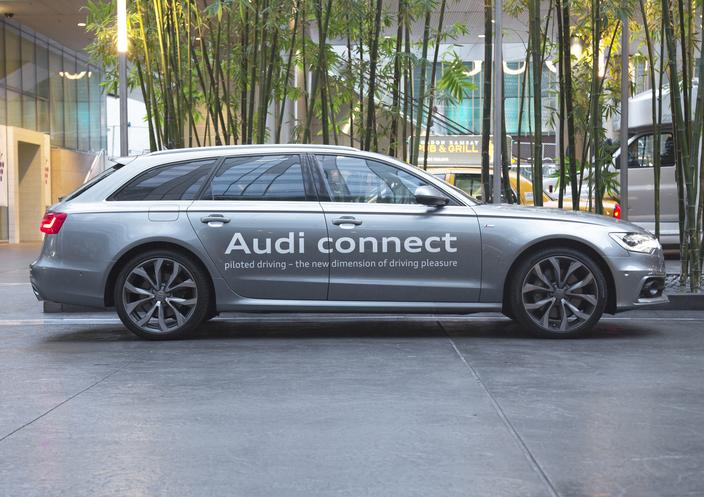
Audi CESWhen it comes to understanding the cutting edge of technology, it’s fair to say that the folks over at MIT have the market cornered.  Each year, the editors at the “MIT Technology Review” take a look at the most innovative companies in the world.  For 2013, Audi made the list as one of the “50 Most Disruptive” companies, credited for its piloted driving project shown at CES.

The piloted driving project was used to develop a system to enhance the Audi’s existing adaptive cruise control.  If it’s successfully implemented for consumer cars, Audi owners could conceivably let their cars do the driving for them on highways and in city centers.  The system uses two radar sensors that scan the area up to 250 meters in front of the car, while a wide-angle camera watches for cars, pedestrians and the lane markings on the road.  Piloted driving project also makes use of several ultrasonic sensors to detect obstacles immediately surrounding the car, and a laser that scans for obstacles in the distance.

Recommended Videos

All together, these sensors, radar, and lasers should create a safer, more efficient, more autonomous driving experience for future Audi owners.  While much of this technology is still in its infancy, the fact that Audi is looking to create “smarter” cars for the future is exactly why it landed on MIT’s list of most innovative companies.

This is Audi’s third award for the piloted driving project, but it’s not one that the company takes for granted. “We are greatly honored to be included in the group of the world’s most innovative companies. It shows that Audi is well equipped for the future,” says Audi Board of Management Chairman Rupert Stadler.

We’re just excited to get our hands on one of these autonomous cars for review.

Davis Adams
Former Contributor
Whether you're talking about gadgets or cars, Davis always seems to prefer "next year's models." He's a neophile to the core…
Volvo is rolling out Apple Music to over 2 million cars with a simple OTA update
Your Volvo may soon get Apple Music without needing CarPlay
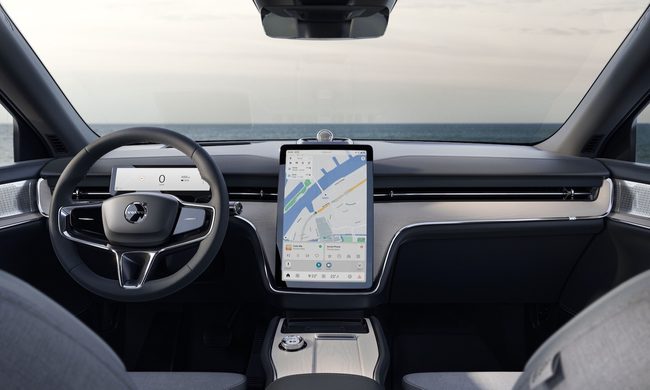
Interior view of the 2024 Volvo EX90.

The line between your smartphone and your car continues to blur. Volvo has announced that it is rolling out an over-the-air software update that brings Apple Music directly to the infotainment systems of more than 2 million vehicles worldwide. Instead of relying on Apple CarPlay or plugging in an iPhone, eligible drivers will be able to stream music natively from their car's built-in system, making Apple Music another integrated feature of Volvo's software experience.

The update is arriving for a wide range of Volvo models, including the EX90, ES90, XC90, S90, V90, XC60, S60, V60, XC40, EX40 and EC40, covering model year 2020 onwards. Availability, however, may vary depending on the vehicle.

Read more
Chery’s latest EV packs flagship tech for the price of a base Tesla, but you can’t buy it
Here's everything packed into Exeed's 2027 Exlantix ES, from its 27-sensor autonomous driving suite to its 860 km range, all starting under $31,000.
Car, Transportation, Vehicle

Chery's premium arm just dropped a sedan that makes you wonder why American EVs cost twice as much for half the tech.

Exeed's 2027 Exlantix ES ships with a driver-assist system called Falcon 700. It is built around an Nvidia Orin-Y chip and a genuinely stacked sensor suite.

Read more
A new AI model wants self-driving cars to think before they swerve
Forget guessing games, this self-driving AI actually shows its work.
Self driving car

Self-driving cars have gotten pretty good at driving. The harder problem is teaching them to drive safely in situations nobody planned for. We have heard horror stories of self-driving cars, behaving erratically in emergency situations, often times delaying first responders from reaching the scene.

A team at Seoul National University, led by professor Jun Won Choi from the Department of Electrical and Computer Engineering, thinks they have cracked part of that puzzle with a new AI model called SafeDrive. The research was recently selected as a highlight paper at CVPR 2026, a distinction that goes only to roughly 3% of all submissions.

Read more