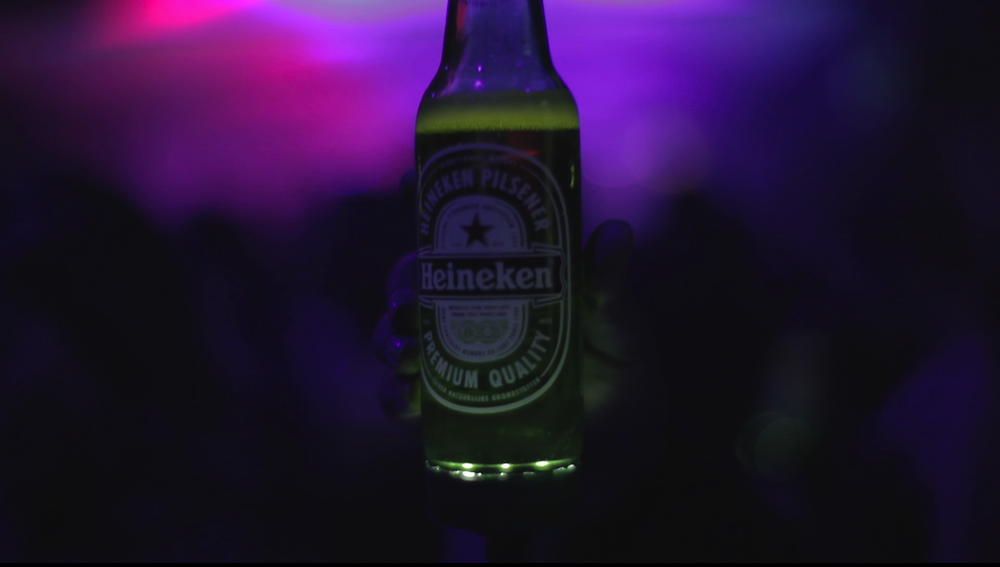
Describe the scene at the typical frat house party: Techno music, dimly lit rooms, multicolor lights, generic beer. Ah, the essence of American youth. Now, Heineken will monopolize on your good ol’ pastimes by putting some tech in your beer with its Heineken Ignite project to create LED “smart bottles.” These interactive bottles will come with motion sensors and tiny lights that will illuminate in correspondence to certain party gestures. For example, the LED will glow when people cheer and clink bottles against one another, or blink quickly while the person is chugging one back. It’ll also come with a software to help bottles tune in with the music and coordinate a synchronized light show.
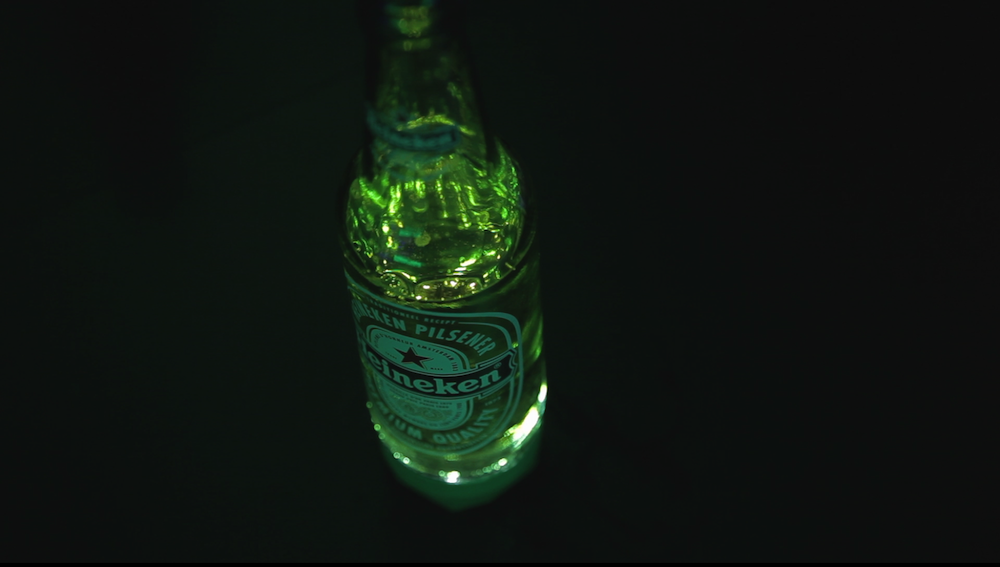 None of this is real just yet. Heineken unveiled the concept during Milan Design Week along with a special Tumblr to explain the thought process. “This innovative approach lets people be a part of the party in a whole new way and opens up possibilities in social situations,” the company boasts.
At the moment, Heineken has only developed a “clunky” prototype consisting of an external module attached to existing bottles, but the team aims to embed the tech directly into bottles going forward.
“Everything should fit underneath a bottle of Heineken, and there’s electronics on this board to rival your iPhone: eight led lights, a processor, an accelerometer, gyroscope and a wireless transmitter with antenna,” the blog reads. “With a custom designed board the tech team manages to squeeze the whole board to just over the size of a 2 Euro coin.” The prototype currently runs on one AA battery and is covered by what looks like felt and electrical tape.
We don’t imagine Heineken will turn every single bottle it produces into a smart bottle if the concept ever reaches commercial market – which is a relief for those who prefer drinking alone without the pushed notion of social interaction. Heineken has yet to release an estimate of how much extra the Heineken Ignite bottles will cost, but it seems like a fun solution for those looking to add a high production value to their otherwise boring frat party. We still have to wonder how one recycles these sensor-laden bottles though.
Watch the promo video below to see the Heineken Ignite smart bottles in action, complete with oddly dressed dancers and people having way more fun than I am.