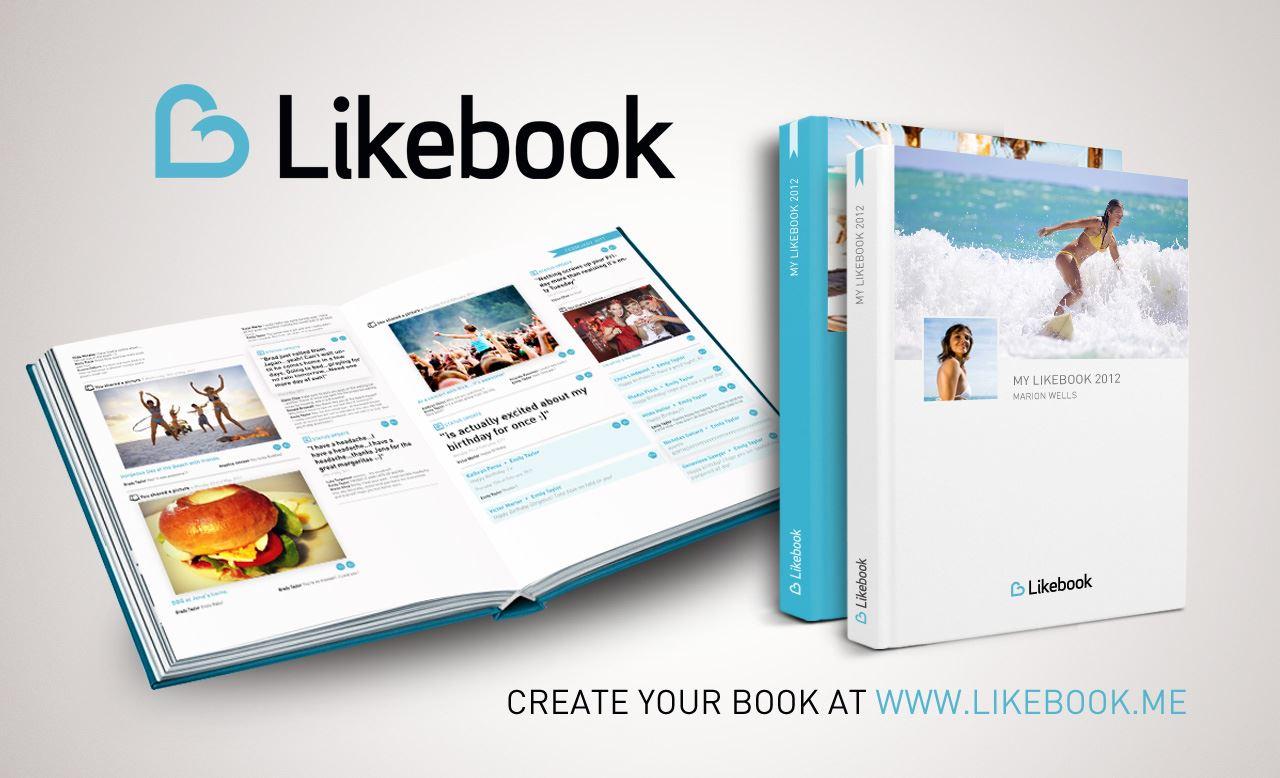
Quite possibly the ideal gift for anyone obsessed with scrapbooking, Likebook is a service that pulls data off your Facebook account and compiles information through 2007 into a paperback or hardback book. Stemming from a product developed in 2010 called the Egobook, the site collects pretty much anything posted on the Facebook Timeline for the pages of the book. This includes status updates, messages posted by friends on your wall, links, photo albums, photos where you are tagged, profile picture changes and all the user interactions such as comments and likes that are attached to each piece of information.
 Information that’s not included within the Likebook includes application updates, game updates, private messages or chat logs. Similar to the Facebook Timeline, all of this data is printed within the book in chronological order. In addition, the user can specify a date range in which content can be pulled as opposed to pulling multiple years.
Hypothetically, someone could print up each year of their life on Facebook and collect Likebooks like high school yearbooks. The user doesn’t have to give Likebook any login or password information, but they do have to authorize Likebook to access the data.
When asked about the concept behind the service, Likebook marketing director Patrick Osinski said “Users already have several years of their personal life story on Facebook. We provide a way to respond to the basic human need to gather, archive, and share the personal stories that are stored in social networks.” Likebook community manager Bérénice Nicolas followed up with “Likebook is way to tell a story. Each customer uses it to tell his or her own story. We are always amazed to see how people are using our service.”
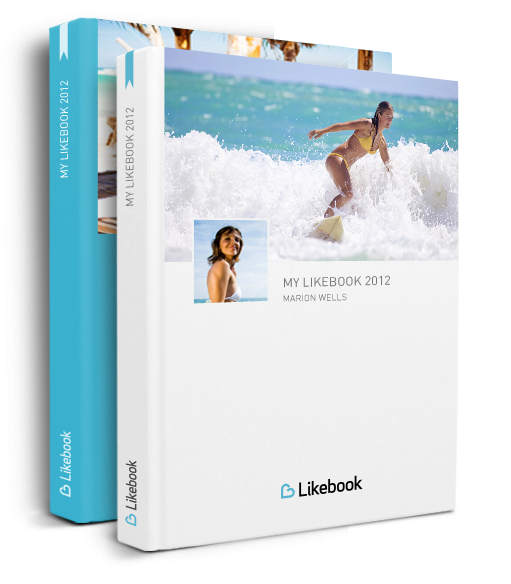 According to company policy, a user’s personal data is only kept long enough to process, print and ship the order. Regarding cost, a Likebook ranges from $12 to $137 depending on the page length (25 to 500 pages) and the type of cover.
The ballpark range for an entire year of a typical Facebook user is around one hundred pages long. During the creation process, users can modify the different types of information included within the book and users can also limit the number of comments printed with each post.
In addition to creating a personal Likebook, users can create a Likebook for a friend as a gift, a version that features a single photo album, a Likebook for a page or group, a Likebook that features a relationship or a version that features a group of close friends. This could be an ideal gift for a family member that doesn’t have a Facebook account, but wants to keep up with a loved one.
Creation of the Likebook takes between four to ten days and the company ships the books all over the world. In the past, company representatives claim Likebooks have been ordered by family members that want to chronicle major events like the birth of a child or evolution of a major relationship. It’s also been ordered by corporations that want to provide a Likebook to employees that contains major events detailed on the company’s official Facebook page.