
  1. Home
  2. Social Media
  3. News

Meta AI is moving into your Threads DMs, where awkward AI chats belong

Because not every AI conversation deserves a spot on your followers' timeline.

Add as a preferred source on Google
Meta AI in threads DM
Rachit Agarwal / Digital Trends

One of the reasons Grok AI became so popular is because it let people chat with it directly on X, resulting in some hilarious conversations. And while the public availability of Grok AI on X has resulted in numerous safety issues, there’s no denying that this openness played a major role in its rise. 

It seems Meta wanted the same, which became evident when the company started testing Meta AI directly on Threads a few months ago, letting users chat with it right in their feed. But not everyone was comfortable having those conversations out in the open, so Meta has just moved its Meta AI inside your Threads’ DMs. 

Why is Meta moving AI into DMs?

Connor Hayes, who heads Threads, explained the change in a recent post. He said the company heard the feedback loud and clear, noting that “not everyone wants to interact with AI publicly on Threads.” So instead of forcing those chats into your feed, Meta is giving you a private lane to use it.
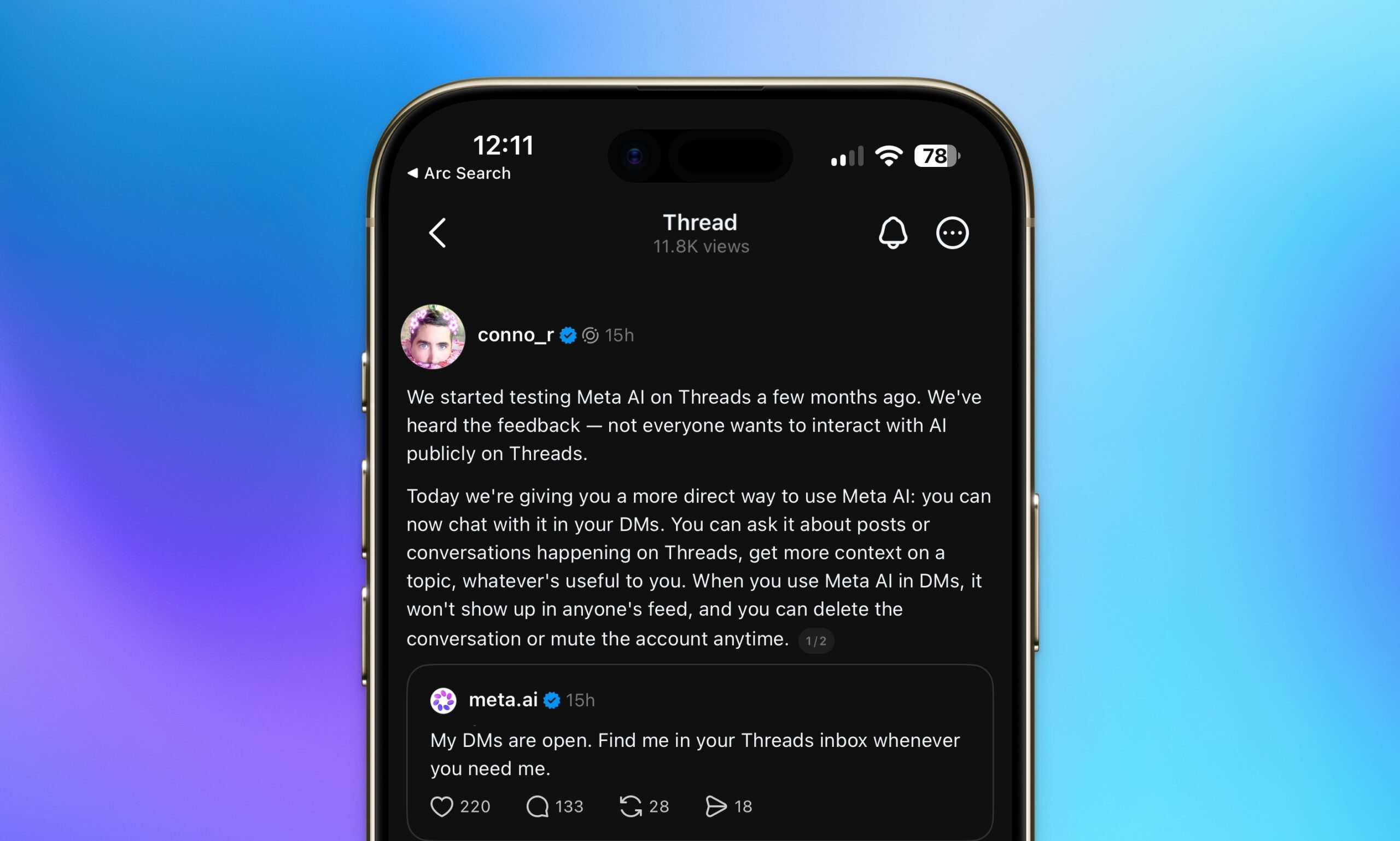
What can you do with Meta AI in your DMs?

Starting today, you can message Meta AI directly in your Threads DMs. You can ask it questions about posts or conversations happening on the platform, get more background on a topic you’re curious about, or use it for pretty much whatever comes to mind.
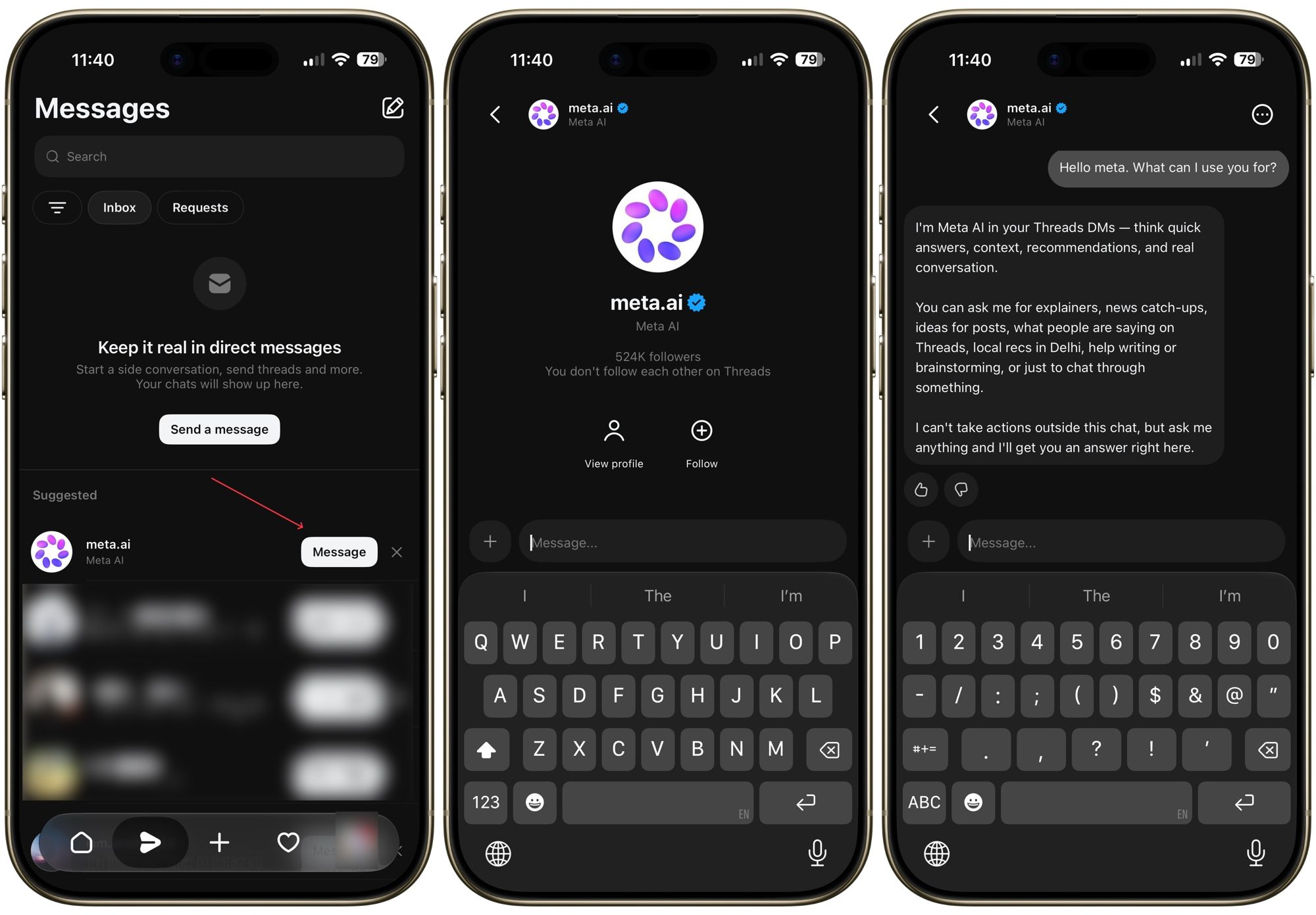
The best part is that these conversations stay private. Since it all happens in DMs, nothing you ask Meta AI will show up on anyone’s feed, including your own. And if you change your mind, you can delete the conversation or mute the AI account whenever you want.

Is Meta AI still reachable in your feed?

Yes, at least for now. Hayes noted that Meta is still testing Meta AI directly in the Threads feed, but only in a few countries. The company says it will keep collecting feedback and refining that experience before rolling it out more broadly.


Rachit Agarwal
Rachit is a seasoned tech journalist with over ten years of experience covering the consumer technology landscape.
X’s creator payouts are changing, and original content is the new currency
The platform is replacing Revenue Sharing with a program designed to reward creators who actually make something.
X Twitter on iPhone

X is changing the rules for creators yet again. This time, the platform wants to put less emphasis on simply generating engagement and more on actually making something original. X is replacing its controversial Creator Revenue Sharing program with a new initiative called Original Content Rewards, which will officially launch on September 8, 2026. The existing Revenue Sharing program will continue paying participating creators through September 7, after which the new system takes over.

X wants to reward creators, not engagement farmers

Read more
Snapchat’s Spotlight algorithm now favors human-made videos over AI-generated ones
Snapchat is taking a firm stance against AI slop.
Snapchat-App-Store-open-on-iPhone

If you've been uploading fully AI-generated videos on Snapchat in hopes of earning rewards, it might be time to rethink your strategy. Snapchat has announced changes to Spotlight that prioritize authentic, original creativity over content created entirely by artificial intelligence. The company says its recommendation system will now favor videos made by real creators, while fully AI-generated submissions will no longer qualify for monetization.

So what's changing on Spotlight?

Read more
LinkedIn is crowdsourcing its fight against AI slop
The company is rolling out a new button that lets you flag posts that seem AI generated.
LinkedIn seems like AI slop button

LinkedIn has a serious AI slop problem, and it's now turning to its own users to help fix it. The platform is rolling out a new button that lets users flag posts they suspect were generated by AI. It plans to use that feedback to fine-tune the system that decides how much reach a post gets outside a user's own network, based on how AI-generated it appears.

The announcement comes shortly after an analysis by Pangram found that more than forty percent of long-form LinkedIn posts are fully AI-generated, and it suggests that the reach-trimming measures the company rolled out earlier this year haven't been enough on their own.

Read more