Hey Spotify, when are we getting lossless audio support for HiFi listening nirvana?
Ah, sorry, never mind. Looks like turning into a messaging platform is the next big thing at the music streaming company. Spotify has just announced a new feature called Messages. If the name didn’t give it away, well, this is essentially a built-in DMs system for all Spotify users.
“But why,” you might ask. As the company puts it, music can “spark a great conversation with those closest to you.” It’s a convenient way of sharing songs, podcasts, and audiobooks with your friends and family, assuming they also use Spotify, aren’t sworn to the cause of YouTube Music or Apple Music, and that they would like “yet another digital fireside chat” in their life.
What is Spotify Messages all about?
Let’s discuss the technical aspects first. Spotify Messages are purely a one-on-one affair, so there isn’t going to be a group ruckus arguing who is the GOAT of R&B between Tupac and Drake. That’s a very lopsided conversation, by the way.
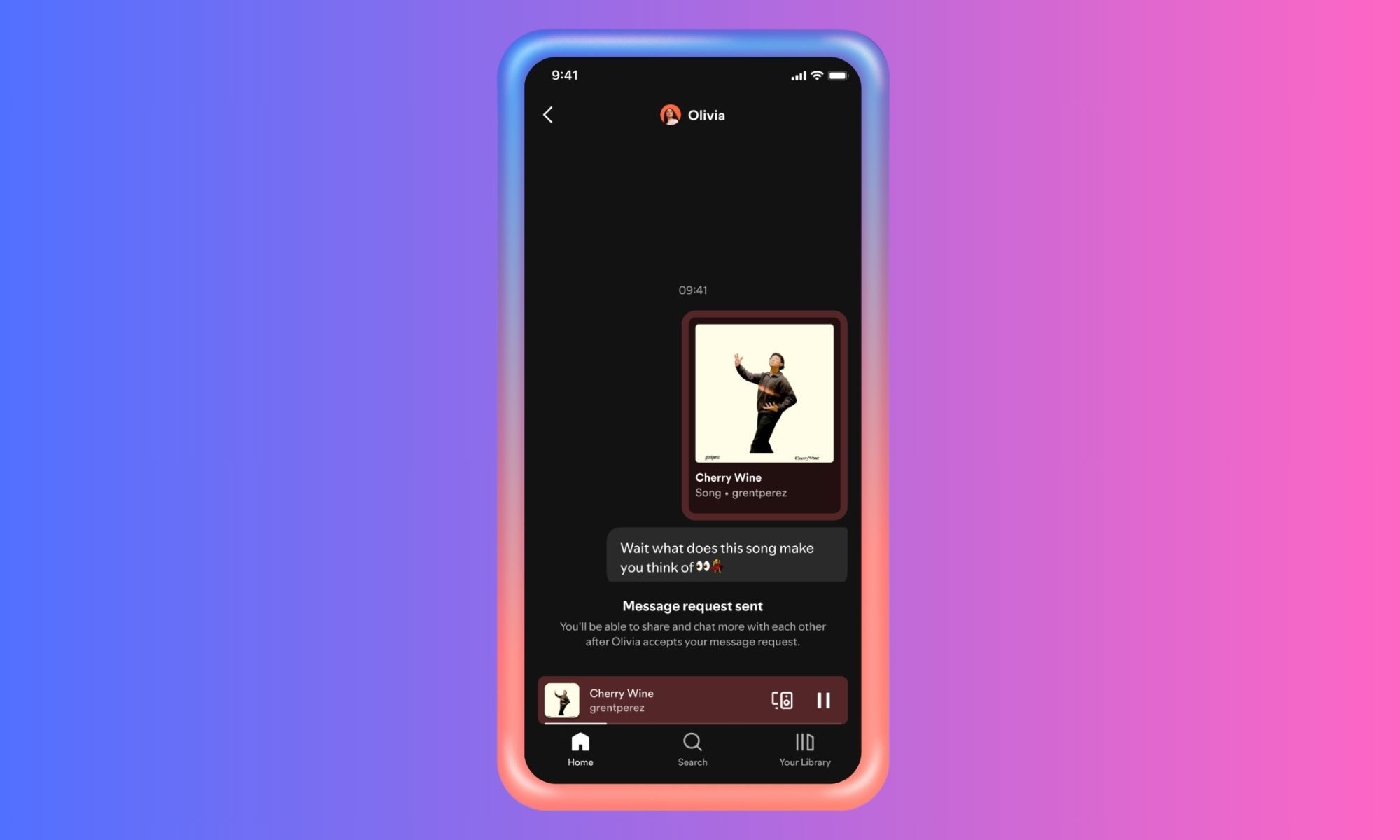
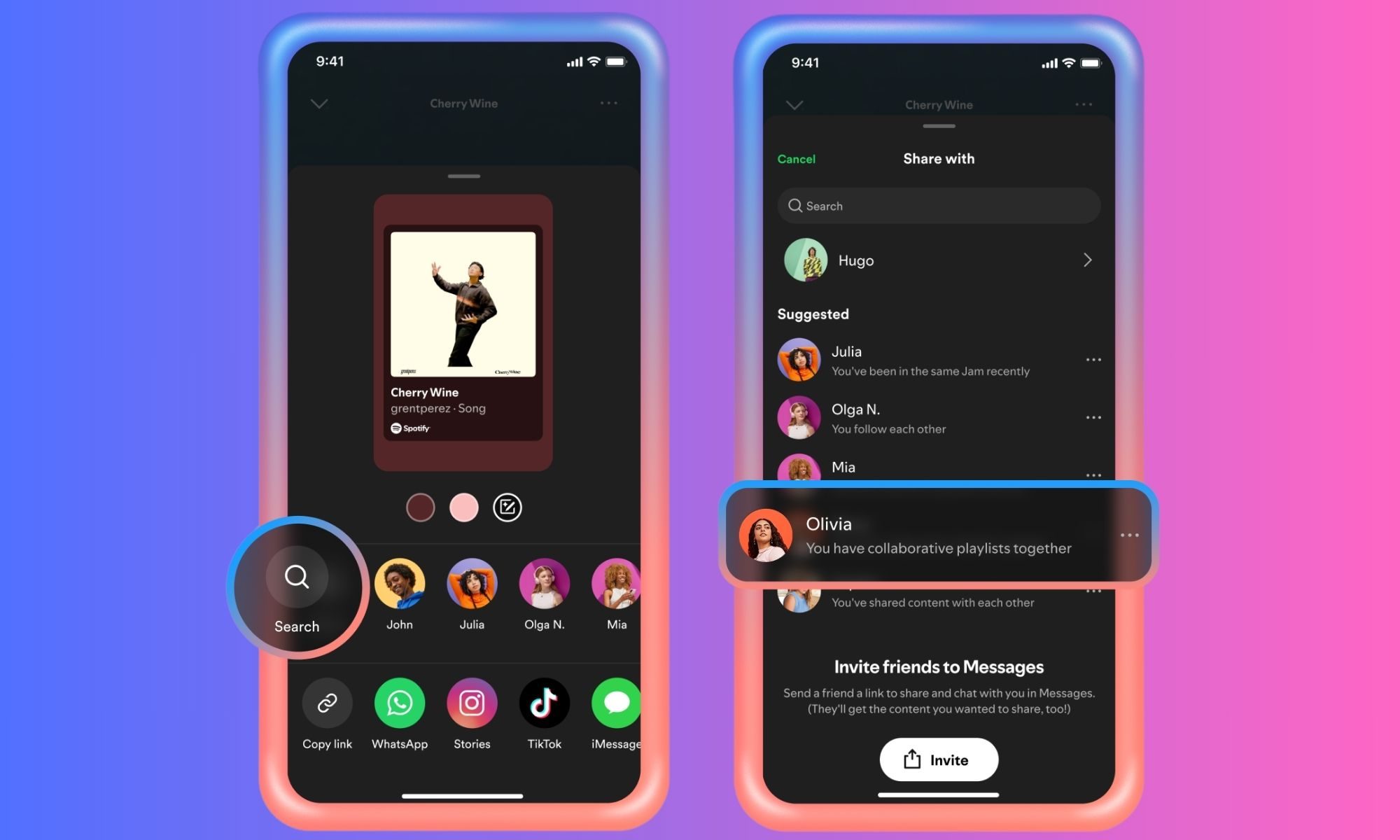
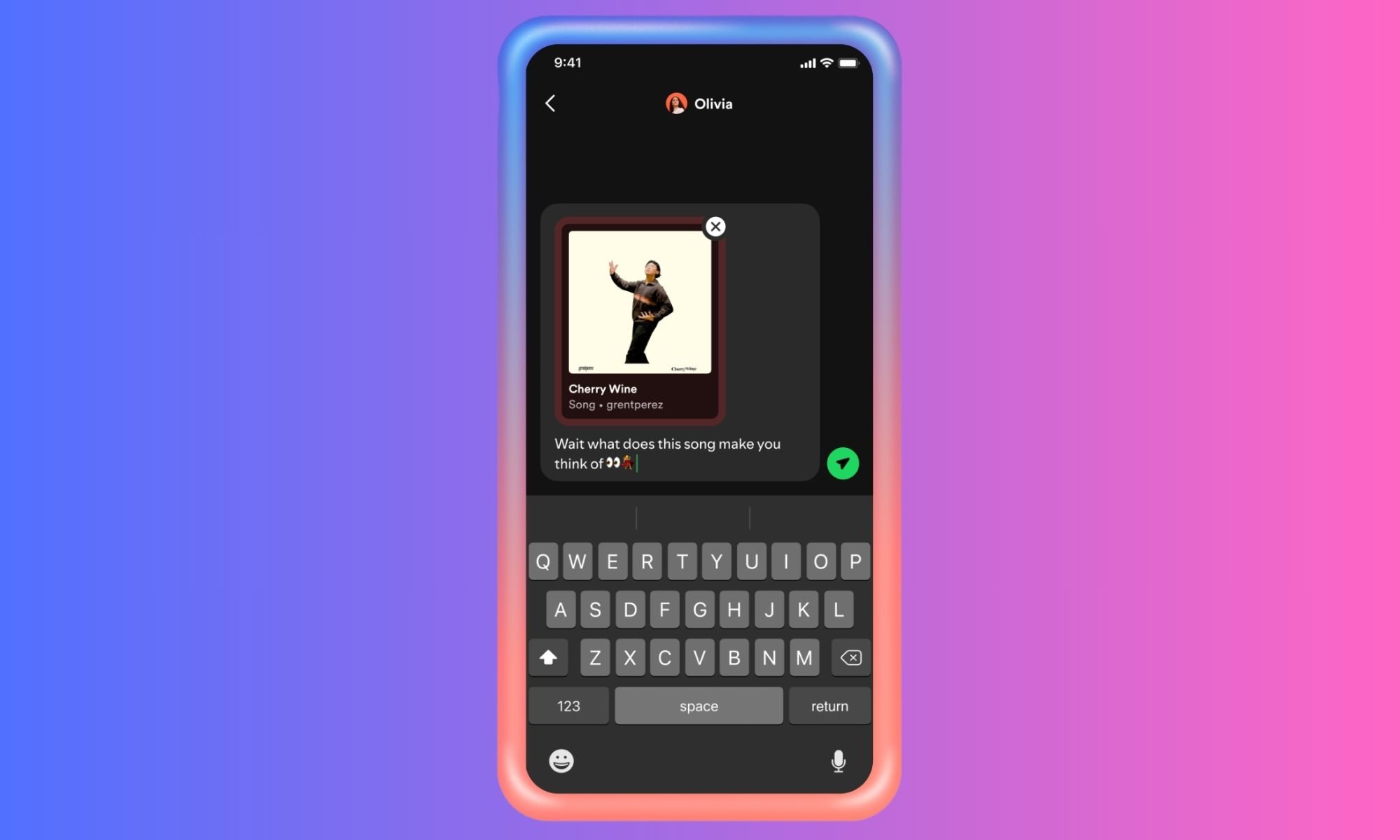
While playing audio content on Spotify, you just have to tap on the share button, select the recipient from a carousel, and press send. Here’s the tricky part. You can only send “Spotify Messages” to a person you’ve already interacted with for Spotify business, such as sharing a subscription plan, participating in a Jam or Blend, or creating a shared Spotify playlist.
Of course, it’s up to you whether you want to chat with another soul on Spotify. When someone sends a chat request, you can choose to accept ot reject it. The messages are protected by a layer of “encryption in transit and at rest,” which is a nicer way of saying that it is not end-to-end protected, as is the case with platforms like WhatsApp.
To access the DMs section, just tap on your profile icon in the top-left corner of the screen, and in the side panel that opens, you will find all the chats. This is also where you will find an invite tool for bringing people into your messages list.
Additionally, if someone shares a Spotify link and you choose to open it (in the app or web view), you will see a green “start chat” button. And that, folks, is how you slide into someone’s Spotify DMs. Err… Spotify Messages.
But why, Spotify?
I am not entirely sure what Spotify wants to accomplish with Messages. There is hardly a mass yearning for yet another communication platform out there. This notion comes from personal experience. I, and a few hundred million people in Asia, Europe, and Latin America, are heavily reliant on WhatsApp and Telegram.
These apps are so ubiquitous that if I go with iMessage or send an SMS message, it will likely go unread. That’s how deeply entrenched these two communication apps have become in daily lives, covering everything from personal chats to business dealings.
On the other hand, folks in the US are heavily reliant on iMessage, and to such an extent that they have turned it into a whole green-blue chat bubble culture war against non-iPhone users. Whatever space for digital communication still remains is happily gobbled up by Snapchat and Messenger, which is integrated across Instagram and Facebook
So, what exactly are Spotify Messages for? Well, it looks like the streaming platform isn’t too sure about it either. This is what the company has to say:
“As always, you should continue sharing Spotify content directly through your favorite platforms like Instagram, Facebook, WhatsApp, Snapchat, TikTok, and more. Messages on Spotify are designed to complement these integrations, not replace them.”
I have a feeling that this isn’t a step in the right direction. Spotify is a streaming platform that is locked in a fierce battle against YouTube Music and Apple Music. It should actually focus on amplifying its brand signal by letting users share Spotify links on as many communication platforms as possible, instead of letting users talk about music in Spotify DMs.
It’s pretty odd to witness, because the company has been building seamless integrations across other communication platforms for a while. Just a few days ago, Spotify announced real-time music sharing in Instagram Notes and audio previews in Instagram Stories.

Similar shareable integrations have been available on Instagram and Facebook since 2018. Last year, Spotify also enabled content sharing via TikTok DMs, the For You page, and Stories, covering everything from songs and playlists to podcasts and audiobooks.
Even for existing Spotify users, this one is a perplexing move. The company has been doing a lot lately, but not all those moves have struck a chord with users. At the top of the list for things Spotify is yet to offer is support for hi-res music streaming, alongside Dolby Atmos and true spatial audio. Then there are functional missteps.
To create playlist folders, you must open Spotify on a desktop, because the facility is not available in the mobile app. Users have also been asking for deeper sorting and filtering controls in playlists, a customizable home screen, a better shuffle system, and more control over recommendations for years.
Yet, what Spotify serves, instead, is an ever-delaying HiFi experience and a Messages feature that I am sure will only appeal to diehard fans who really, really want to talk about music. It’s perplexing, but maybe some melophile out there gets lucky by sliding into Spotify DMs over shared music interests.