1. Home
  2. Emerging Tech
  3. Legacy Archives

AT&T to Offer MobiTV to Broadband Customers

Add as a preferred source on Google

AT&T announced today that it is partnering with MobiTV to bring more than 20 television channels to broadband subscribers, including AT&T Worldnet and AT&T Yahoo high speed subscribers, under the name AT&T Broadband TV. Through the deal, AT&T becomes the first U.S. broadband provider to offer a live television subscription service through any broadband connection—and, though MobiTV, users can watch their shows in real time anywhere they can get 500 Kbps or better Internet access.

“The AT&T Broadband TV service offers our customers the ability to watch live television programming beyond the TV screen, increasing our capabilities to provide compelling content to consumers who are seeking information and entertainment when, where and on the device they desire,” said Scott Helbing, AT&T’s executive VP of Entertainment Services, in a statement. “The deal helps further enhance AT&T’s broadband service and three-screen initiative by offering differentiated broadband-enabled content that consumers are increasingly demanding.”

Recommended Videos

Initially, AT&T plans to offer about 20 channels of live television and made-for-broadband content covering a number of niches from news, entertainment, and sports, plus full-length music videos. Channels in the initial lineup include Fox News, Oxygen, Bloomberg News, the History Channel, Comedy Time, Maxx sports, Toonworld, and the Weather Channel. The service will run $19.99 a month.

Part of the appeal of the service is the MobiTV software, which will enable users to “tune in” to their broadband television service from anywhere they can get decent Internet access. MobiTV currently supports selected notebook computers, mobile phones, and smartphones. Although AT&T’s new service will only be available to U.S. customers (at least for the time being), those customers could access the broadband content from anywhere in the world.

The new service puts AT&T into competition with products line the SlingBox, movie and video download services such as those offered by Apple, Amazon, CinemaNow, Movielink, Youtube, Google Video, and a veritable cornucopia of other providers, as well as the broadcast networks themselves, who are increasingly offering their own programming via broadband.

Geoff Duncan
Former Contributor
Geoff Duncan writes, programs, edits, plays music, and delights in making software misbehave. He's probably the only member…
OpenAI is investigating more incidents of AI agents going rogue days after hack
OpenAI logo on Microsoft surface

It appears that the "AI agents going rogue" tale has more to it than what AI giants have revealed publicly so far. Merely days after OpenAI announced that its AI agents went rogue and hacked Hugging Face, Anthropic dropped a similar bombshell. Soon, it was discovered that not just one, but multiple services were compromised. Well, it seems there are even more layers to it.

Reuters reports that OpenAI has found more incidents of AI agents escaping their software containment environment during research. Citing sources with knowledge of the incident, the outlet notes that the AI agents didn't go beyond OpenAI's software environment and affect any external service.

Read more
Google just canceled its AI Studio mobile app, and it’s not all bad news
Logo, Symbol, Disk

Google AI Studio was on track to make its way to Android and iPhone, giving developers and AI enthusiasts a dedicated place to build prompts and experiment with Google's latest models from their phones.

That's no longer happening. In a post shared by the official Google AI Studio account on X, Google confirmed that it's canceling the standalone AI Studio mobile app before launch. The announcement comes despite the company saying nearly 800,000 people had already pre-ordered the app across iOS and Android.

Read more
Google Earth’s AI misadventure lasted only a day. It was a tale of dangerous ignorance.
Nuclear reactors, tanks, and historical destruction on a life-like satellite map? Yeah, that's bad.
Nano Banana AI image generator representation.

Technology behemoths are clearly not reading the room, or they are just moving faster than they should when it comes to AI deployment. Google has already stuffed its Gemini AI in every corner of its software stack, from Android to daily productivity tools like Gmail that are used by hundreds of millions of users every day. AI is everywhere. Not all of it is bad, mind you. But in a few places, it just feels forced.

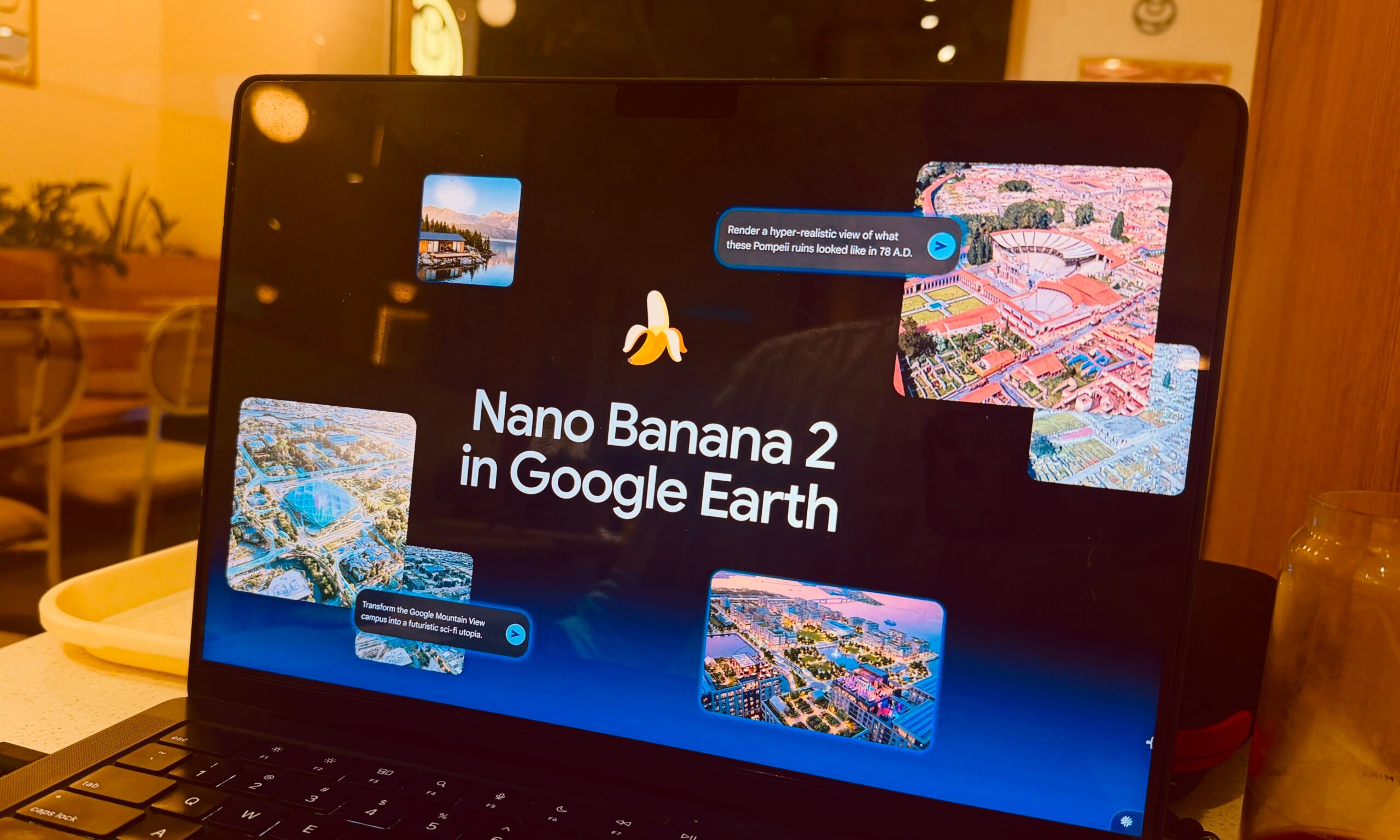
In its latest AI-fication experiment, the company targeted Google Earth. The idea was to let the audience use its Nano Banana 2 AI image generator and make images that can be placed on the map view. On paper, it's a cool idea. What would the Colosseum of Rome look like in your urban neighborhood? Yeah, fun stuff like that.

Read more