1. Home
  2. Emerging Tech
  3. Photo Galleries
  4. Legacy Archives

Singapore’s solar-powered supertrees

Add as a preferred source on Google

They might look like something out of a futuristic sci-fi movie, but believe it or not, these crazy structures actually exist, and have been standing tall in Singapore for well over a year now. 

Supertree Grove is part of Singapore’s Gardens By the Bay – a massive tract of reclaimed land that the government has transformed into a giant garden. It’s part of a larger effort to eventually turn Singapore from a “garden city” to a “city in a garden;”  with the goal to raise its residents’ quality of life by enhancing the city’s greenery.

The Supertrees are a stunning example of green architecture, and are much more than just gigantic tree-shaped edifices. In addition to serving as vertical gardens, they’re also designed to mimic the ecological functions of real trees. Each structure is outfitted with an array of photovoltaic cells that collect and store solar energy throughout the day – power that’s used to illuminate the garden when the sun goes down each night. Thanks to their unique shape, the trees also serve as rainwater collectors, and help funnel water to fountain displays and irrigation systems.

And of course, the bigger ones even have space for people. You can get an aerial view of the gardens from a skybridge attached to two of the larger trees, and can even grab a bite to eat in the big 160-foot one.

Find out more at GardensByTheBay 

Images via Wikimedia Commons.

Drew Prindle
Former Senior Editor, Features
Drew Prindle is an award-winning writer, editor, and storyteller who currently serves as Senior Features Editor for Digital…
Google just canceled its AI Studio mobile app, and it’s not all bad news
Logo, Symbol, Disk

Google AI Studio was on track to make its way to Android and iPhone, giving developers and AI enthusiasts a dedicated place to build prompts and experiment with Google's latest models from their phones.

That's no longer happening. In a post shared by the official Google AI Studio account on X, Google confirmed that it's canceling the standalone AI Studio mobile app before launch. The announcement comes despite the company saying nearly 800,000 people had already pre-ordered the app across iOS and Android.

Read more
Google Earth’s AI misadventure lasted only a day. It was a tale of dangerous ignorance.
Nuclear reactors, tanks, and historical destruction on a life-like satellite map? Yeah, that's bad.
Nano Banana AI image generator representation.

Technology behemoths are clearly not reading the room, or they are just moving faster than they should when it comes to AI deployment. Google has already stuffed its Gemini AI in every corner of its software stack, from Android to daily productivity tools like Gmail that are used by hundreds of millions of users every day. AI is everywhere. Not all of it is bad, mind you. But in a few places, it just feels forced.

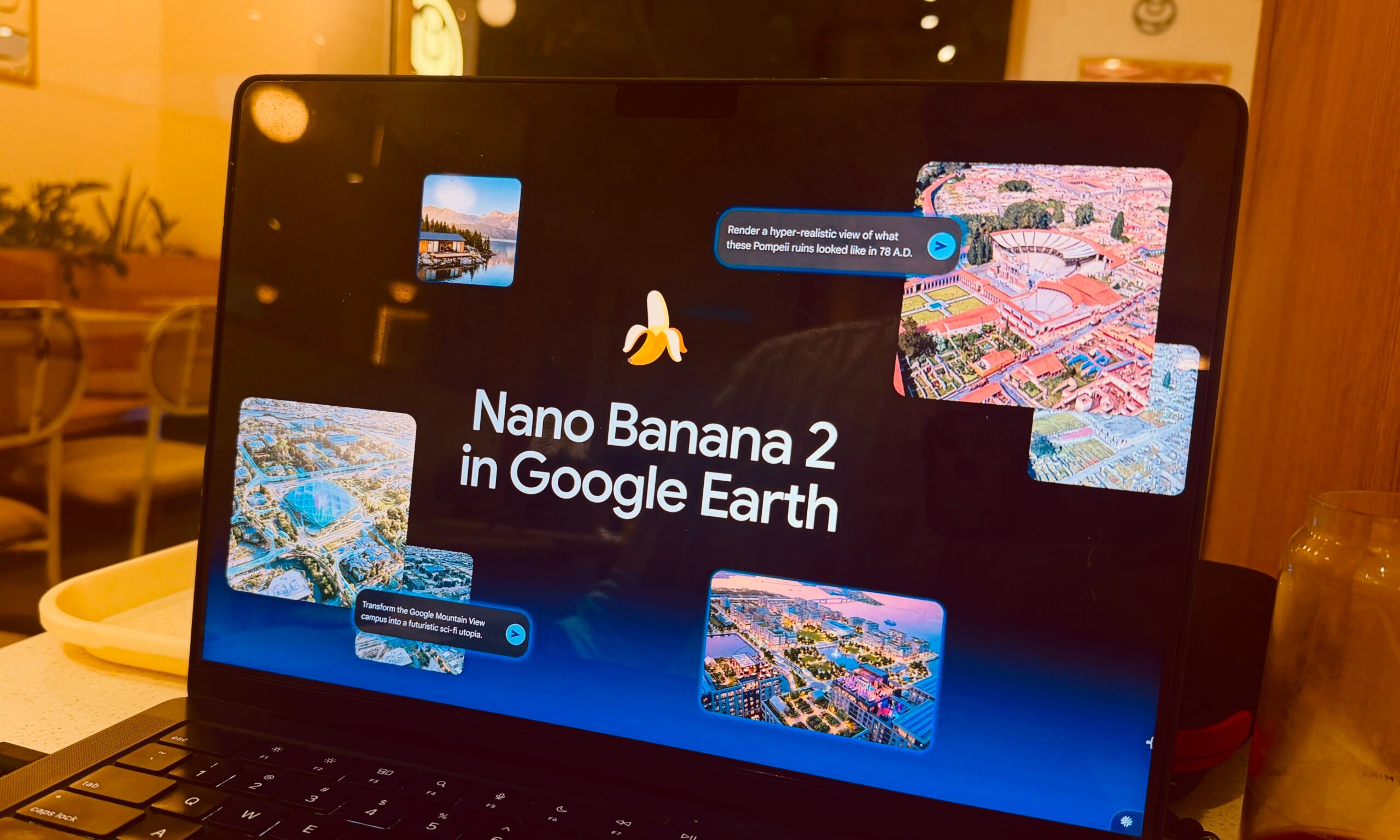
In its latest AI-fication experiment, the company targeted Google Earth. The idea was to let the audience use its Nano Banana 2 AI image generator and make images that can be placed on the map view. On paper, it's a cool idea. What would the Colosseum of Rome look like in your urban neighborhood? Yeah, fun stuff like that.

Read more
Google’s new AI gives robots better balance, smarter hands, and teamwork capabilities
Google just made robots a lot less clumsy and a lot more helpful.
Gemini robotics 2.0

Google DeepMind just brought sci-fi robots closer to reality, and it is very exciting. Building on its original Gemini Robotics model, the company has introduced Gemini Robotics 2, an AI system designed to help robots think, move, and even work together. Unlike most robots today, which rely on pre-programmed routines or someone controlling them remotely, this new system lets robots figure things out on their own when situations get unpredictable.

Can robots finally handle whole-body tasks?

Read more