  1. Home
  2. Mobile
  3. Android
  4. Emerging Tech
  5. Legacy Archives

California driver ticketed for wearing Google Glass found not guilty

Add as a preferred source on Google

Cited for wearing Google Glass at a traffic stop during October 2013, 44-year-old Cecilia Abadie has successfully beaten the ticket and all charges have been dismissed as of today. During the original traffic stop, a California Highway patrolman wrote Abadie a ticket for speeding 15 mph over the posted speed limit and added an additional citation for “driving with monitor visible to driver.” Abadie’s attorney argued that while she was wearing Google Glass at the time of the stop, the device was not activated and did not obstruct her vision in any way while operating the vehicle.

Earlier today, San Diego court commissioner John Blair found there was no evidence supporting the claim that the device was operating at the time of the traffic stop. In addition, Blair dismissed the speeding citation since an expert wasn’t available to testify if the patrolman’s speed detector was properly calibrated prior to the stop. 
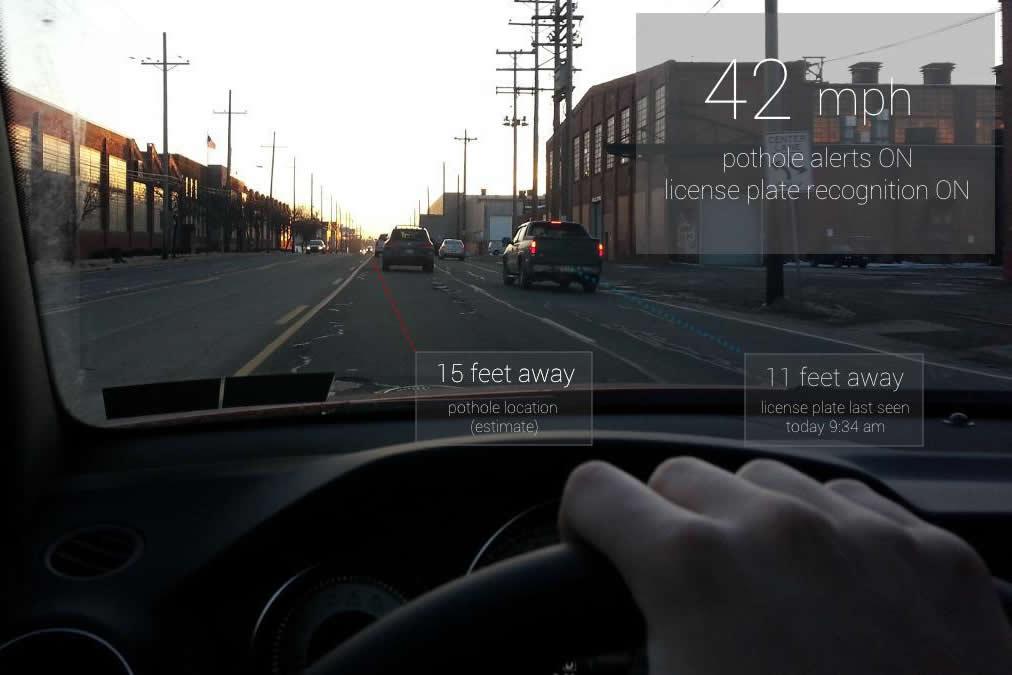
Google-Glass-in-a-car
Image used with permission by copyright holder

Speaking about the win after the court session, Abadie said “I believe we have to start experimenting with devices like this. As a hands-free device, it is safer than a cell phone.”

Recommended Videos

Interestingly, the ruling does provide a bit of a instructional loophole for Google Glass owners. As long as a driver turns off Google Glass prior to a police officer walking up to the driver’s side window of the vehicle, there’s no way to prove that Google Glass was operating during the drive. The ruling could also help encourage more development of integrated driving applications, perhaps designed by the car manufacturer to display data such as current speed or turn-by-turn directions.

That being said, California lawmakers could simply outlaw use of Google Glass while driving and make the device illegal to wear when behind the wheel. Legislators in Illinois, Delaware, New Jersey and West Virginia have already considered similar legislation that would make wearing Google Glass illegal while operating a motor vehicle.

Mike Flacy
By day, I'm the content and social media manager for High-Def Digest, Steve's Digicams and The CheckOut on Ben's Bargains…
Snapchat Planets Meaning: Order, Rankings, and How Friend Solar System Works
Snapchat Planets turns your best friends list into a solar system, and yes, your orbit says a lot
Snapchat Planets being shown on the Snapchat app on iPhone.

Snapchat+ includes several exclusive features, but few have generated as much curiosity as Snapchat Planets. Part of the app's Friend Solar System, it transforms your Best Friends list into a planetary ranking, assigning each of your top eight friends a planet based on how often you interact.

From Mercury, which represents your closest friend, to Neptune, which represents your eighth closest, the system offers a quick visual snapshot of your interactions. But what do the different planets actually mean, and how does Snapchat decide who gets which one?

Read more
How to use WhatsApp Web
We'll show you how to use WhatsApp on your desktop or laptop
WhatsApp Web

As one of the most popular messaging services, you’ve already heard of WhatsApp. From its humble beginnings in 2009—two years before Apple introduced iMessage—to its acquisition by Facebook (now Meta) in 2014, WhatsApp has become the dominant messaging platform around the globe.

In recent years, it's grown even more potent with new features like video messages, self-destructing voice messages, the ability to edit sent messages, and more. We even finally got an WhatsApp iPad app in May 2025.

Read more
What is WhatsApp? How to use the app, tips, tricks, and more
From setting it up to mastering hidden features, here is your complete guide to WhatsApp.
WhatsApp app store listing open on iPhone

There's no shortage of messaging apps out there. The past decade has given us more options than we know what to do with, largely because smartphones demanded something better than plain old SMS.

Both the App Store and the Play Store are packed with apps that promise to revolutionize the way we communicate. Most of them didn't make it. The truth is, a messaging app is only as good as the number of people using it, and most apps never cross that threshold.

Read more