  1. Home
  2. Emerging Tech
  3. News

ChatGPT’s makeover to bring back charm, chat, and a little chaos

Say goodbye to robotic replies: OpenAI plans to reintroduce warm, customizable personalities in ChatGPT. Also, for verified adults, unlock a more "grown-up mode".

Add as a preferred source on Google
ChatGPT to become more friendly and introduce an adult mode
Varun Mirchandani / Digital Trends

What’s happened? OpenAI is preparing to restore a more expressive, “friendly” personality layer to ChatGPT after user feedback suggested that recent versions, like ChatGPT 5, have felt cold and overly safe. Alongside that, the company plans to roll out a verified adult mode in December, which will permit erotically themed conversations for users who meet age requirements.

  • Altman says new internal tools allow stronger mental health safeguards, clearing the way to safely relax restrictions in most cases.
  • The adult mode will require user verification and won’t be open to everyone.
  • The update reportedly includes customizable personality settings, letting users choose how warm, formal, or casual the AI sounds.
  • This comes after critics argued that GPT-4o was too “charming”, but ChatGPT 5 lost its personality entirely.

We made ChatGPT pretty restrictive to make sure we were being careful with mental health issues. We realize this made it less useful/enjoyable to many users who had no mental health problems, but given the seriousness of the issue we wanted to get this right.

Now that we have…

— Sam Altman (@sama) October 14, 2025

Why this is important: Chatbots like ChatGPT are no longer just tools. In fact, for many, they act as companions. The personality of the AI shapes how users relate, trust, and feel when using it. Bringing back warmth isn’t just nostalgia; it’s about restoring emotional connection. Additionally, allowing erotically themed content also acknowledges that adult users expect more nuanced and mature conversational possibilities. That said, how OpenAI implements age verification will set a precedent for future AI systems that distinguish between minors and adults. If the mechanics are sloppy or opaque, users may be forced to hand over sensitive IDs, biometric data, or face scans, all to “prove” their age. And that raises obvious risks: identity theft, data leaks, or surveillance misuse.
Why should I care? This update is about more than giving ChatGPT a personality makeover, but also about how much control users will have over their AI experience versus how much they’ll have to give up to access it. As such, a friendlier, more expressive chatbot might sound great to some. However, the price of entry, which is handing over personal data for verification, could make some users think twice.

  • If you’ve felt ChatGPT lose its warmth, the personality revival could make conversations feel more natural again.
  • Adult creators and roleplayers may gain access to richer expressive modes, where romantic, sensual, or mature storytelling can happen (within limits).
  • The verification bar, however, might exclude or discourage users unwilling or unable to share personal identification.
Recommended Videos

Okay, so what’s next? For now, users can expect a phased rollout: first with personality presets and customization tools, then adult-mode access for verified users by December. OpenAI will likely monitor usage closely, adjusting safety policies based on real-world feedback. And if this works out, we might see competing AI platforms follow suit with their own “moods” or “grown-up modes”.

Varun Mirchandani
Varun is an experienced technology journalist and editor with over eight years in consumer tech media. His work spans…
Robots can now ‘see’ touch thanks to a new color-changing tactile sensor
Researchers have developed a color-changing tactile sensor that turns pressure into visible information.
Robot Touch Human Finger

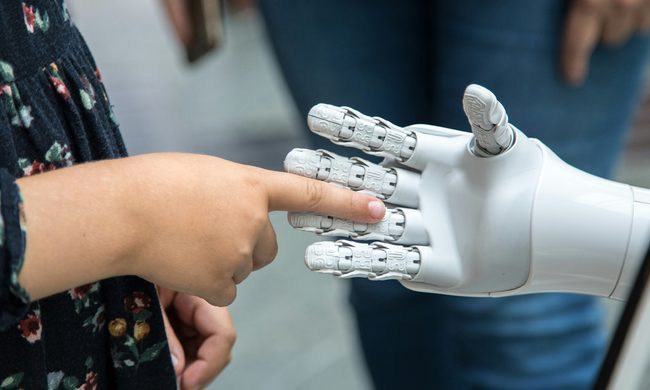
Most robots are pretty good at seeing, but touching? That's been a much tougher problem. While humans instinctively know how hard they're gripping a coffee mug or pressing a button, robots have traditionally relied on complex arrays of tiny sensors to estimate the same thing. Now, researchers at Queen Mary University of London believe they've found a much simpler solution: make touch visible.

A sensor that turns touch into color

Read more
Chrome is getting better at understanding the breaks and punctations you never say out loud
Voice typing in Chrome is about to feel much more natural
Google Chrome on Android Featured

Google is quietly making voice dictation in Chrome feel a lot more natural. With the latest Chrome 151 Beta, the company is introducing a new capability that allows the browser's speech recognition engine to automatically infer punctuation based on the way people speak, eliminating the need to explicitly say commands like "comma" or "full stop."

The update may sound minor at first glance, but it addresses one of the biggest frustrations with voice typing: speaking naturally often produces text that lacks punctuation unless users consciously dictate every punctuation mark. By teaching Chrome to understand pauses, rhythm, and speech patterns, Google is taking another step toward making conversations with computers feel more human.

Read more
Horror films play music to warn about danger. These headphones use the same trick to save you from robots
Spherephones replaces factory alarms with music that tells you what is coming and from where.
spherephones-georgia-tech

The ear has always processed what is coming before the eye does. In horror movies, the music always tells you something bad is coming. Now researchers at Georgia Tech are using the same idea in real life to keep factory workers safe around robots.

They have built a wearable headset called Spherephones that converts nearby robot movement into spatial music, giving you a warning before a machine gets too close. It helps the user stay aware without breaking their attention.

Read more