  1. Home
  2. Emerging Tech
  3. Legacy Archives

There is a Locked beer fridge in Sochi that requires a Canadian passport to open

Add as a preferred source on Google

Noted by the official Molson Canadian Twitter account this week, Molson Canadian has placed a cherry red, locked fridge in Canada’s Olympic House in Sochi and packed the fridge with enough beer to satiate the burly, bearded men of the Canadian bobsled team ten times over. However, this particular fridge has a catch. It can only be unlocked by inserting a legitimate Canadian passport.  

According to the creators of the fridge, a passport is first inserted into a slot located to the left of the fridge door and a photo is taken of the passport using a trigger mechanism and modified webcam. After the passport photo is analyzed by the attached computer and verified, the door unlocks and slowly swings open.

Recommended Videos

Of course, after the door is open, anyone is welcome to a beer. Rather than adopt a vending machine design that spits out a single can of beer, the fridge is specifically designed to encourage people to seek out a Canadian friend. Prior to the Winter Olympics in Sochi, Molson Canadian placed the fridge at multiple locations around Europe and encouraged residents as well as tourists to seek out a Canadian to gain access to the beer inside the fridge. For example, the fridge was placed in public areas within Canterbury, the White Cliffs of Dover, northern France, Cassel, London, Brussels and rural Belgium. 

Regarding passport security, it’s unlikely that any passport images are actually stored within the computer built into the fridge. It’s more likely that the passport image is compared to an image of a typical Canadian passport in order to verify the authenticity, then the passport image is discarded. It’s also possible that the images are verified by a team with Molson Canadian, mostly because the fridge will have to be restocked on occasion during the Winter Olympics.

Mike Flacy
By day, I'm the content and social media manager for High-Def Digest, Steve's Digicams and The CheckOut on Ben's Bargains…
AI security cameras may soon recognize your walk before they recognize your face
A new AI gait system tracks body motion through skeletal keypoints, aiming at long-range identity checks where face scans and fingerprints fall short.
Security cam

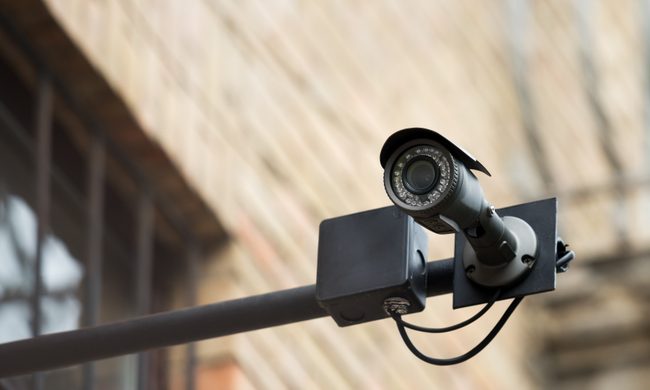
Security cameras are built to look for faces. New research suggests they may soon have another target, the small habits buried in the way someone walks.

A paper published in the International Journal of Reasoning-based Intelligent Systems describes SKDMap-Net as a gait recognition system designed to identify people from walking video, even when the camera doesn’t get a clean look at their face. Instead of relying on a close-up scan, it studies how a body moves from frame to frame.

Read more
A 20-second 3D printer breakthrough comes with exactly the kind of catch science loves
The process can create complex microstructures far faster than some laser-based methods, but full 3D control is still a work in progress.
Aluminium, Smoke Pipe

A 3D printer that can make a structure in about 20 seconds sounds like a lab claim wearing a cape. The clever bit is real. The catch arrives before anyone starts dreaming about instant replacement parts.

University of Utah researchers have demonstrated a holographic 3D printing technique that hardens tiny structures in one exposure instead of building them layer by layer. That one-shot approach could avoid the weak, leaky seams that stacked printing can leave behind. For now, though, this is a tool for microstructures, not a shortcut to printing whatever object pops into your head.

Read more
Amazon is full of copycats and shady brands. This Chrome extension lets you avoid them.
Advertisement, Poster, Text

Shopping on Amazon used to be simple. You searched for a product, compared a few familiar brands, and checked out. These days, it often feels like you're scrolling through an endless parade of names that look like someone leaned on a keyboard before hitting publish. That's exactly the problem Knockoff is trying to solve.

Created by developer Josh Pigford, the Chrome extension doesn't promise to expose counterfeit products or magically tell you what's good. Instead, it tackles something arguably more annoying: the flood of unfamiliar, mass-produced brands that dominate Amazon search results.

Read more