1. Home
  2. Cars
  3. Photo Galleries
  4. Legacy Archives

Move over Veyron; Bugatti’s 500-mph plane – the 100P – is coming to skies near you

Add as a preferred source on Google

Nobody buys a Bugatti to be practical; they buy one because it’s dangerously fast and an infallible design classic.

The design is so innovative that the founder of the company, Ettore Bugatti, not only designed some of the most beautiful cars of all time but also had a knack for airplanes.

In the 1930s, the famous designer created the 100P, an airplane designed to participate in the Deutsch de la Merthe Cup, which was a kind of aeronautical speedway race around Paris.

This might seem a little ridiculous, but 1930’s society also considered Charlie Chaplin’s mustache fashionable. So there’s that.

However, the airplane design placed two 4.9-liter, 450-horsepower straight-eight engines in the airplane, which, when running together, were good for 900 hp. Bugatti figured 900 horses would allow the plane to reach 500 mph, according to Top Gear. And, I would say, his math is pretty good.

The exterior of the plane looks like something out of the Star Fox franchise with its counter rotating props, V-shaped tail, forward pitched wings and zero-drag cooling system.

Unfortunately, World War II thwarted Bugatti’s plans for the airplane and he was forced to hide the designs from the German war machine. Sadly, the plane was never built.

That is, until now.

In 2009, California residents John Lawson and Simon Birney decided they would build an exact replica of the plane, incorporating five patents taken out for the original version. Having recently finished the project, the plane is being made ready to begin its maiden voyage on March 25th in Oxnard, California.

Even though antique high-speed aircraft are not exactly my strong point, I think I’ve seen enough planes to call this one pretty darn rad. Not only is the 100P rad, it’s also a nod to the future, which is now … try to wrap your mind around that.

(Photo credit: Bugatti Aircraft Association)

Trevor Dermody
Former Digital Trends Contributor
Volvo is rolling out Apple Music to over 2 million cars with a simple OTA update
Your Volvo may soon get Apple Music without needing CarPlay
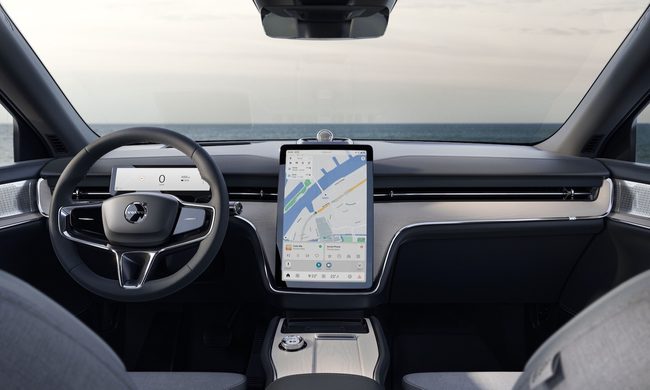
Interior view of the 2024 Volvo EX90.

The line between your smartphone and your car continues to blur. Volvo has announced that it is rolling out an over-the-air software update that brings Apple Music directly to the infotainment systems of more than 2 million vehicles worldwide. Instead of relying on Apple CarPlay or plugging in an iPhone, eligible drivers will be able to stream music natively from their car's built-in system, making Apple Music another integrated feature of Volvo's software experience.

The update is arriving for a wide range of Volvo models, including the EX90, ES90, XC90, S90, V90, XC60, S60, V60, XC40, EX40 and EC40, covering model year 2020 onwards. Availability, however, may vary depending on the vehicle.

Read more
Chery’s latest EV packs flagship tech for the price of a base Tesla, but you can’t buy it
Here's everything packed into Exeed's 2027 Exlantix ES, from its 27-sensor autonomous driving suite to its 860 km range, all starting under $31,000.
Car, Transportation, Vehicle

Chery's premium arm just dropped a sedan that makes you wonder why American EVs cost twice as much for half the tech.

Exeed's 2027 Exlantix ES ships with a driver-assist system called Falcon 700. It is built around an Nvidia Orin-Y chip and a genuinely stacked sensor suite.

Read more
A new AI model wants self-driving cars to think before they swerve
Forget guessing games, this self-driving AI actually shows its work.
Self driving car

Self-driving cars have gotten pretty good at driving. The harder problem is teaching them to drive safely in situations nobody planned for. We have heard horror stories of self-driving cars, behaving erratically in emergency situations, often times delaying first responders from reaching the scene.

A team at Seoul National University, led by professor Jun Won Choi from the Department of Electrical and Computer Engineering, thinks they have cracked part of that puzzle with a new AI model called SafeDrive. The research was recently selected as a highlight paper at CVPR 2026, a distinction that goes only to roughly 3% of all submissions.

Read more