1. Home
  2. Computing
  3. Gaming
  4. Legacy Archives

Digital Trends may earn a commission when you buy through links on our site. Why trust us?

For $3,000, you can get a Mac Pro, or Nvidia’s new dual-GPU graphics card

Add as a preferred source on Google

There’s expensive PC hardware, and then there’s this: Nvidia just announced the GeForce Titan Z graphics card, a $3,000 monster that essentially slaps together a pair of high-end graphics processing units (GPU) to create something that’s incredibly powerful, but only attainable by a lucky few, Maximum PC reports.

Nvidia CEO Jen-Hsun Huang made the announcement today at the company’s yearly GPU Technology Conference. Powered by a pair of Kepler GPUs, 12GB of RAM, and 5,760 processing cores, it will most likely require some overly elaborate cooling system to prevent it from melting your PC. According to Nvidia, “Unlike traditional dual-GPU cards, Titan Z’s twin GPUs are tuned to run at the same clock speed, and with dynamic power balancing,” which means that neither GPU creates a performance bottleneck. 

Recommended Videos

Though it’s unclear what speed the Titan Z GPUs will run at, the Titan Black, which uses the same Kepler GPU has a rated clock speed of 889Mhz. To give you an idea of what the Titan Z’s performance could be like, the $1,000 Titan Black – a beast in its own right – has half the RAM and processing cores. Think: Two Titan Black cards, functioning as one.

Instead of focusing on technologies that are on the verge of entering the mainstream, like 4K, Nvidia says the Titan Z is designed with next-generation 5K in mind, along with multi-monitor gaming.

“If you’re in desperate need of a supercomputer that you need to fit under your desk, we have just the card for you,” Huang said. Indeed, if you’re going to build a supercomputer, a Titan Z surely isn’t a bad component to start with, assuming you’ve got the cash for it.

What do you think of the Nvidia GeForce Titan Z? Is $3,000 too much to spend on a graphics card? What’s the most you would spend on one? Sound off in the comments below.

Konrad Krawczyk
Former Computing Editor
Konrad covers desktops, laptops, tablets, sports tech and subjects in between for Digital Trends. Prior to joining DT, he…
ChatGPT is coming for one of Google’s smartest Chrome features
OpenAI brings ChatGPT to Chrome to challenge Google's Gemini Side Panel
OpenAI

OpenAI is expanding ChatGPT beyond its website with the launch of a new Chrome extension that can understand the contents of the webpage you're viewing. The extension allows users to ask questions about a page, summarize articles, explain complex concepts, and even kick off longer AI-powered tasks without leaving their browser.

The move positions ChatGPT as a direct competitor to Google's Gemini in Chrome, which introduced similar context-aware browsing features earlier this year. While both tools aim to bring AI directly into web browsing, they take slightly different approaches to productivity and automation.

Read more
This open-source Mac app finds the junk files your deleted apps leave behind
Uninstally removes apps properly, leftovers and all
Uninstally macOS app UI

Uninstalling apps on macOS is usually very easy. You drag an app to the Trash, empty it, and move on. The annoying part is that many apps still leave residue behind, including support files, caches, preferences, containers, and logs. I have always found that frustrating, especially when old app data keeps sitting around long after the app itself is gone.

AppCleaner by FreeMacSoft has been the popular go-to option for this for years, and it still does the job well. But I recently came across a new open-source alternative called Uninstally by Codenta, which solves the same basic problem. It removes Mac apps along with the support files, caches, preferences, containers, logs, and other leftovers they usually leave behind.

Read more
AMD just made Ryzen laptop chips even more confusing, but here’s what’s actually new
The refreshed lineup brings more Zen 4 processors to mainstream and budget laptops.
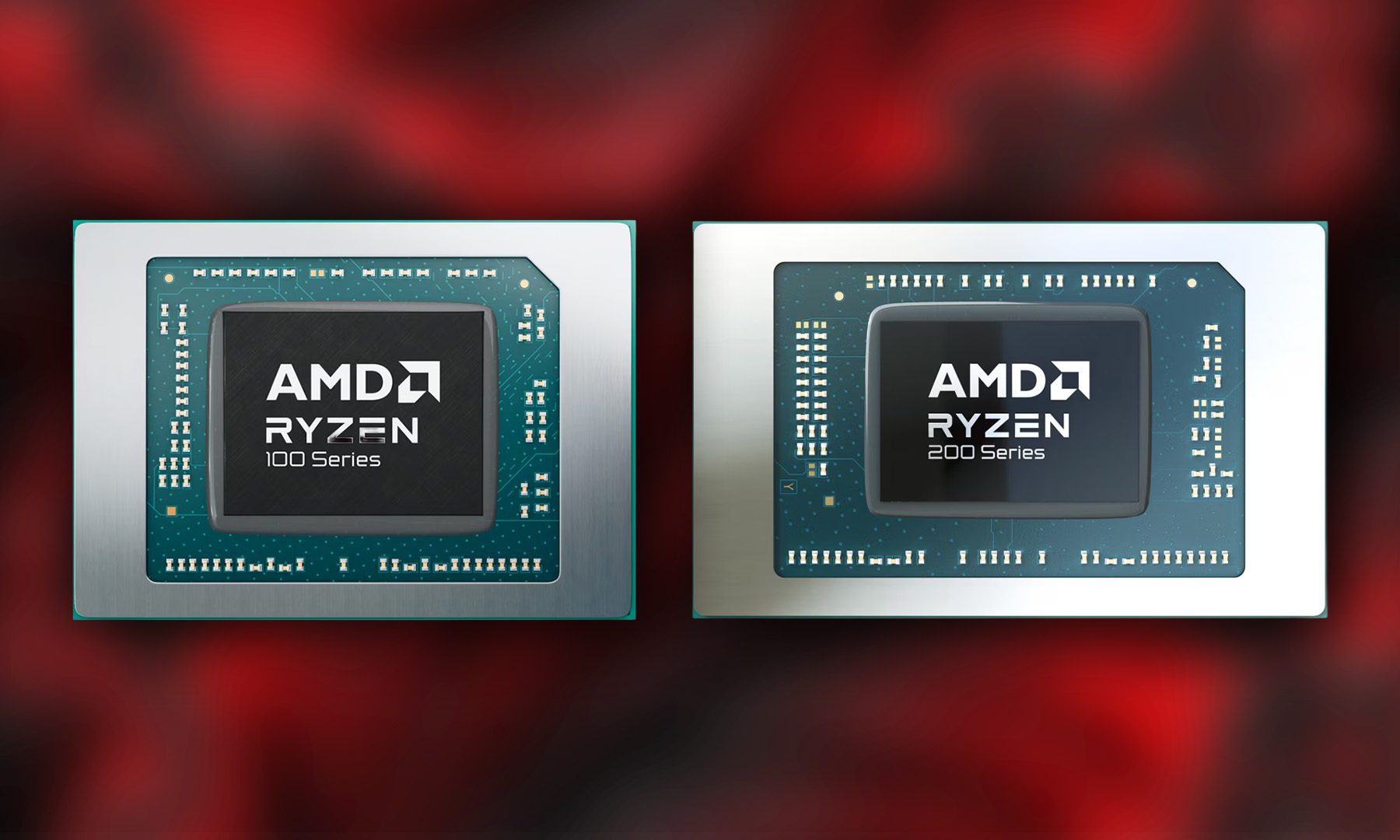
AMD Ryzen 100 and 200 series

AMD has quietly expanded its mobile processor portfolio with 11 new Ryzen laptop processors, adding fresh models under both the Ryzen 200 and Ryzen 100 families. While that sounds straightforward enough, the bigger story isn't the chips themselves -- it's AMD's increasingly confusing naming strategy. The company has introduced seven new Ryzen 200 processors alongside four new Ryzen 100 models, but despite belonging to different series, many of them are actually built on the same Hawk Point silicon featuring Zen 4 CPU cores and RDNA 3 integrated graphics.

The Ryzen 200 series gets seven new CPUs

Read more