After months of anticipation and a swath of rumors, the HTC One (M8) made its big debut — and “big” seems to be the key word. HTC declared the smartphone’s forthcoming launch the company’s biggest event yet and the device itself is pretty sizable, boasting a 5-inch LCD display, longer battery life, and up to 128GB of potential storage. Size aside, the HTC One M8 is also beautiful, with a body comprised of 90 percent metal and a color selection ranging from silver to gold. Yet, how does HTC’s new device compare to its processor? Check out the spec comparison below for a quick, side-by-side comparison of the two products.
Additionally, check out our Samsung Galaxy S5 and HTC One M8 comparison, along with our iPhone 5S and HTC One M8 comparison for a closer look at the competition.
|
HTC One 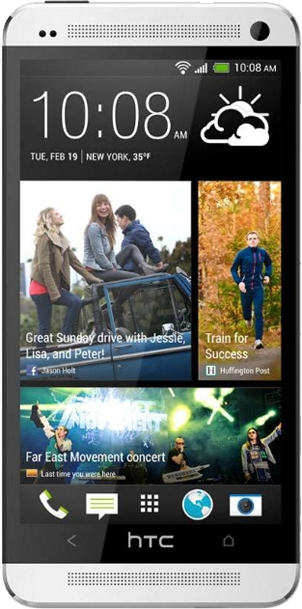 |
HTC One M8  |
|
| Size | 137.4 x 68.2 x 9.3 (mm) | 146.36 x 70.6 x 9.35 mm |
| Weight | 143g | 160g |
| Screen | 4.7-inch LCD | 5-inch LCD3 |
| Resolution | 1080×1920 pixels | 1080×1920 pixels |
| OS | Android 4.1.2 with Sense UI 5 | Android 4.4.2 with HTC Sense 6 |
| Internal Storage | 32/64GB | 16/32GB |
| Expandable Storage | None | Up to 128GB |
| SD Card Slot | No | Yes |
| Processor | Quad-core Snapdragon 600 | 2.3GHz Quad-core Snapdragon 801 |
| RAM | 2GB | 2GB |
| Connectivity | Wi-Fi, 4G LTE, HSPA+, NFC | Wi-Fi, 4G LTE, USB 2.0, HSPA+, NFC |
| Front Camera | 2.1MP, 720P HD | 4UP, 1080P HD |
| Rear Camera | 4UP, 1080P HD | 5MP, 1080P HD |
| Bluetooth | Yes, version 4.0 | Yes, version 4.0 |
| Extra features | MPU-3050 | BoomSound, BlinkFeed, dual-lens camera |
| Battery | 2,300mAh, embedded | 2,600mAh, embedded |
| Charger | Micro USB | Micro USB |
| Marketplace | Google Play Store | Google Play Store |
| Color Options | Black, red, grey | Silver, rose, gold, grey |
| Ave. Price | $200 | $200 with a two-year contract, or $32 per month on Next 12 |
| Availability | AT&T, Sprint, T-Mobile, Verizon | AT&T, Sprint, T-Mobile, Verizon |
| DT Review | 3.5 | Hands-on Impressions |
It knows what you’re doing
The HTC One M8 has a lot to offer when it comes to advanced features. Perhaps the most intuitive one adorning the device over its predecessor is Motion Launch, a host of sensors tailored to know what you’re with your smartphone in specific situations. Instead of having to fiddle with the sleep-wake button, users merely have to double-tap the screen to bring the HTC One M8 back to life. To answer a call, just bring the phone to your ear. Turn it sideways, press the volume button and — viola — camera mode activated. The original HTC One was supported by HTC Sense 5, which featured intuitive controls that let you silence your ringer or switch to speakerphone just by flipping your device over. The dynamic user interfaces of both the One and the One (M8) make for a tactile touchscreen experience.
More room, more power
A more advanced phone often needs more storage space and a more powerful battery. Along with 2GB of RAM, the One (M8) features 32GB of internal storage, which is actually less than the One’s 64 gigs of storage. However, the One (M8) features a MicroSD card slot for up to 128GB of external, extra storage on a memory card. The 2,600mAh and Snapdragon 801 processor give the One (M8) 40 percent more battery life than its predecessor, and an “extreme” power-saving mode lets you run the device for two weeks before needing to recharge it. Along with battery life, HTC also stepped up their processor game for the One (M8), running on the Quad-core Snapdragon 801, which is standard for the industry. The One had been running on the Quad-core Snapdragon 600, a subpar processor even then, so the upgrade to the Snapdragon 801 was a needed improvement.
Two cameras are better than one
The HTC One (M8) sports two cameras to satisfy your photographic needs. The first camera takes the photo and the sensor-enhanced second camera collects all the depth information to produce gorgeous, true-in-depth, in-focus images. And if a photo, after running through two cameras, still comes out blurry? Don’t worry, the UFocus effect will fix that for you. The original One had a pretty great camera to start with, so the inclusion of a second, detail-enhancing lens just makes the photographing experience even better.
Conclusion
The HTC One (M8) is a sequel that’s better in every way than the original. It’s got a bigger screen, more external storage space, longer battery life, a dual-camera feature, new gesture controls, and you can get it in gold.
What do you think of the new HTC One (M8)? How does it compare to its predecessor? Sound off in the comments below.