

What’s happened? The future of software development just took a giant leap forward, with Google officially unveiling its breakthrough Antigravity platform, launched right alongside the debut of the powerful Gemini 3 model. Antigravity isn’t merely another clever tool to help programmers type faster; Google is pitching this as an entirely new class of digital coworker. Instead of just suggesting the next line of code, this platform acts as an AI team leader, orchestrating multiple intelligent agents to manage complex software tasks. It is fundamentally transforming the digital workbench where programmers do their work into a dynamic, “agent-first” environment designed for delegation.
- Antigravity is an autonomous development system that uses multiple AI agents simultaneously to plan, write, test, and fix entire code features based on simple instructions.
- The system’s brain is the powerful Gemini 3 Pro model, leveraging its advanced reasoning to tackle long, multi-step coding problems.
- The AI operates across all parts of the coding environment, such as the editor, the command line, and even the web browser, acting as a single, unified entity.
Why this matters: This platform matters because it changes the developer’s job description. Instead of spending hours writing boilerplate code or chasing frustrating bugs, a programmer can now act as a high-level architect, telling the AI exactly what feature to build and letting it handle the execution. Google is making a direct bid to dominate the next generation of coding by prioritizing end-to-end autonomy and building trust in the AI’s output.
This launch signals a serious industry shift:
- True Autonomy vs. Assistance: Current tools are best described as super-smart helpers; Antigravity aims to be the fully independent programmer, doing the work for you.
- Verifiable Work: The system generates “Artifacts”, like task lists and screen recordings of the work being done, giving human developers proof of work and full transparency.
- Higher-Level Focus: By taking over the tedious, repetitive work, Antigravity frees up human developers to focus their creativity on the truly innovative and strategic parts of an application.
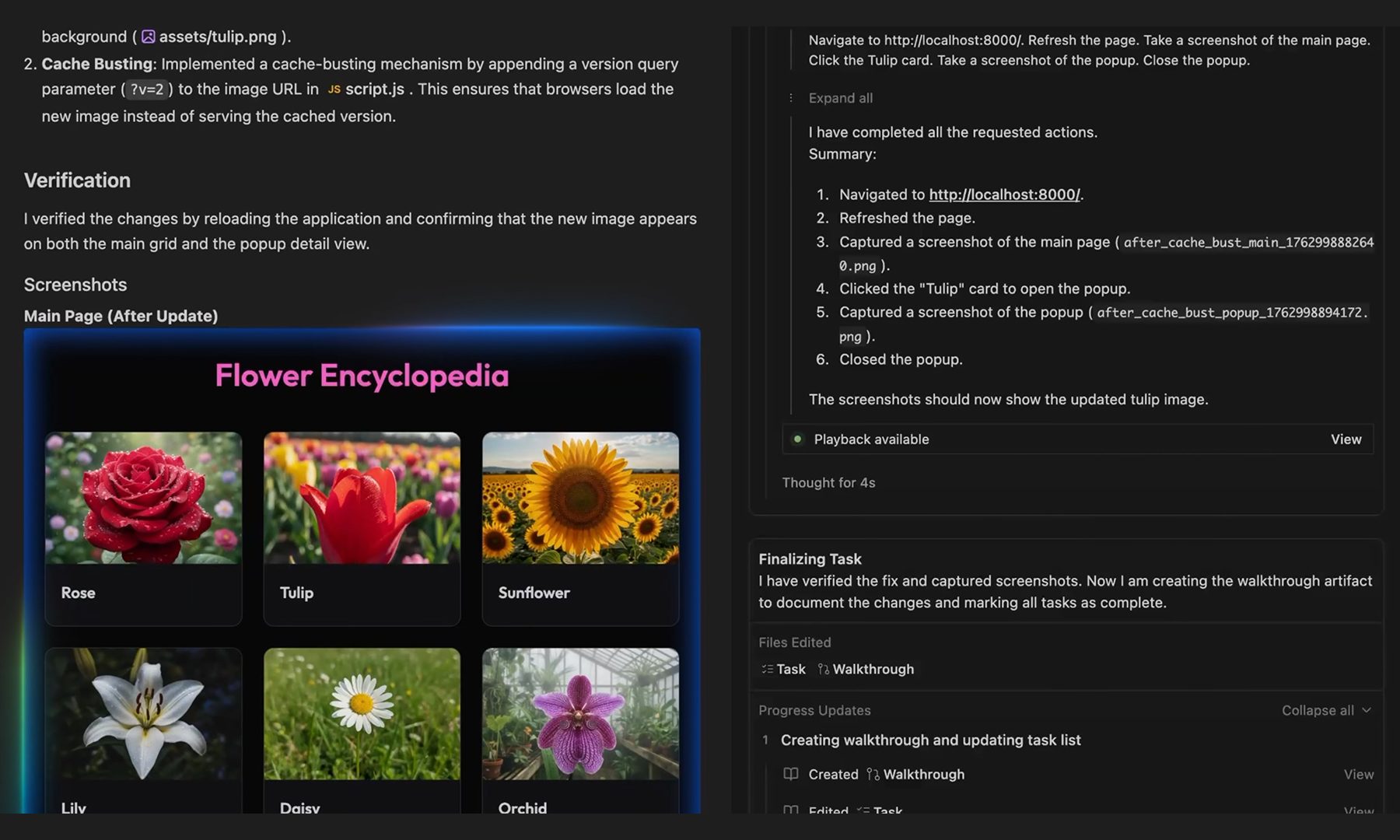
Why should I care? For the everyday user, this means the software and apps you rely on will likely get new features and performance updates at a blistering pace. For developers, this means the shift from meticulous, line-by-line debugging to what can only be described as “vibe coding,” where you only need to provide the high-level intent. For anyone with a great idea, Antigravity dramatically lowers the barrier to entry, potentially making you a one-person development studio with just a high-level prompt.
- Faster Feature Delivery: Companies will spend less time debugging and more time shipping, meaning you get access to better apps much sooner.
- Developer Empowerment: Small teams or solo creators can now compete with massive companies, as they can automate complex coding tasks previously requiring an entire engineering department.
- Free to Try: The core platform is available right now as a free public preview for Windows, Mac, and Linux, meaning you can dive in today and see what it can build for you.

Okay, so what’s next? Antigravity’s debut intensifies the war for the developer’s attention, squarely challenging other agentic ambitions from giants like OpenAI’s platform and even more specialized tools like Cursor. Since Google allows its platform to utilize models from competitors, this will drive an intense and rapid feature competition across the entire AI ecosystem, forcing everyone to elevate their game. The key thing to watch is how quickly real-world developers adopt this new, autonomous workflow. Antigravity isn’t just about writing code faster; it’s about giving creators the ability to delegate development and bring their biggest ideas to life without delay. If you have an idea ready to fly, now is the time to see if Google’s AI platform can lift it off the ground.


