  1. Home
  2. Emerging Tech
  3. News

The hot AI video generator that got everyone talking may now take a while to arrive

Hollywood studios reportedly raised concerns about how the model was trained

Add as a preferred source on Google
Seedance 2.0 Bytedance Official
ByteDance

One of the most talked-about AI video generators in recent weeks may not arrive as quickly as expected. According to a new report by The Information, TikTok parent ByteDance has reportedly suspended the global rollout of its Seedance 2.0 video-generation model after running into copyright disputes with major Hollywood studios and streaming platforms.

Seedance 2.0, which debuted earlier this year, quickly went viral online for its ability to generate highly realistic video clips from simple prompts. The model can create short videos from text or images, making it one of the latest entrants in the fast-growing text-to-video AI race alongside tools like OpenAI’s Sora and Google Veo.

Why is ByteDance delaying the launch?

The delay appears to be tied to growing legal pressure from the entertainment industry. According to reports, several Hollywood studios and streaming companies, including Disney, Netflix, and Paramount, raised concerns that the model may have been trained on copyrighted film and TV content without permission. Some AI-generated clips circulating online reportedly featured recognizable characters or actors from popular franchises, triggering legal warnings.

I hate to say it. It’s likely over for us. https://t.co/248PmWnEgr

— Rhett Reese (@RhettReese) February 11, 2026

Disney has reportedly sent a cease-and-desist letter to ByteDance, alleging that copyrighted works were used in the model’s training data and that some outputs reproduced protected intellectual property. Faced with these concerns, ByteDance has reportedly paused the planned global rollout, which had been expected around mid-March, while engineers work on safeguards to prevent unauthorized use of copyrighted material.

Why did Seedance 2.0 attract so much attention?

Seedance 2.0 quickly drew attention after its debut thanks to its ability to generate short cinematic videos with realistic motion, camera movement, and characters. Viral clips featuring scenes with recognizable actors and characters fueled both excitement and concern across the creative industry.

Ninja Turtles vs Power Rangers | Seedance 2.0 AI video pic.twitter.com/GAZzsjfGMF

— Ben Geskin (@BenGeskin) February 18, 2026

The situation also reflects a growing tension in the AI space, where powerful generative tools are advancing rapidly while creators and studios question how training data is sourced. As a result, legal challenges may increasingly shape how and when these AI models reach the public.

Varun Mirchandani
Varun is an experienced technology journalist and editor with over eight years in consumer tech media. His work spans…
Google’s new AI gives robots better balance, smarter hands, and teamwork capabilities
Google just made robots a lot less clumsy and a lot more helpful.
Gemini robotics 2.0

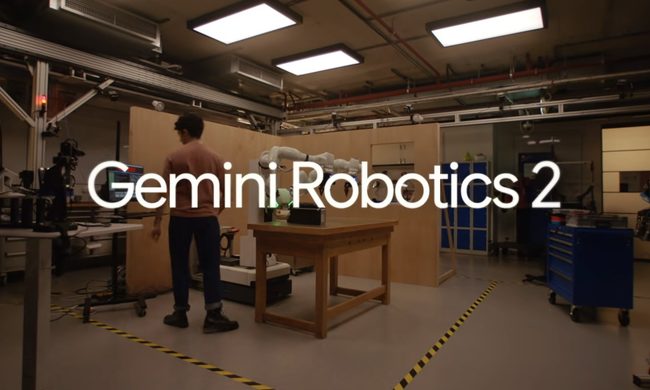
Google DeepMind just brought sci-fi robots closer to reality, and it is very exciting. Building on its original Gemini Robotics model, the company has introduced Gemini Robotics 2, an AI system designed to help robots think, move, and even work together. Unlike most robots today, which rely on pre-programmed routines or someone controlling them remotely, this new system lets robots figure things out on their own when situations get unpredictable.

Can robots finally handle whole-body tasks?

Read more
Remember Samsung’s Ballie home robot? It may finally be inching closer to reality
Leaked app wireframes give the strongest hint yet that Samsung's Ballie home robot, first shown at CES 2020, might still be headed toward an actual release.
Samsung Ballie robot in a room next to a dog feeder.

Samsung's rolling home robot has been the industry's longest-running "will it ever actually ship" joke, and I'll admit I'd mostly given up on it. Now, there's finally a glimmer of hope.

Samsung first unveiled Ballie as a concept at CES 2020. Then, it showed it as a significantly upgraded version four years later. However, the company never confirmed a release date or committed to releasing it at all. 

Read more
Polar is yet another AI browser, but it goes beyond just automating the mundane web chores
Polar wants to turn your browser into an AI-powered productivity tool
Polar AI browser

The AI browser race is entering a new phase. After spending much of 2025 trying to reinvent web search with built-in chatbots, startups are increasingly shifting their attention toward browser agents that can automate repetitive work instead of simply answering questions. The latest company to embrace that transition is Polar, a startup founded by former Perplexity engineer Kevin Zhang, which has raised $5.7 million in seed funding led by Madrona.

Unlike the first generation of AI browsers that targeted everyday consumers, Polar is designed specifically for knowledge workers. Its premise is straightforward: instead of replacing Google Search, the browser aims to eliminate repetitive tasks that professionals perform across dozens of browser tabs every day.

Read more