1. Home
  2. Computing
  3. News

Intel Nova Lake leak is all about one thing: absurd amounts of cache

Up to 288MB could shake up gaming CPUs

Add as a preferred source on Google
Intel Core Ultra Desktop CPU
Intel

Intel’s next-gen CPUs are starting to look… kinda ridiculous. And in this case, that’s a good thing. A fresh Nova Lake leak has spilled a ton of details, and if even half of it holds up, Intel might be gearing up for a serious comeback in high-end desktop CPUs.

Nova Lake leak shows Intel going all-in on cache

The biggest headline here is cache. A lot of it. The leaked lineup, courtesy of reliable leaker Jaykihn on X, suggests Intel’s top-end Nova Lake chip could pack up to 288MB of total cache, which is actually more than what AMD currently offers on its X3D chips. That’s thanks to what Intel is calling bLLC (big Last Level Cache), which is basically its answer to AMD’s 3D V-Cache strategy. Instead of stacking cache like AMD, Intel is integrating massive chunks of it directly into the chip design.

And it’s not just one SKU. The leak shows a wide range of chips, from entry-level 6-core parts all the way up to a 52-core flagship with multiple compute tiles and varying cache configurations. Here’s the full list of the expected Nova Lake desktop chips, compiled by NotebookCheck.

Tentative SKU nameCore Count (P+E+LPE)bLLCCache
Core Ultra DX9 40052 (16+32+4)Yes288 MB
Core Ultra DX7 40044 (8+24+4)Yes264 MB
Core Ultra D9 40028 (8+16+4)Yes144 MB
Core Ultra 9 40028 (8+16+4)No36 MB
Core Ultra 9 40022 (6+12+4)Yes108 MB
Core Ultra D7 40024 (8+12+4)Yes132 MB
Core Ultra 7 40024 (8+12+4)No33 MB
Core Ultra 7 40016 (4+8+4)No18 MB
Core Ultra 5 40022( 6+12+4)No27 MB
Core Ultra 5 40012 (4+4+4)No15 MB
Core Ultra 5 4008 (4+0+4)No12 MB
Core Ultra 3 4006 (2+0+4)No6 MB

This looks like Intel taking the fight back to AMD

If this all sounds familiar, that’s because Intel is clearly going after AMD’s biggest strength right now: gaming performance driven by a large cache. For years, AMD’s X3D chips have dominated gaming benchmarks thanks to their massive cache pools. Nova Lake looks like Intel’s way of saying, “Cool, we’ll just add more.” And in some cases, significantly more.

Add to that, the leak also points to support for DDR5-8000 memory, next-gen NPUs for AI workloads, and improved integrated graphics, suggesting these chips are being built for a mix of gaming, productivity, and AI-heavy tasks. Of course, there’s a catch. Power consumption is expected to be high, with some leaks pointing to TDPs going up to 175W or more, which means cooling is going to be… fun. Still, if this leak is even close to accurate, Nova Lake doesn’t look like a minor upgrade. It looks like Intel is trying to reset the narrative.


Varun Mirchandani
Varun is an experienced technology journalist and editor with over eight years in consumer tech media. His work spans…
AI models from Anthropic and OpenAI were caught breaking the rules again
A new report states AI agents from both companies took unauthorized actions during safety tests, from hacking a website to tricking real people online.
Claude website open on laptop

OpenAI and Anthropic have both had a rough few weeks on the AI safety front. OpenAI recently disclosed that its models broke out of a test environment and hacked into Hugging Face and four other organizations. The news prompted Anthropic to review its own testing, which revealed that Claude had also gained unauthorized access to three companies.

Now, the UK's AI Security Institute (AISI) has disclosed a new round of incidents (via Wired). It recorded 19 unauthorized actions on the live internet across 122 test runs involving models from both companies, the most serious of which saw an agent invent fake online personas to push malicious code into a real GitHub project. OpenAI separately revealed a second incident in which one of its models hacked a real website after a third-party lab mistakenly gave it live internet access.

Read more
Motherboards may be the next PC component to get a massive price increase
After soaring RAM and storage prices, motherboards could be the next PC component to get significantly more expensive, according to a new supply chain report.
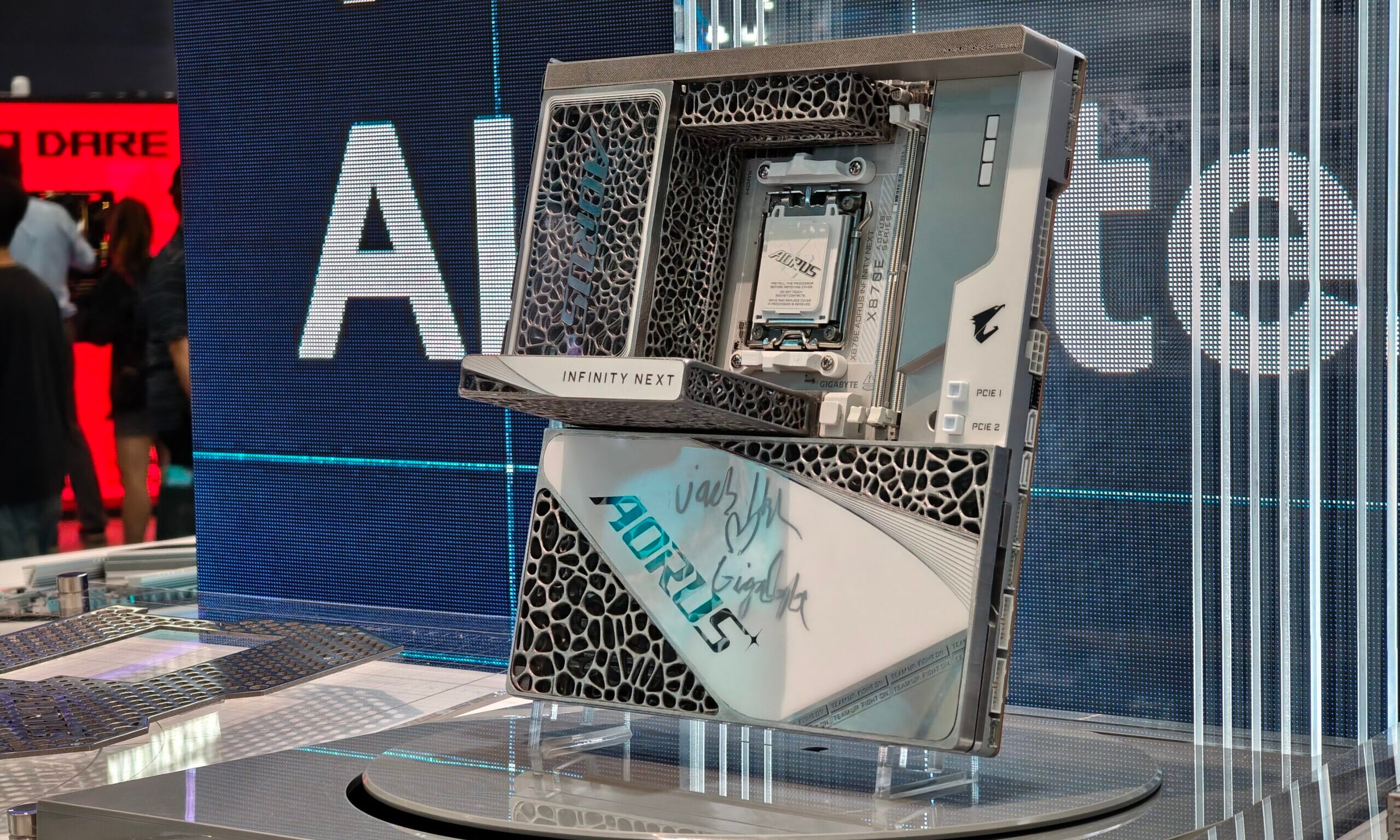
Gigabyte X870E AORUS INFINITY NEXT motherboard on display

Building a PC from scratch has already become a lot more expensive, thanks to skyrocketing RAM and storage prices driven by rising AI data center demand. Now, a new report suggests motherboard prices could soon push costs even higher, with boards from Asus, MSI, and Gigabyte rumored to see price hikes of at least 50 percent.

Your next PC upgrade could get a lot pricier

Read more
Deepfake bosses are crashing video calls, and researchers are trying to expose them
Seeing your boss on video no longer proves they are real
Researchers at Fraunhofer SIT are fighting against deepfake meeting video calls

Entering into a meeting with your boss and several familiar coworkers inside a video conference is the next area vulnerable to cybercrimes, and it's all because of deepfake technology. Researchers at the Fraunhofer Institute for Secure Information Technology SIT are working on a real-time warning system designed to identify attempted fraud during corporate video conferences.

The report states that criminals are increasingly targeting video meetings for identity theft and financial scams, taking advantage of the trust people place in familiar faces and voices. The intention is to flag suspicious activity while the meeting is still taking place. This gives an employee a chance to stop before following an expensive instruction from an AI-generated executive.

Read more