  1. Home
  2. Computing
  3. Wearables
  4. Features

Apple reportedly slashes its Vision roadmap for smart glasses, and Meta’s lead matters more than ever

Apple is betting it can enter the smart glasses market late and still win on brand and ecosystem.

Add as a preferred source on Google
A woman wearing the Apple Vision Pro headset.
Apple

A year ago, Apple analyst Ming-Chi Kuo published a Vision product roadmap featuring seven devices. Now, he has published a new one with just two products remaining. 

The change in the product roadmap, Kuo claims, has been approved by John Ternus, Apple’s incoming CEO, who officially takes over on September 1, 2026.

What did Apple cut and what survived?

According to Kuo’s updated analysis (via X), only two of the seven products have survived, and Apple has cancelled five of them. 

Recommended Videos

Of the two, one is a pair of AI smart glasses that competes directly with the Meta Ray-Ban lineup, while the other is a display-equipped pair of AR glasses that uses optical waveguides (it layers virtual content over the real world). 

The AI glasses are expected in 2027, and the AR glasses won’t arrive until 2029 (at the earliest). Everything else, including plans for a successor to the Vision Pro, along with the lighter Vision Air, is gone. 

Apple’s decision, Kuo explains, prioritizes “smart glasses with greater mass-market potential,” and I couldn’t agree more, but the timing might not be right.

What makes smart glasses a better bet than mixed reality headsets?

According to a Counterpoint Research report published in February 2026, the global smart glasses shipments grew 139% year-over-year in the second half of 2025. 

Meta, the company behind the most popular AI smart glasses in the world, is leading the market with its strong lineup (including the Meta Ray-Ban Display) and consistent rollout of AI-based features. 

It held a market share of 82% in the same period, owing to its global presence, strong collaborations with established eyewear brands, and hardware backed by intuitive software features. 

The company has single-handedly demonstrated the potential of the market, and it’s only expected to grow further in the coming years. It’s clear that Apple wants a piece of the market, but Meta’s years of head start and experience may work against the Cupertino giant. 

Is Apple running out of time in the smart glasses race?

Every month Apple spends restructuring its roadmap is a month Meta spends selling, iterating, and building the retail infrastructure that makes smart glasses feel normal. 

What’s even more concerning is that the company’s smart glasses might not ship until the end of 2027, which gives Meta at least another year and a half to come up with new products, refine its features, and solidify its position. 

Apple believes that it can enter late and still win on brand, design, and seamless iPhone integration, the same playbook that worked against the smartwatch incumbents in 2015. However, that means that the company’s first AI glasses should be either as good or better than whatever Meta is shipping at that point. 

In my opinion, the Vision Pro was more of a platform bet than a consumer product, and Ternus’ decision to cancel its successor is an acknowledgment that the strategy didn’t pay off at the pace Apple had hoped. The question isn’t whether redirecting those resources toward smart glasses is the right move; it’s whether Apple is already too late.

Shikhar Mehrotra
For more than five years, Shikhar has consistently simplified developments in the field of consumer tech and presented them…
Google Earth’s AI misadventure lasted only a day. It was a tale of dangerous ignorance.
Nuclear reactors, tanks, and historical destruction on a life-like satellite map? Yeah, that's bad.
Nano Banana AI image generator representation.

Technology behemoths are clearly not reading the room, or they are just moving faster than they should when it comes to AI deployment. Google has already stuffed its Gemini AI in every corner of its software stack, from Android to daily productivity tools like Gmail that are used by hundreds of millions of users every day. AI is everywhere. Not all of it is bad, mind you. But in a few places, it just feels forced.

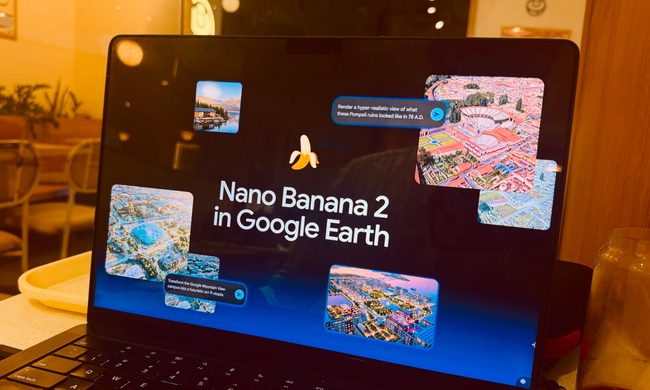
In its latest AI-fication experiment, the company targeted Google Earth. The idea was to let the audience use its Nano Banana 2 AI image generator and make images that can be placed on the map view. On paper, it's a cool idea. What would the Colosseum of Rome look like in your urban neighborhood? Yeah, fun stuff like that.

Read more
AMD is apparently gearing up to raise GPU prices right after Nvidia’s steep hike
AMD has reportedly told AIB partners about a price hike that goes into effect in. August.
AMD RX 7800

AMD is next in line to raise the asking price of its Radeon GPUs, merely days after the news of a similar hike coming for Nvidia graphics cards started making waves. As per ChannelGate on Weibo (h/t VideoCardz), AMD has informed its board partners that the price of GPU and memory bundles will go up by at least 10% in August.

Is a similar price hike coming for standalone graphics cards? I won't be surprised if that happens. The situation is so bad that AMD is planning to bring back graphics cards with 4GB of onboard memory. AMD just introduced the RX 9050 GPU, which costs $279. Notably, it's just $20 less than the RX 9060 XT that offers double the graphics memory.

Read more
Microsoft will make Windows work well with just 8GB RAM. We desperately need it
The dream of a reliable and affordable Windows laptop hinges on the next milestone at Microsoft.
Surface laptop on wooden table

The year 2026 has marked a huge course correction for Microsoft after years of frustrating users with plenty of confusing processes, unoptimized UI elements, and just the generous bloatware that can bring any Windows system to a crawl. Microsoft has finally shifted into a new phase. From fixing the right-click behavior to speeding up the Search system, the company has fixed plenty of papercuts.

The next major milestone is making Windows 11 run smoothly on Windows PCs with just 8GB of RAM. That directly means entry-level and budget laptops will at least get the basics right, even if that means sacrificing the on-device AI bells and whistles. Let's face it. The increasingly AI-first approach to computing on a Windows 11 machine is a little too taxing on the hardware at hand.

Read more