  1. Home
  2. Emerging Tech
  3. News

Online payments are dimming the charm of one of America’s top tourist attractions

One of America's last analog tourist traditions just joined the cashless economy.

Add as a preferred source on Google
Photography, Binoculars, Camera
Unsplash

We all know those heavy, coin-operated binoculars perched on every scenic overlook in America, the ones you’ll find everywhere from the Empire State Building to the Grand Canyon. Turns out, they’ll soon start accepting tap-to-pay payments. 

This is great news, as you’ll no longer need to carry a quarter anymore, and making payments with your smartphone is much more convenient. However, I’d argue that the quarter was kind of the whole point.

So why do these binoculars need a tech upgrade now?

Tower Optical, the company behind nearly 2,000 of these cast-iron binoculars across the United States and Canada, has been making them since 1933, and its owners have come up with an interesting yet sad insight.

Recommended Videos

Co-owner Adam Rice says that people still want to use the binoculars, but they’ve just stopped carrying quarters. It’s the growing popularity of contactless and digital payments that is to blame here (via WSJ). 

A new ownership group is quietly replacing the old coin slots and timers with battery-powered, tap-to-pay terminals. The only visible change is a small antenna on top of the binoculars. The first retrofitted units go live this month, including the iconic viewers on top of Rockefeller Center.

Is this actually a win for tourists, or does it kill the vibe?

Here’s my honest take. This is definitely the right business call, especially since more and more people are getting accustomed to paying for stuff using their smartphone.

However, it is a slightly sad one at the same time, since these viewers survived almost a century by staying exactly the same, without any signs of digitization. No app, no screen, just you, a coin, and a view. Tap-to-pay keeps them alive, which is good as nobody wants these things to disappear.

But it also ties them to your phone, the same device Rice says people are using these binoculars to briefly escape from. The irony is not lost on anyone who has ever fumbled for change at the top of a mountain only to realize they could have just tapped their phone the whole time.

Tower Optical’s previous owner Greg Rising explored augmented-reality overlays that never shipped before he passed away in 2024, which was also when new investors took over. Their bet is simpler: don’t reinvent the experience, just fix the payment method, while keeping everything else just as nostalgic as it’s always been.

Shikhar Mehrotra
For more than five years, Shikhar has consistently simplified developments in the field of consumer tech and presented them…
Google’s new AI gives robots better balance, smarter hands, and teamwork capabilities
Google just made robots a lot less clumsy and a lot more helpful.
Gemini robotics 2.0

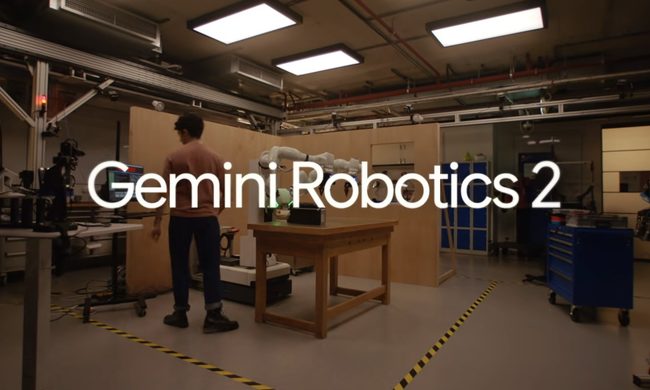
Google DeepMind just brought sci-fi robots closer to reality, and it is very exciting. Building on its original Gemini Robotics model, the company has introduced Gemini Robotics 2, an AI system designed to help robots think, move, and even work together. Unlike most robots today, which rely on pre-programmed routines or someone controlling them remotely, this new system lets robots figure things out on their own when situations get unpredictable.

Can robots finally handle whole-body tasks?

Read more
Remember Samsung’s Ballie home robot? It may finally be inching closer to reality
Leaked app wireframes give the strongest hint yet that Samsung's Ballie home robot, first shown at CES 2020, might still be headed toward an actual release.
Samsung Ballie robot in a room next to a dog feeder.

Samsung's rolling home robot has been the industry's longest-running "will it ever actually ship" joke, and I'll admit I'd mostly given up on it. Now, there's finally a glimmer of hope.

Samsung first unveiled Ballie as a concept at CES 2020. Then, it showed it as a significantly upgraded version four years later. However, the company never confirmed a release date or committed to releasing it at all. 

Read more
Polar is yet another AI browser, but it goes beyond just automating the mundane web chores
Polar wants to turn your browser into an AI-powered productivity tool
Polar AI browser

The AI browser race is entering a new phase. After spending much of 2025 trying to reinvent web search with built-in chatbots, startups are increasingly shifting their attention toward browser agents that can automate repetitive work instead of simply answering questions. The latest company to embrace that transition is Polar, a startup founded by former Perplexity engineer Kevin Zhang, which has raised $5.7 million in seed funding led by Madrona.

Unlike the first generation of AI browsers that targeted everyday consumers, Polar is designed specifically for knowledge workers. Its premise is straightforward: instead of replacing Google Search, the browser aims to eliminate repetitive tasks that professionals perform across dozens of browser tabs every day.

Read more