For most gamers, “space combat” is synonymous with titles like Wing Commander or T.I.E. Fighter. You zip around the starfield in a speedy little attack ship, blasting away other speedy attack ships while the bulky capital ship that you launched from looms in the distance.
Dreadnought flips the script. Forget those weak-ass snub fighters. This game is all about the big fellas, the capital ships. Star Destroyers. The U.S.S. Enterprise. Battlestar Galactica. They’ve all got analogues in Dreadnought‘s multi-class online play. There are familiar building blocks making up Yager’s 5v5 online multiplayer, but the game plays like something wholly unique. If you enjoyed the ship-to-ship battles in Assassin’s Creed IV: Black Flag then you’ll want to check out Dreadnought.
Story/Concept
The Captain’s Chair. There’s a fictional backstory for Dreadnought, but Yager isn’t ready to share it. The free-to-play game kicks off its public testing of the multiplayer in 2015, but there’s also a plan in place to release an episodic, story-based component. The focus for now is on giving players a taste of what the capital ship-on-capital ship combat feels like. Fiction comes later.


Multiplayer amounts to 5v5 showdowns in which teams compete for points. Features like ship customization and perks — realized in the game as unlockable officers that offer different passive bonuses — remain nebulous, as does Yager’s take on in-game purchases. They’re all part of the larger plan, as are other ships beyond the five showcased in the game’s E3 demo. But the game breaks away from the norm enough.
Gameplay
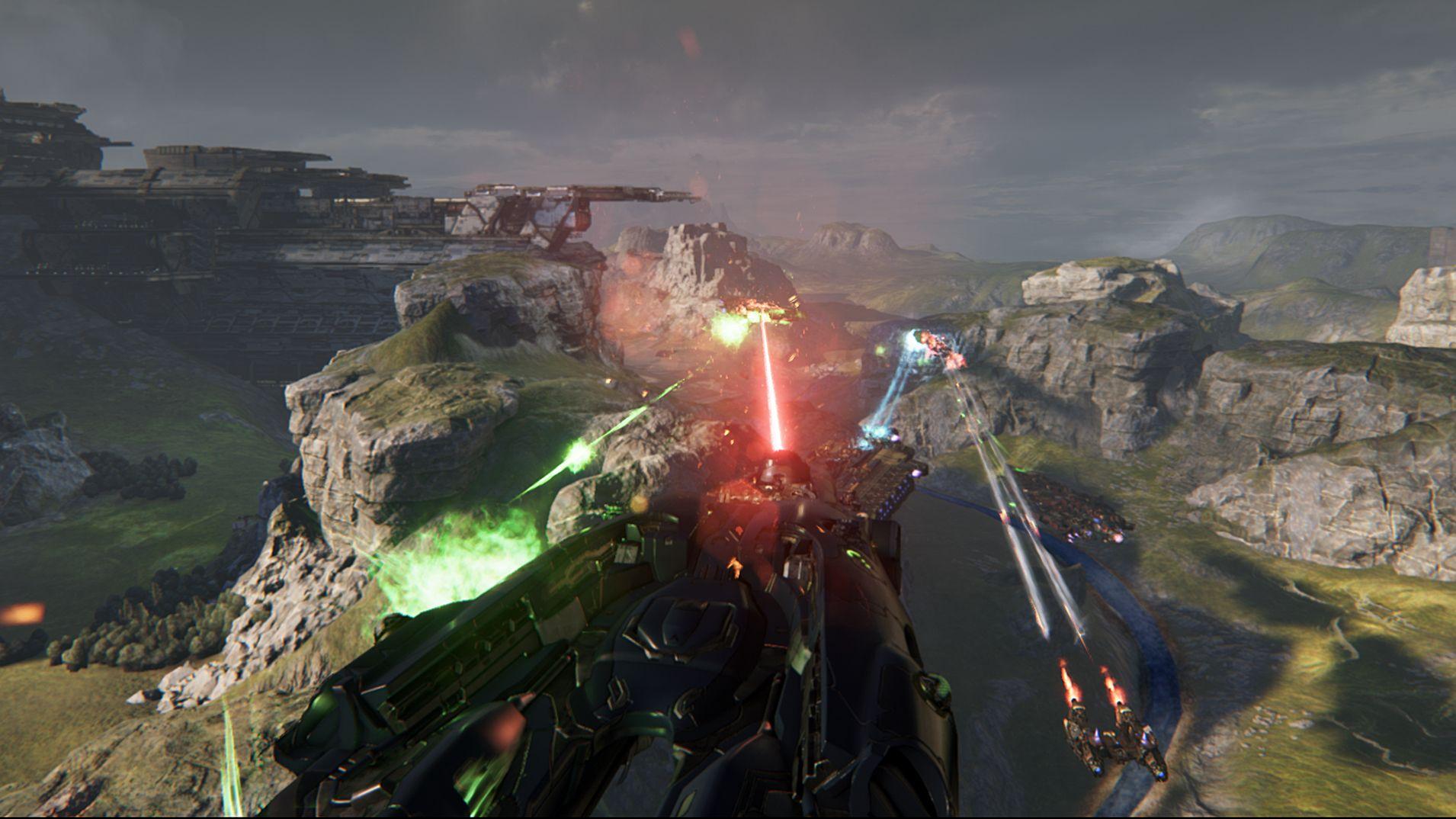
Ship-to-ship. Each of the five ships present in Yager’s E3 demo has very different performance and special abilities, all of which roughly line up with those that you’d expect to see in a more traditional class-based shooter. They’ve all got primary and secondary fire weapons, as well as four different cooldown-managed abilities assigned to hotkeys. Players also have the ability to re-route power on the fly with each ship, beefing up shields, engines, or weapons at the cost of lowered effectiveness for the two systems power diverts away from.


Let’s take a look at the five ships:
- Destroyer: The Destroyer is Dreadnought‘s well-rounded capital ship; it doesn’t excel in any one category, but its decent speed/maneuverability, shielding, and offensive/defensive capabilities make it effective in virtually any role.
- Dreadnought: The Dreadnought is a powerful tank class, with its heavy armor and weapons loadout balanced by the slowest speed and maneuverability of the five ships revealed so far.
- Corvette: The speedy, lightly armored Corvette is your scout class, able to zip behind enemy lines, both to feed intel to the rest of the team and for flanking maneuvers.
- Tactical: The pristine, white armor of the Tactical cruiser stands apart from the darker metals making up the other ship classes, and that helps players to easily identify it as the go-to medic. It’s not a very hardy fighter, but it’s got a couple of different options when it comes to repairing damaged teammates.
- Artillery: The gun-shaped Artillery cruiser is Dreadnought‘s sniper class. It fires slowly and crumbles quickly under fire, but its damaging attacks maintain pinpoint accuracy at the most extreme distances.
Take your time. There’s a temptation to treat Dreadnought like you would any other shooter, but that doesn’t work out so well in practice. Even with the relatively speedy Corvette, these are slow-moving ships that lumber along. They both soak up and dish out a lot of weapons fire, but — and here’s where the Black Flag comparison is most relevant — careful positioning is vital for a winning team.


The different ships need to work together, of course, but it’s equally important to ensure that you’ve got the ability to move — however slowly — to a safe haven once enemy fire starts to focus in your direction. The ships handle like tanks in that you’ve got to rotate the direction the hull is facing in order to turn. They can also ascend/descend, which is handy if you can, say, put a mountain range between you and your opposition (the E3 demo’s one map featured an in-atmosphere showdown).
Presentation
Big bang. Dreadnought is built using Epic’s relatively new Unreal 4 engine, and it shows. The ships themselves are intricately detailed, with all manner of moving parts giving the impression of a bustling crew keeping all systems in working order. The lone environment we played on — a mountain range of browns and greens dotted with futuristic industrial buildings — doesn’t stand out in terms of its design, but that’s to be expected in a game that’s built entirely around air superiority.
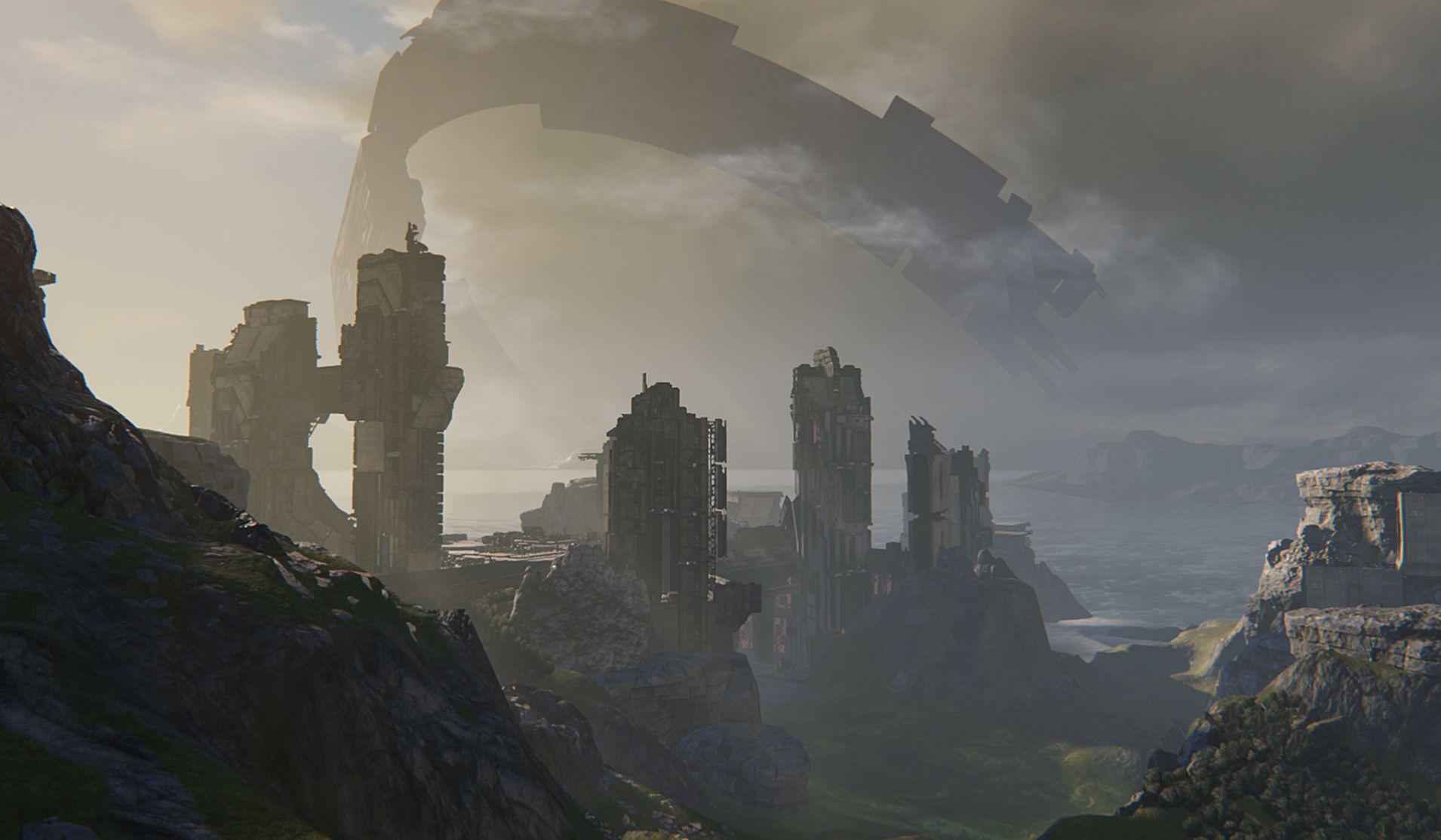
Most impressive is the play of lights and particle effects that flare up as ships let loose volleys of missiles and laser beams. The sky becomes a deadly dance of fireworks as each match hits a fever pitch. Sometimes it’s to the detriment of the play, as an unlucky spawn can drop you right in the middle of a running battle, but we’re willing to chalk that up to early code and continuing work on balance for now. Yager’s got a lot of months to go before the non-specific 2015 testing begins.
Takeaway
Dreadnought is an exciting proposition. It amounts to a fresh take on the idea of what a multiplayer shooter game can be. There’s a slower pace, and less of a reliance on reflexes than you’d typically expect from this type of game, but that’s to be expected in a game built around giant capital ships blasting planet-busting salvos of ordnance at one another. Stay tuned for more on Dreadnought in the run-up to 2015’s public testing.