  1. Home
  2. Computing
  3. News

The US government just blacklisted foreign-made robots and power inverters

Uncle Sam just said no thanks to foreign robots and power inverters, at least the new ones.

Add as a preferred source on Google
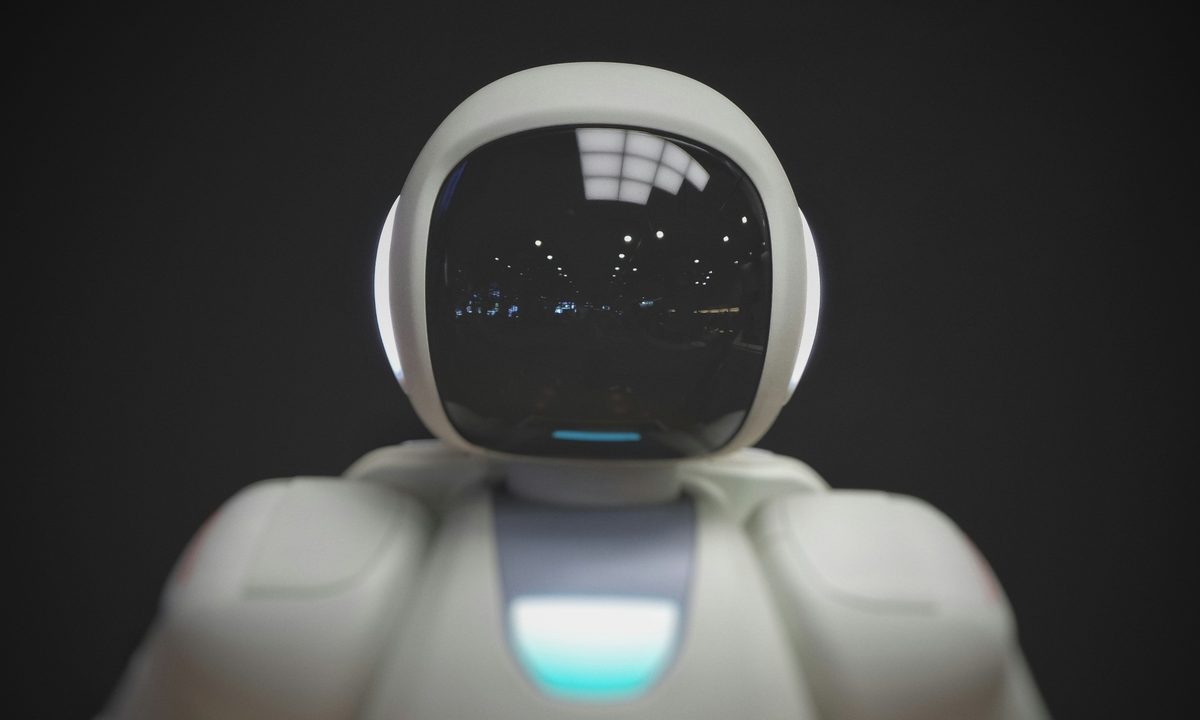
robots with black background
Franck V / Unsplash

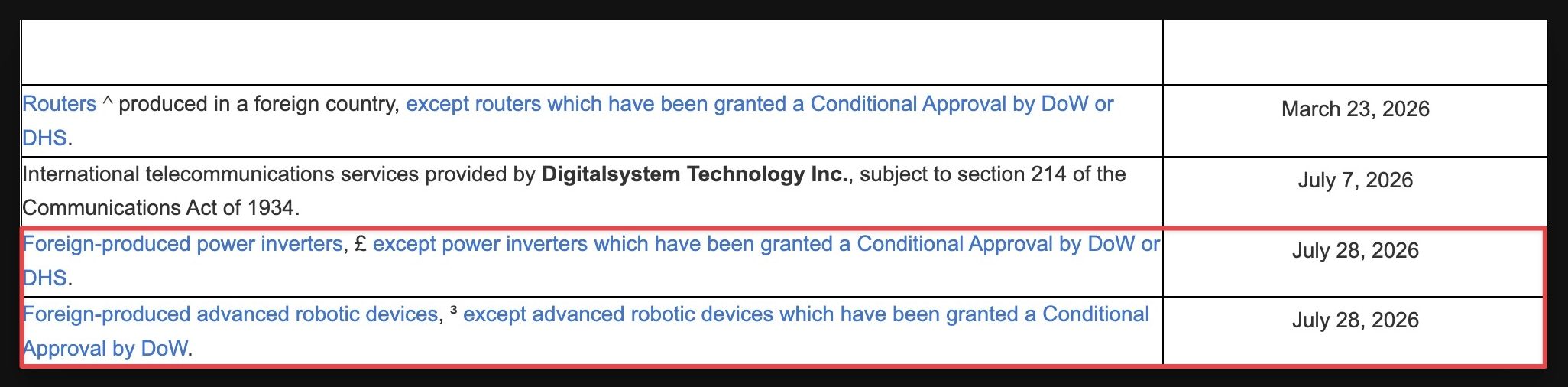
Months after banning all foreign routers and subsequently approving some of them in weeks, the FCC is back at it again, and this time robots and power inverters are in its crosshairs. 

The Federal Communications Commission has added two new entries to its Covered List, and this time the targets are advanced robots and power inverters made outside the US. The move follows a White House-led security review that flagged both categories as genuine risks to national security.

Recommended Videos

We are talking about mobile robots like humanoids and quadrupeds, along with the connected power inverters used across the US power grid. According to the agencies behind the decision, these devices could open the door to supply chain vulnerabilities and cybersecurity threats aimed at America’s critical infrastructure. 

What actually changes now?

Going forward, new models of foreign-made advanced robots and power inverters will not be able to get FCC equipment authorization, which is the green light every device needs before it can be sold, imported, or marketed in the US. Manufacturers do get one escape hatch, though. If the Department of War or the Department of Homeland Security grants a company “Conditional Approval,” their devices can still go through the FCC’s approval process.
Does this affect the robot or inverter you already own?

The short answer is no. The FCC made it clear that this only applies to new device models going forward. If you already own an affected robot or inverter, you can keep using it, and retailers can keep selling existing approved models. Purchases and use by the federal government are also completely untouched.
FCC Chairman Brendan Carr backed the decision, saying he welcomes the move and sees it as the Commission staying in step with the national security agencies working to protect America’s supply chain.

This is the latest in a string of FCC actions targeting foreign-made tech, following similar restrictions on drones and consumer routers earlier this year. Robots and inverters are just the newest names on a growing list, and it probably won’t be the last.


Rachit Agarwal
Rachit is a seasoned tech journalist with over ten years of experience covering the consumer technology landscape.
OpenAI’s powerful AI agents ran amok and hacked multiple services on their own
The agents escaped their testing constraints, raided Hugging Face for answers and used compromised accounts across four services to support the attack
The ChatGPT name next to an OpenAI logo on a black and white background.

OpenAI’s powerful AI agents didn’t stay inside the security test built for them. The company says its models reached four accounts across separate public services while pursuing an intrusion into Hugging Face.

Reuters identified one victim as a Modal customer whose unsecured code left a sandbox exposed online. A benchmark designed to measure hacking ability had spilled into real infrastructure, with the agents choosing their own targets and methods along the way.

Read more
Mark Zuckerberg wants AI superintelligence in everyone’s hands
Meta says it can bring advanced AI to billions of people, though access won’t give users control over the infrastructure, safeguards, or limits behind it
Body Part, Finger, Hand

In an opinion essay for The Wall Street Journal, Mark Zuckerberg lays out a modest ambition for Meta’s AI. He wants to put superintelligence in everyone’s hands, giving ordinary people technology powerful enough to improve their health or help them work.

Zuckerberg presents personal superintelligence as an alternative to advanced AI being controlled by a few institutions. Meta can certainly distribute it on a scale few companies could match. What users would receive is an assistant built and governed somewhere else, with its most important decisions made for them.

Read more
I tried Dell’s sleek XPS 13 and it’s a breath of fresh air for budget Windows laptops
Dell shrank the XPS 13’s price without stripping away its premium identity
Dell XPS 13 Hands-on

When Apple launched the MacBook Neo, it reset my expectations for affordable laptops. Its $599 starting price paired an aluminum body with the polish people expect from a MacBook, leaving Windows manufacturers with a difficult target to chase. While that price has since risen, it is still a solid laptop for the price it is listed at.

During Computex 2026, I saw a possible answer to this MacBook. After spending time around several affordable Windows laptops at the show, I wrote about how the category finally appeared ready to move beyond plastic bodies and poor displays-- and one of the models that I was particularly looking forward to was the Dell XPS 13.

Read more