I’ve been using Gemini Notebook ever since it launched, and for the longest time, it was my go-to app for just about everything. Whether I was researching a topic, organizing work, or studying something new, it became one of those apps I instinctively opened without thinking. When Google kept adding new features, I genuinely believed it had secured a permanent spot in my workflow.
Then, almost without realizing it, ChatGPT Pro took over. I’ve been using its Work mode for a while now, and somewhere along the way, it replaced Gemini Notebook. Of course, it wasn’t an overnight switch. I kept bouncing between the two for weeks, but I gradually found myself reaching for ChatGPT every single time instead. At some point, I realized I hadn’t opened Gemini Notebook in days. Now, I honestly don’t use it at all.
Everything I need, all in one place
Using ChatGPT Work feels surprisingly similar to using Gemini Notebook. I open Work mode and start with an idea. Most of the time, my prompt is as simple as, “Let’s talk about this X topic.” From there, ChatGPT starts building a workspace around that idea. One thing I really like is how everything stays organized. On the right, you’ll see two panels: Outputs and Sources. Sources is exactly what it sounds like — it’s where all the references used for the project live. Personally, I prefer adding my own sources because I still don’t completely trust AI to pick the right ones every time. If ChatGPT does pull in references automatically, I almost always verify them before relying on the information. That’s just how I like to work. If you’re more comfortable letting AI handle the research, though, you absolutely can. It’s flexible enough to support both approaches.
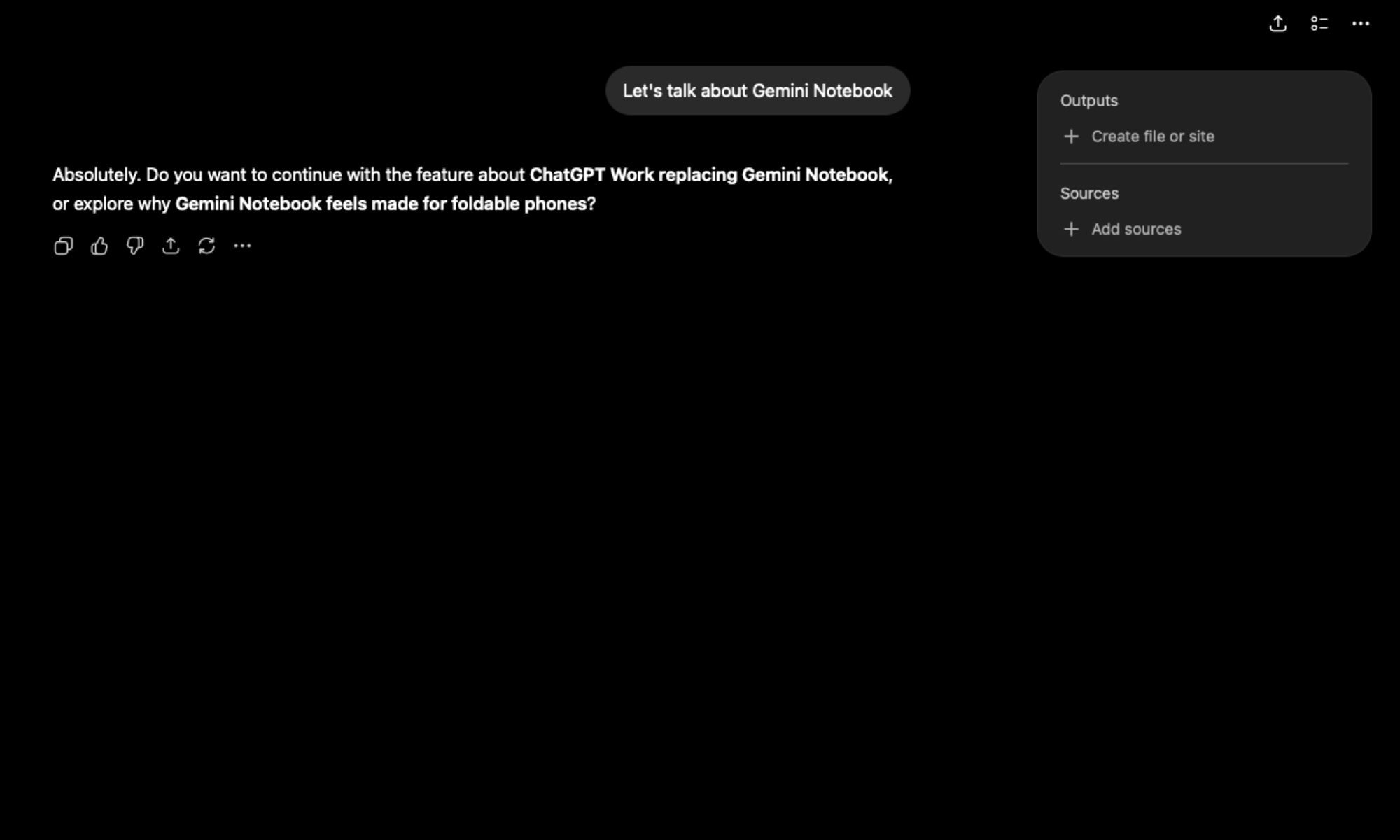
The Outputs panel is where things get really interesting. This is where ChatGPT can turn your research into something tangible, whether that’s a document, a spreadsheet, or even a website. I’ve already built several sites using Work mode, and it’s honestly one of my favorite features. If you’re curious about that workflow, I’ve covered it in more detail here. What I enjoy most, though, is that Work mode isn’t just a place to dump information. Like Gemini Notebook, it becomes a workspace where I can ask follow-up questions, challenge ideas, refine my research, and keep building on everything I’ve collected. Since all my sources remain visible alongside the conversation, it’s easy to add new references, remove outdated ones, or quickly jump back to the original material whenever I need to fact-check something.
Why I never looked back?
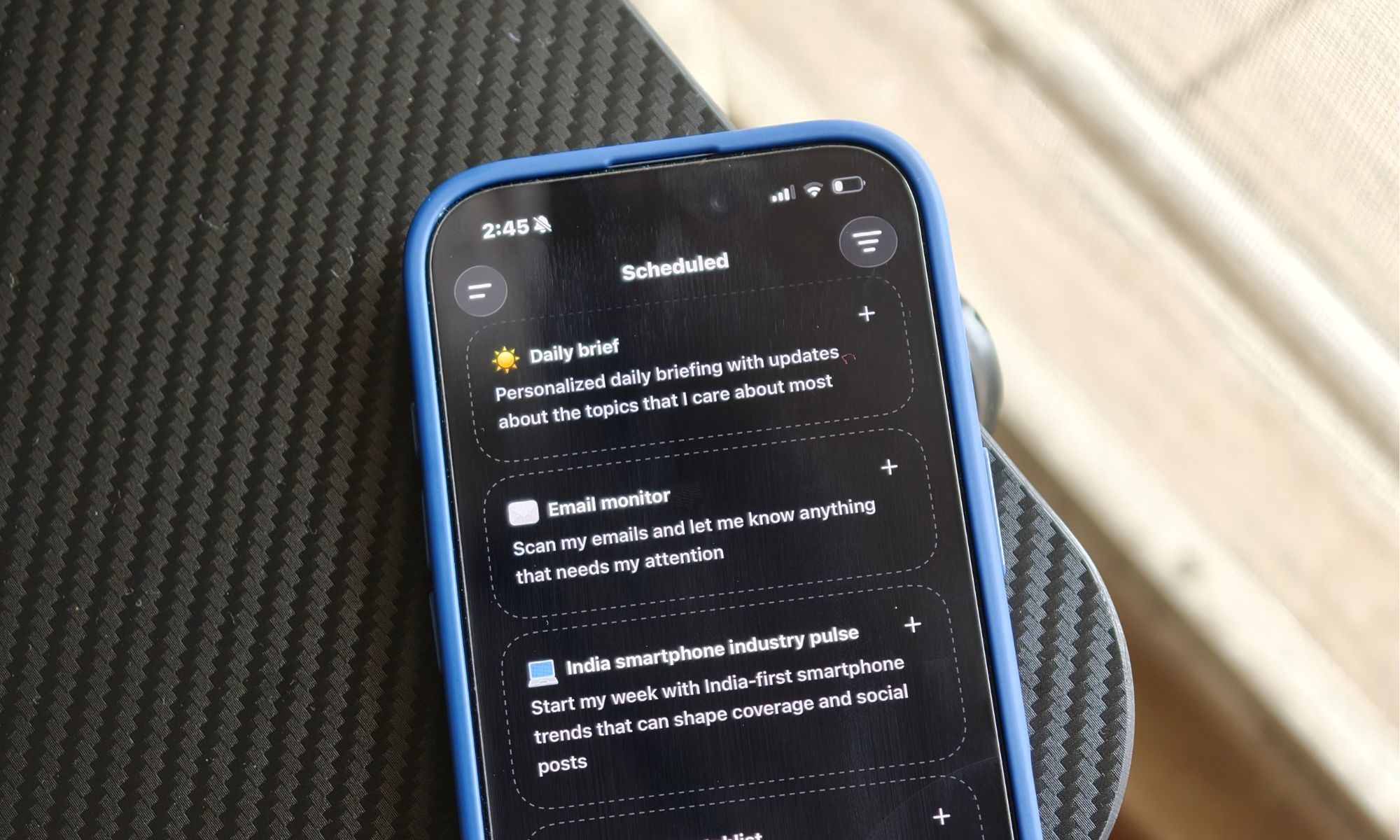
At this point, you’re probably thinking that if ChatGPT Work feels so much like Gemini Notebook, why switch at all? I had the same question when I first started using it. The answer is simple: Work mode is only one part of what I’m paying for. Once I’m done researching or studying, I don’t have to jump to another app to get things done. I can schedule reminders, ask ChatGPT to send me a message later, get a briefing of my day every morning, or automate small tasks that I’d normally have to remember myself. It’s actually like an assistant that sticks with me throughout the day.
Then there’s the new Shopping mode, which has quickly become one of my favorite additions. I recently finished setting up my work desk and needed a comfortable office chair with proper lower back support. Instead of opening half a dozen browser tabs and comparing reviews myself, I simply asked ChatGPT, “Help me find a good work chair with proper lower back support.” Within minutes, it had shortlisted several great options, compared their features, highlighted the pros and cons of each, and made the whole decision much easier. I still made the final choice, of course, but it saved me a surprising amount of time. That’s exactly the kind of AI experience I want — taking care of all the tedious research. And that’s only scratching the surface. The same subscription lets me generate images, create short videos, build websites, write documents, analyze files, and automate countless little tasks that would otherwise eat into my day. Instead of juggling a collection of different AI tools, I now have one place that handles almost everything I need.

Gemini Notebook is still an excellent research tool, and I genuinely enjoyed using it. But once ChatGPT Pro became the app I could research, create, automate, and even shop with, I gradually stopped opening Gemini Notebook altogether. That’s when I realized I was replacing an entire workflow. ChatGPT Pro just fit the way I work better from start to finish.