At any given moment there are approximately a zillion different crowdfunding campaigns happening on the Web. Take a stroll through Kickstarter or IndieGoGo and you’ll find there’s no shortage of weird, ambitious, and downright stupid projects out there – far too many for any reasonable person to keep up with. But here at DT we are not reasonable people. We spend an inordinate amount of time poring through crowdfunding sites and product blogs in search of the next Oculus Rift or Pebble Watch, so we’re here to bring you a quick roundup of the best projects that are currently up and running.
Synek — Refillable craft beer dispenser
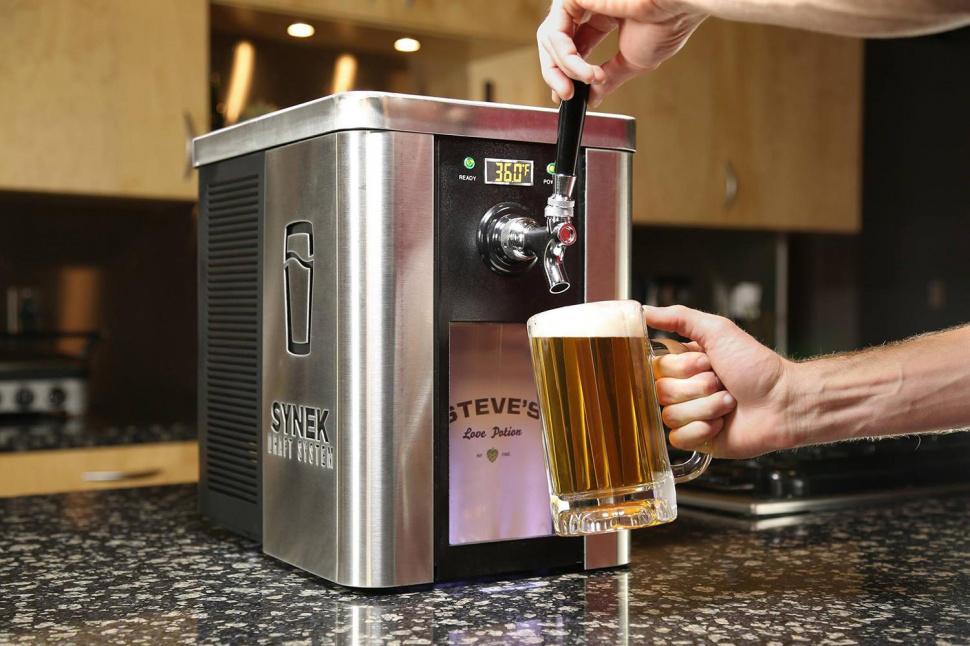 If you drink a lot of craft beer, you’ve undoubtedly encountered the following dilemma: Either you wind up with more empty bottles than you can possibly fit in your recycle bin each week, or you get your brew by the growler and inevitably have it go flat before you finish it all. The only other options are to downsize the amount you drink (not likely) or fully commit to your craft beer habit and buy yourself a kegerator. Neither option is particularly enticing, but thankfully somebody has cooked up an alternative solution. Synek is basically a tiny refillable kegerator you can keep on your kitchen counter. Inside its temperature-controlled hull, the Synek is sports a with a removable one-gallon vacuum pouch that you can fill up with the beer of your choosing. It’s equipped with a special nozzle that allows you to fill it from virtually any tap, and because it doesn’t let any air into the pouch, it keeps your beer fresher than a growler. Check out our full post for more details.
Pelty — Candle-powered Bluetooth speaker
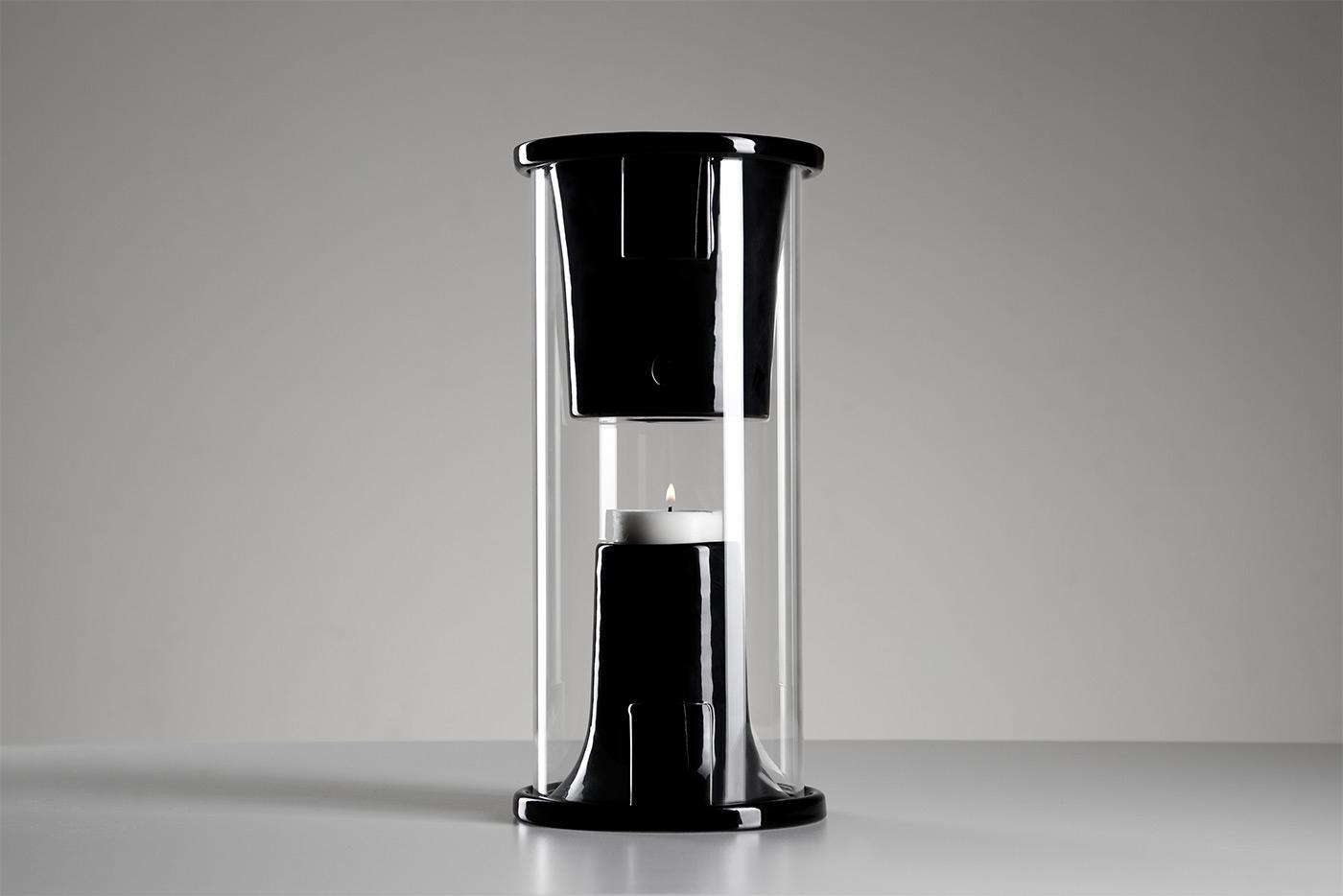 The Pelty gets its name from a unique physical phenomenon, the “Peltier effect,” which states that energy passing through two metals generates a difference in heat, which in turn generates electricity. Leveraging this phenomenon with little more than a tea candle, Pelty’s thermoelectric generator creates enough energy to continuously power an efficient amplifier, which in turn drives a small 3-inch speaker once the flame is up and burning. The product’s Indiegogo page explains that just about any candle will work with the Pelty, though the device will ship with instructions on what size to pick and how to place it in the speaker. The device’s creators avoided plastic and metal, instead favoring ceramic, glass, and wood – all Italian-sourced – for the device. Ceramic, in particular, resists heat well and has desirable insulation and acoustic properties. Find out more here.
CryptoCat — Free encrypted messaging client
 Now that we know for sure that the Big Brother (read: The NSA) is definitely watching, logging, and examining most of our online activity, you’ve got more reason than ever to encrypt your online communication. CryptoCat is a secure chat client that uses the OTR protocol, AES-265 encryption with 4069-bit asymmetric keys to keep your messages secure — and it works right in your browser. It’s one of the simplest and most effective encrypted chat clients in the game, and after helping keep millions of conversations encrypted over the past couple years (for free!), the app’s creator Nadim Kobeissi is turning to Kickstarter to raise some money for further development. He’s looking to raise $45,ooo to build an Android app, and also add some new features to the existing iOS app. And it’s not just text encryption either — Kobeissi says that encrypted audio and video support is in the pipeline as well.
iPunch — Smart, impact-sensing MMA gloves
 There’s all manner of wearable devices designed to quantify the number of steps you take in a day, the calories you burn, or even how fast you can swing a golf club or a bat. But what about how hard you can punch? Well, thanks to a UK hardware startup by the name of Responsive Sports, quantified punches are now a possibility as well. The company has taken to Kickstarter to raise funding for iPunch, a sensor-studded set of combat gloves designed for boxers and martial artists. The gloves connect to both iOS and Android devices via Bluetooth, and, with the help of their embedded sensors, allow the wearer to monitor how hard he or she is hitting. Under the hood, iPunch gloves have two sensors apiece: one to measure impact force, and the other to detect motion. This means that in addition to telling you how hard you’re hitting, the gloves can also determine what kind of punch you’re throwing and beam it to your smartphone in real time.
SplatterTek — Thermally-activated color-changing apparel
 We honestly can’t think of any practical uses for these shirts, but that doesn’t make them any less awesome. Thanks to a specially-engineered dye, SplatterTek shirts will change color when they’re hit with something cold, and then return to their original color once they warm up again. This color-shifting effect is fully reversible, and repeatable thousands of times in the shirt — so long as you take care of it and wash it properly. Inside the fabric of the shirts there are millions of tiny micro-capsules (less than a micron in size) that consist of two parts: an internal phase, and a hard outer shell. The internal phase is an organic material (a fat or wax) that has a specific and adjustable melting point. Dyes are dissolved into this material, and when it’s heated to its melting point, the material goes clear and the color disappears. When it cools to the solid phase, the material becomes opaque and the color reappears.