1. Home
  2. Cars
  3. Legacy Archives

Mazda switches gears, plans 450-horsepower turbo rotary for next RX-7

Add as a preferred source on Google

Mazda has changed its tune on the next generation RX-7, deciding to add a little boost to the mix.

Motoring reports that Mazda is adding a twin-scroll turbocharger setup to the new RX, increasing output to a brawny 450 horsepower. Previous dispatches indicated the RX-7 would feature a naturally aspirated, 300-hp rotary unit, but apparently Mazda decided the RX’s revival deserved a little more vigor. The last FD used a 276-hp turbo 13B powerplant in top form.

Recommended Videos

Mazda is also ditching the prospective Miata-based platform and will revamp the retired RX-8 chassis instead. The RX-8 had more power and rigidity than the MX-5, so its stiffer framework is a better choice for the new drifter.

The Wankel-powered RX will likely embody the same “Kodo” design philosophy that roots the Mazda3, Mazda6, and Mazda CX-5. The “Soul of Motion” ideology sees a car as a cohesive, living creature that can emotionally connect with its driver, a la a horse and its rider.

The RX-7’s design rendering shows long, emotive lines that are almost Italian in feel, and look more contemporary and daring than its predecessor.

It’s slated for a May 2017 release, a date that celebrates the 50th anniversary of the Wankel-powered Mazda Cosmo. The Cosmo, which debuted in 1967, was the first production car to feature a rotary engine. Thus, the legendary Wankel was born.

Since then, the legendary oil burner has underpinned the RX-7, RX-8, Taiki Concept car, and several Mazda race cars. In fact, the Wankel is the only non-piston engine to ever win Le Mans.

Most recently, a Wankel engine was announced as a range extender for the upcoming Mazda2 plug-in hybrid. An extra 118 miles in a hatchback is great and all, but the RX-7 is what Wankels are meant for: high-revving, boosted bliss.

(Photo via Motoring)

Andrew Hard
Andrew first started writing in middle school and hasn't put the pen down since. Whether it's technology, music, sports, or…
Volvo is rolling out Apple Music to over 2 million cars with a simple OTA update
Your Volvo may soon get Apple Music without needing CarPlay
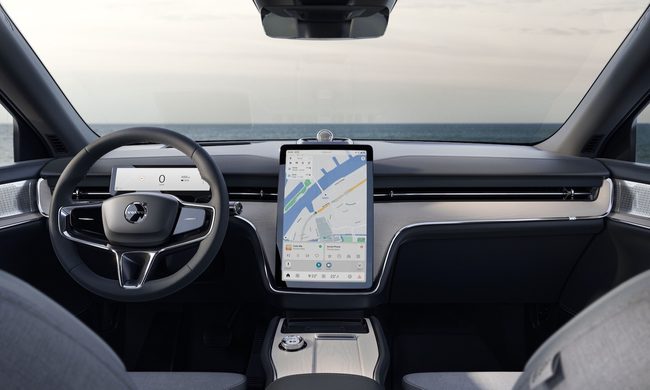
Interior view of the 2024 Volvo EX90.

The line between your smartphone and your car continues to blur. Volvo has announced that it is rolling out an over-the-air software update that brings Apple Music directly to the infotainment systems of more than 2 million vehicles worldwide. Instead of relying on Apple CarPlay or plugging in an iPhone, eligible drivers will be able to stream music natively from their car's built-in system, making Apple Music another integrated feature of Volvo's software experience.

The update is arriving for a wide range of Volvo models, including the EX90, ES90, XC90, S90, V90, XC60, S60, V60, XC40, EX40 and EC40, covering model year 2020 onwards. Availability, however, may vary depending on the vehicle.

Read more
Chery’s latest EV packs flagship tech for the price of a base Tesla, but you can’t buy it
Here's everything packed into Exeed's 2027 Exlantix ES, from its 27-sensor autonomous driving suite to its 860 km range, all starting under $31,000.
Car, Transportation, Vehicle

Chery's premium arm just dropped a sedan that makes you wonder why American EVs cost twice as much for half the tech.

Exeed's 2027 Exlantix ES ships with a driver-assist system called Falcon 700. It is built around an Nvidia Orin-Y chip and a genuinely stacked sensor suite.

Read more
A new AI model wants self-driving cars to think before they swerve
Forget guessing games, this self-driving AI actually shows its work.
Self driving car

Self-driving cars have gotten pretty good at driving. The harder problem is teaching them to drive safely in situations nobody planned for. We have heard horror stories of self-driving cars, behaving erratically in emergency situations, often times delaying first responders from reaching the scene.

A team at Seoul National University, led by professor Jun Won Choi from the Department of Electrical and Computer Engineering, thinks they have cracked part of that puzzle with a new AI model called SafeDrive. The research was recently selected as a highlight paper at CVPR 2026, a distinction that goes only to roughly 3% of all submissions.

Read more