  1. Home
  2. Cars
  3. Photo Galleries
  4. Legacy Archives

Forbidden fruit: Renault prepping suped-up Twingo Gordini hatchback

Add as a preferred source on Google

The Renault Twingo hatchback has always been a good car, but it’s never been a particularly exciting one. Front-wheel drive, a small engine, and impressive fuel economy are great selling points for a city car, but they don’t exactly get a gearhead’s blood boiling.

So when Renault debuted the third-generation Twingo at the Geneva Motor Show this March, it was at the very least a pleasant surprise. Rear-wheel drive. Rear-engine. Turbocharged powerplant. Is this really the same car?

Well, the French automaker isn’t stopping there, because according to Left Lane News, Renault is planning an even hotter Gordini version of the tiny Twingo.

Gordini is the performance division of Renault Sport Technologies, and it was established in 1946 by Amédée Gordini, who was badassly nicknamed “Le Sorcier” (The Sorcerer).

Gordini used his black magic to create some exceptional racecars throughout the mid 1900’s, including the exceptional, single-seater Gordini Type 32. His cars competed in Formula 1 and 2 in early 1950s and even in Le Mans during the ’60s.

Renault has produced a Twingo Gordini before, in the car’s second generation, but it carried little more than a new paint job and some racing flair. The Gordini name has a real motorsport pedigree, and it looks like Renault is finally doing it justice for the Twingo’s third iteration.

The hot Twingo will draw power from a turbocharged, 0.9-liter three-cylinder engine that creates over 120 horsepower. That may not sound like a lot, but considering the lack of heft it has to push around, it should be plenty spry. Furthermore, the Twingo Gordini will ride on a Renault Sport-tuned chassis, with larger brake discs, stiffer suspension, and anti-roll bars.

Expect the racing treatment to carry over onto the vehicles aesthetics as well, with more aggressive aero, twin exhaust pipes, and Gordini’s favorite sporting color, bleu de France.

Andrew Hard
Andrew first started writing in middle school and hasn't put the pen down since. Whether it's technology, music, sports, or…
Volvo is rolling out Apple Music to over 2 million cars with a simple OTA update
Your Volvo may soon get Apple Music without needing CarPlay
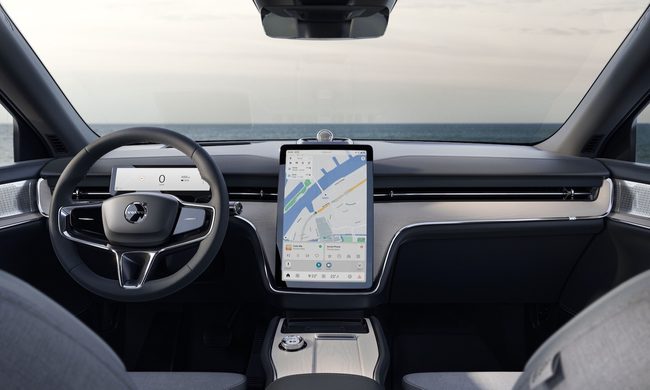
Interior view of the 2024 Volvo EX90.

The line between your smartphone and your car continues to blur. Volvo has announced that it is rolling out an over-the-air software update that brings Apple Music directly to the infotainment systems of more than 2 million vehicles worldwide. Instead of relying on Apple CarPlay or plugging in an iPhone, eligible drivers will be able to stream music natively from their car's built-in system, making Apple Music another integrated feature of Volvo's software experience.

The update is arriving for a wide range of Volvo models, including the EX90, ES90, XC90, S90, V90, XC60, S60, V60, XC40, EX40 and EC40, covering model year 2020 onwards. Availability, however, may vary depending on the vehicle.

Read more
Chery’s latest EV packs flagship tech for the price of a base Tesla, but you can’t buy it
Here's everything packed into Exeed's 2027 Exlantix ES, from its 27-sensor autonomous driving suite to its 860 km range, all starting under $31,000.
Car, Transportation, Vehicle

Chery's premium arm just dropped a sedan that makes you wonder why American EVs cost twice as much for half the tech.

Exeed's 2027 Exlantix ES ships with a driver-assist system called Falcon 700. It is built around an Nvidia Orin-Y chip and a genuinely stacked sensor suite.

Read more
A new AI model wants self-driving cars to think before they swerve
Forget guessing games, this self-driving AI actually shows its work.
Self driving car

Self-driving cars have gotten pretty good at driving. The harder problem is teaching them to drive safely in situations nobody planned for. We have heard horror stories of self-driving cars, behaving erratically in emergency situations, often times delaying first responders from reaching the scene.

A team at Seoul National University, led by professor Jun Won Choi from the Department of Electrical and Computer Engineering, thinks they have cracked part of that puzzle with a new AI model called SafeDrive. The research was recently selected as a highlight paper at CVPR 2026, a distinction that goes only to roughly 3% of all submissions.

Read more