1. Home
  2. Cars
  3. Legacy Archives

Calling all hackers: Tesla needs you to increase electronic security

Add as a preferred source on Google

To keep its assets safe, one company is looking outside the law for help.

No, this isn’t the tagline for an upcoming Jason Statham film, however Steven Seagal is probably on standby.

Recommended Videos

American automaker Tesla is in the process of hiring somewhere between 20 and 30 hackers to improve wireless security, according to a report by Motor Authority.

To accomplish this, the company recently sent its resident security expert and ‘hacker princess’, Kristin Paget, to a programming conference called Def Con in Las Vegas, Nevada. Paget’s mission was to recruit binary code-adroit techies.

Using a ‘know your enemy’ approach, Tesla is looking to prevent hackers from wirelessly commandeering systems on its electric vehicles, something that has been a point of concern recently.

Why is Tesla worried about this? The answer is twofold.

The first was an incident where a Model S owner patched into his vehicle’s computer system and accessed a non-standard web browser via the central screen. The Model S’ safeguards alerted Tesla of the unauthorized interface, and the company promptly contacted the customer, warning that such actions could void the car’s warranty. The customer reportedly complied, but the story raised some eyebrows nonetheless.

RELATED: Tesla Model S updates drive warranty to eight years and unlimited miles

The second spark for increased hacker security was higher profile. A Chinese tech convention called SyScan challenged nerds to slice into the Model S, with a prize of $10,000 up for grabs. One group, called Qihoo 360 Technology Co., managed to activate the car’s headlights, horn, and sunroof remotely. As you might guess, Tesla was perturbed.

Bypassing the Model S’ computer firewall could be more damaging than a non-standard web browser or misbehaving sunroof, however. The Tesla is basically a rolling computer, and the company sends updates to the car via the Internet, so a thief could potentially locate, start, or steal the vehicle with nothing but a laptop.

But sleep well, Model S owners, Tesla is boosting its defense.

Andrew Hard
Andrew first started writing in middle school and hasn't put the pen down since. Whether it's technology, music, sports, or…
Topics
Volvo is rolling out Apple Music to over 2 million cars with a simple OTA update
Your Volvo may soon get Apple Music without needing CarPlay
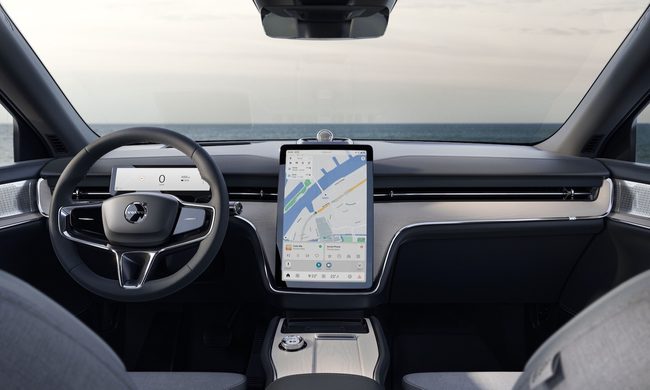
Interior view of the 2024 Volvo EX90.

The line between your smartphone and your car continues to blur. Volvo has announced that it is rolling out an over-the-air software update that brings Apple Music directly to the infotainment systems of more than 2 million vehicles worldwide. Instead of relying on Apple CarPlay or plugging in an iPhone, eligible drivers will be able to stream music natively from their car's built-in system, making Apple Music another integrated feature of Volvo's software experience.

The update is arriving for a wide range of Volvo models, including the EX90, ES90, XC90, S90, V90, XC60, S60, V60, XC40, EX40 and EC40, covering model year 2020 onwards. Availability, however, may vary depending on the vehicle.

Read more
Chery’s latest EV packs flagship tech for the price of a base Tesla, but you can’t buy it
Here's everything packed into Exeed's 2027 Exlantix ES, from its 27-sensor autonomous driving suite to its 860 km range, all starting under $31,000.
Car, Transportation, Vehicle

Chery's premium arm just dropped a sedan that makes you wonder why American EVs cost twice as much for half the tech.

Exeed's 2027 Exlantix ES ships with a driver-assist system called Falcon 700. It is built around an Nvidia Orin-Y chip and a genuinely stacked sensor suite.

Read more
A new AI model wants self-driving cars to think before they swerve
Forget guessing games, this self-driving AI actually shows its work.
Self driving car

Self-driving cars have gotten pretty good at driving. The harder problem is teaching them to drive safely in situations nobody planned for. We have heard horror stories of self-driving cars, behaving erratically in emergency situations, often times delaying first responders from reaching the scene.

A team at Seoul National University, led by professor Jun Won Choi from the Department of Electrical and Computer Engineering, thinks they have cracked part of that puzzle with a new AI model called SafeDrive. The research was recently selected as a highlight paper at CVPR 2026, a distinction that goes only to roughly 3% of all submissions.

Read more