  1. Home
  2. Cars
  3. Legacy Archives

Bad news, Tesla owners: the Chinese have successfully hacked a Model S … sort of

Add as a preferred source on Google

Over the last few weeks, the sinister sounding nerd convention SyScan has held a competition to hack into a Tesla Model S. Now the results are in, and while it is possible to remotely control the sunroof, no one will be remotely crashing a Model S anytime soon.

The competition was held to demonstrate the potential vulnerabilities of highly digital and increasingly networked cars, with the winner eligible to receive a $10,000 prize. Qihoo 360 Technology Co. managed to win about $1,700 of that prize for hacking the Model S’s horn, car locks, headlights and skylight from a remote location.

Recommended Videos

These are hardly earth shaking achievements, but they do have serious safety implications in particular the car locks. Most Model S drivers are fortunate enough not live in areas where carjacking is a serious concern, but residents of places like South Africa where the crime is endemic will hardly find this a comforting accomplishment.

Bloomberg has reported that Tesla was not involved in the conference, and in fact not very pleased about it. However to its credit Tesla, has asked hackers to flag any vulnerabilities they discover and refer them to the company’s security experts.

Despite the relatively modest achievements of the hackers, the broader concern is a very real one. As we have previously reported, researchers for the Defense Advanced Research Projects Agency (DARPA) have already been able to control the brakes, acceleration and steering of some cars remotely.

That is precisely why companies like Tesla have been hiring security experts away from Apple and other tech companies. And if car companies are willing to spend money on it as opposed to ignoring it, then they must expect this to be a real problem in future.

Peter Braun
Former Digital Trends Contributor
Peter is a freelance contributor to Digital Trends and almost a lawyer. He has loved thinking, writing and talking about cars…
Topics
Volvo is rolling out Apple Music to over 2 million cars with a simple OTA update
Your Volvo may soon get Apple Music without needing CarPlay
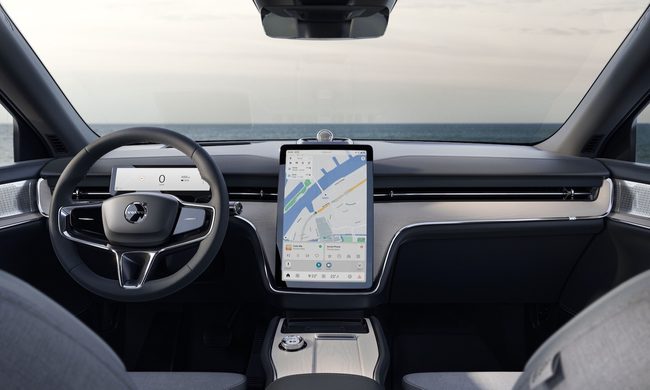
Interior view of the 2024 Volvo EX90.

The line between your smartphone and your car continues to blur. Volvo has announced that it is rolling out an over-the-air software update that brings Apple Music directly to the infotainment systems of more than 2 million vehicles worldwide. Instead of relying on Apple CarPlay or plugging in an iPhone, eligible drivers will be able to stream music natively from their car's built-in system, making Apple Music another integrated feature of Volvo's software experience.

The update is arriving for a wide range of Volvo models, including the EX90, ES90, XC90, S90, V90, XC60, S60, V60, XC40, EX40 and EC40, covering model year 2020 onwards. Availability, however, may vary depending on the vehicle.

Read more
Chery’s latest EV packs flagship tech for the price of a base Tesla, but you can’t buy it
Here's everything packed into Exeed's 2027 Exlantix ES, from its 27-sensor autonomous driving suite to its 860 km range, all starting under $31,000.
Car, Transportation, Vehicle

Chery's premium arm just dropped a sedan that makes you wonder why American EVs cost twice as much for half the tech.

Exeed's 2027 Exlantix ES ships with a driver-assist system called Falcon 700. It is built around an Nvidia Orin-Y chip and a genuinely stacked sensor suite.

Read more
A new AI model wants self-driving cars to think before they swerve
Forget guessing games, this self-driving AI actually shows its work.
Self driving car

Self-driving cars have gotten pretty good at driving. The harder problem is teaching them to drive safely in situations nobody planned for. We have heard horror stories of self-driving cars, behaving erratically in emergency situations, often times delaying first responders from reaching the scene.

A team at Seoul National University, led by professor Jun Won Choi from the Department of Electrical and Computer Engineering, thinks they have cracked part of that puzzle with a new AI model called SafeDrive. The research was recently selected as a highlight paper at CVPR 2026, a distinction that goes only to roughly 3% of all submissions.

Read more