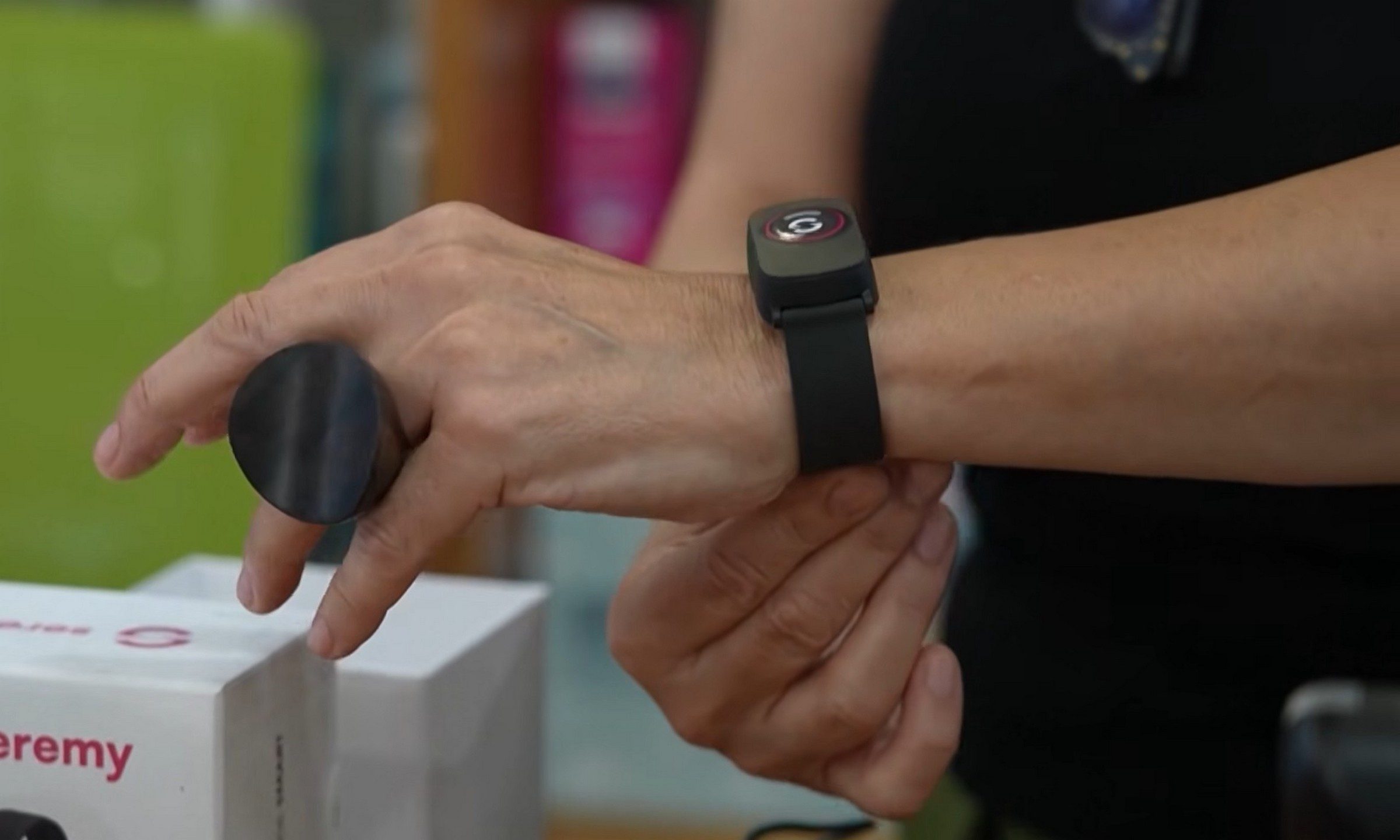
These days, I think I’m mostly wearing a JawBone Up for the added self-esteem boost.
I haven’t really had much trouble motivating myself to get to the gym as of late, or to take a walk around the city on a sunny day. But I’d be lying if I said I those steps didn’t get a little spring in them upon reading that I’m apparently averaging 8,900 more steps a day than other male Up users in my general age range, or something along those lines.
It’s a fun bit of data. And really, that’s one of the most appealing elements of personal fitness trackers: the ability to, in a sense, compete against others, or at the very least, to compete against some abstract notion of the “average”person (more correctly, the average person who goes out their way to wear a fitness bad). It’s a sense of motivation through gamification, and it speaks to an inherent sense of competitiveness bred into us through decades of after-school sports and standardized testing.
There’s probably something worse than being average, but at the moment I can’t come up with anything.
Our fitness trackers, are, well tracking us.
JawBone saw a rather canny PR opportunity when an earthquake struck Northern California a week or so ago. The day after the vineyards and cellars of Napa County were rattled by the largest tremor in a quarter century, a graph made the cable news rounds showing a sudden jolt around 3:20, when JawBone wearers were suddenly roused from bed by that 6.0 quake. No major shock there of course, but what is interesting is the fact that 45 percent of those woken in the middle of the night never made it back to sleep, which seems to speak to the sort of primal fear we experience when the earth begins to move under us.
Again, this isn’t groundbreaking stuff (sorry), but it speaks to some interesting possibilities for this sort of data. What can this kind of information teach us about ourselves when collected over a large population for a long period of time? The more precise the information becomes, the more insight we can gain over societal habits and health issues, broken into handy categories like location, gender and age range. It’s easy to see how health organizations would be champing at the bit for that kind of data in an age of out-of-control obesity, diabetes and other controllable health risks.

While lauded by many, however, Jawbone’s graph simultaneously presented a potential PR nightmare for JawBone. It shed some light on a fact that we were all aware of, but many just hadn’t taken the time to really consider: Our fitness trackers, are, well tracking us. To put an even finer point on it, they’re watching us while we sleep. We’ve had plenty of time to consider and bemoan the ramifications for such tracking when it comes to our smartphones, but fitness trackers are relatively new phenomenon. Unlike our phones, however, which also serve as our cameras, gaming devices and dating services, all fitness trackers are designed to do is track.
Last month, Democratic Senator Chuck Schumer made mention of the phenomenon, calling for federal protection against what he called a potential “privacy nightmare”and calling FitBit out by name. Here’s Chuck:
Personal fitness bracelets and the data they collect on your health, sleep, and location, should be just that —personal. The fact that private health data —rich enough to identify the user’s gait —is being gathered by applications like Fitbit and can then be sold to third-parties without the user’s consent is a true privacy nightmare.
45 percent of those woken in the middle of the night never made it back to sleep.
Facebook was also in hot water earlier this year when it purchased fitness tracking app Moves and decided to let the app share info with the social network. The shift in Terms of Service didn’t really mince words:
We may share information, including personally identifying information, with our Affiliates (companies that are part of our corporate groups of companies, including but not limited to Facebook) to help provide, understand, and improve our Services.
For its part, Fitbit was quick to respond to Schumer’s comments. (See? Exercise pays off.) The company insisted that it doesn’t sell the data it collects and suggested that the Senator team up with the company to “work…on this important issue.”
And this is sort of where we are right now. We’re taking the first (tracked) steps into a world of wearables, where all of our data is potentially up for grabs. As scary as Facebooks and iPhones have been for privacy advocates, just imagine a near future when everything on our person is measuring something personal about us. Much like the recent earthquake, it’s enough to make many lose sleep.
The answer, as always, is vigilance. Both for ourselves and the companies. We need to be hyper aware of what we’re willing to give up, what companies intend to do with that information, and when the opportunity presents itself, flipping them the occasional middle finger.