User interface designer Derek Kuschel wants to revolutionize the automotive hacking world, and he’s gone to Kickstarter for help.
His project, dubbed the CANBus Triple, uses the Controller Area Network (CAN) language that likely already exists in your car (it’s government-mandated for all vehicles 2008 and newer) to render aftermarket ECUs, tuning boxes, and readout controllers nearly obsolete.
Modern cars are fitted with countless sensors and monitors to control things like engine temperature, air-fuel mixture, vehicle weight, and transmission speed. The Triple grants motorists control over almost any controller that uses the CAN language, making this device much more than a simple readout.
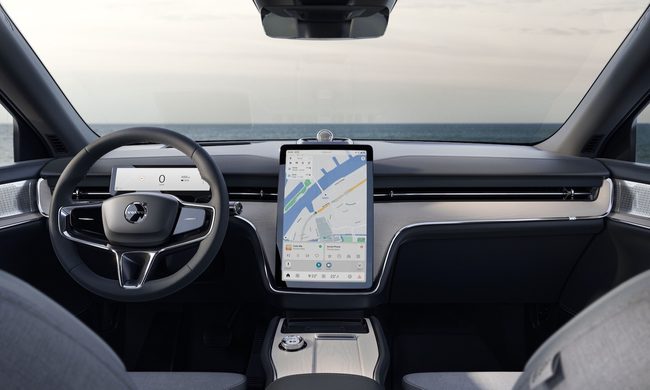
With a proper understanding of your vehicle’s communication language, you can operate almost any system on the car (windows, lights, stereo, navigation) from one interface. Simply log into the accompanying application, determine which lines of code control which feature on the vehicle, and then hack away.
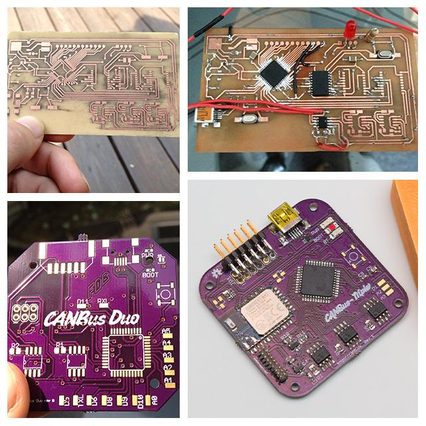 There’s functionality for tuners too. Because the CANBus is a gateway to your vehicle’s onboard computer via the OBDII plug, a savvy programmer can potentially send out custom CAN data packets to change fuel mixture, adjust rev limits, and change vehicle timing in the pursuit of increased performance. Theoretically, cars with electronically controlled suspension could also be controlled from Kuschel’s CAN interface.
“The CANBus triple is for makers and car hackers that want to augment any CAN system,” he says, “whether it’s a car, robot, or model train system.”
Related: Hemingway, Cadillacs, and Canadians: an engineering quest to build world’s fastest hot tub
The Kickstarter will be accepting contributions for 15 more days, but Kuschel has already met his $18,000 goal and then some. As of this writing, he’s hovering just under $36,000 with 437 total backers.