  1. Home
  2. Cars
  3. Photo Galleries
  4. Legacy Archives

Entry-level MINI Rocketman back in the works?

Add as a preferred source on Google

MINI’s on-again, off-again entry-level model has reportedly been given the green light for production.

The automaker previously explained that developing an entry-level model was off the table because it would need to ride on a purpose-designed platform that would be too expensive to develop in-house. However, MINI appears to have found a partner with which to develop the car and it is pushing full speed ahead with its development.

Understandably, MINI is keeping mum about its upcoming city car but British magazine Auto Express believes it will be developed jointly with Toyota. Its design will be inspired by the Rocketman concept (pictured) that was introduced at the 2011 Geneva Motor Show but it will ditch the double-hinged doors, the two-piece tailgate and the mouse ear-like tail lamps.

While the concept was crafted largely out of carbon fiber, the production car will eschew composite materials and rely heavily on lightweight metals like aluminum in order to shed precious pounds.

Related: Four-door MINI Cooper

The only official tidbit of information that MINI has released is that its entry-level model will offer a simple, back-to-the-basics cockpit that will be centered around the driver.

“To have a great cabin, all you need is a great steering wheel, a seat and a great user interface. We want no superfluous parts. Driving in the city is stressful enough, so we need a reduction in the number of elements. True luxury is now simplicity,” explained MINI head of design Anders Warming in an interview with British magazine Auto Express.

MINI’s smallest model is scheduled to land in Europe in 2016 at the very earliest. Whether or not it will be sold in the United States is up in the air.

Ronan Glon
Ronan Glon is an American automotive and tech journalist based in southern France. As a long-time contributor to Digital…
Volvo is rolling out Apple Music to over 2 million cars with a simple OTA update
Your Volvo may soon get Apple Music without needing CarPlay
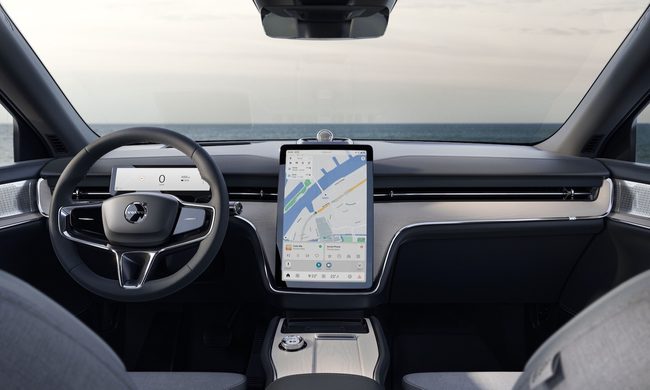
Interior view of the 2024 Volvo EX90.

The line between your smartphone and your car continues to blur. Volvo has announced that it is rolling out an over-the-air software update that brings Apple Music directly to the infotainment systems of more than 2 million vehicles worldwide. Instead of relying on Apple CarPlay or plugging in an iPhone, eligible drivers will be able to stream music natively from their car's built-in system, making Apple Music another integrated feature of Volvo's software experience.

The update is arriving for a wide range of Volvo models, including the EX90, ES90, XC90, S90, V90, XC60, S60, V60, XC40, EX40 and EC40, covering model year 2020 onwards. Availability, however, may vary depending on the vehicle.

Read more
Chery’s latest EV packs flagship tech for the price of a base Tesla, but you can’t buy it
Here's everything packed into Exeed's 2027 Exlantix ES, from its 27-sensor autonomous driving suite to its 860 km range, all starting under $31,000.
Car, Transportation, Vehicle

Chery's premium arm just dropped a sedan that makes you wonder why American EVs cost twice as much for half the tech.

Exeed's 2027 Exlantix ES ships with a driver-assist system called Falcon 700. It is built around an Nvidia Orin-Y chip and a genuinely stacked sensor suite.

Read more
A new AI model wants self-driving cars to think before they swerve
Forget guessing games, this self-driving AI actually shows its work.
Self driving car

Self-driving cars have gotten pretty good at driving. The harder problem is teaching them to drive safely in situations nobody planned for. We have heard horror stories of self-driving cars, behaving erratically in emergency situations, often times delaying first responders from reaching the scene.

A team at Seoul National University, led by professor Jun Won Choi from the Department of Electrical and Computer Engineering, thinks they have cracked part of that puzzle with a new AI model called SafeDrive. The research was recently selected as a highlight paper at CVPR 2026, a distinction that goes only to roughly 3% of all submissions.

Read more