  1. Home
  2. Cars
  3. Photo Galleries
  4. News

This imagined Porsche 901 concept is a brilliant revision of the legendary 911

Add as a preferred source on Google

Reimagining the iconic Porsche 911 is no simple task. On one hand, you don’t want to mar the iconic design themes that have been there since the beginning. On the other, you want to give the car a new look, a fresh perspective that is equally unique and respectful to the past.

Ege Arguden, a digital designer from Turkey, tried to do just that with his Porsche 901 concept. With its classic European profile and minimalist architecture, the striking 901 is an homage to the 911s of old.

“Even tough it is considered one of the most traditional evolutions in car design, [the] Porsche 911 grew significantly in size and became a much more complex and [luxurious] vehicle compared to the original 911,” explains Arguden. “The aim of Porsche 901 was to go back to the roots and capture the essence of the original 911.”

From the rear, the 901’s most flattering angle, there are shades of the E-Type Jaguar, with intakes that reference the butterfly engines of early Porsche RSR models. Its wide stance and long rake give the car a sleek, athletic shape, one that Arguden proportioned to be 200mm shorter than the current 911.

“After the ideation process, the most challenging phase was refinement; many hours were spent to achieve the right 911 silhouette,” he said.

From the front, the 901 is still eye-catching but less classically sexy, with triple-prong headlights and a wide-mouth grill. From the early design sketches, you can see the traditional Porsche round headlights, but Arguden says he “tried to modernize these elements with subtle changes.”

The renderings, which were hosted by Carbodydesign, were developed during Arguden’s tenure at the Art Center College of Design in Pasadena, California. He graduated last fall, and has several other designs posted on his Behance.net page.

Andrew Hard
Andrew first started writing in middle school and hasn't put the pen down since. Whether it's technology, music, sports, or…
Volvo is rolling out Apple Music to over 2 million cars with a simple OTA update
Your Volvo may soon get Apple Music without needing CarPlay
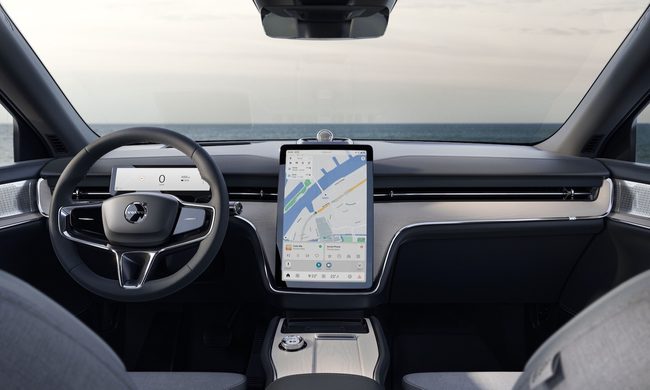
Interior view of the 2024 Volvo EX90.

The line between your smartphone and your car continues to blur. Volvo has announced that it is rolling out an over-the-air software update that brings Apple Music directly to the infotainment systems of more than 2 million vehicles worldwide. Instead of relying on Apple CarPlay or plugging in an iPhone, eligible drivers will be able to stream music natively from their car's built-in system, making Apple Music another integrated feature of Volvo's software experience.

The update is arriving for a wide range of Volvo models, including the EX90, ES90, XC90, S90, V90, XC60, S60, V60, XC40, EX40 and EC40, covering model year 2020 onwards. Availability, however, may vary depending on the vehicle.

Read more
Chery’s latest EV packs flagship tech for the price of a base Tesla, but you can’t buy it
Here's everything packed into Exeed's 2027 Exlantix ES, from its 27-sensor autonomous driving suite to its 860 km range, all starting under $31,000.
Car, Transportation, Vehicle

Chery's premium arm just dropped a sedan that makes you wonder why American EVs cost twice as much for half the tech.

Exeed's 2027 Exlantix ES ships with a driver-assist system called Falcon 700. It is built around an Nvidia Orin-Y chip and a genuinely stacked sensor suite.

Read more
A new AI model wants self-driving cars to think before they swerve
Forget guessing games, this self-driving AI actually shows its work.
Self driving car

Self-driving cars have gotten pretty good at driving. The harder problem is teaching them to drive safely in situations nobody planned for. We have heard horror stories of self-driving cars, behaving erratically in emergency situations, often times delaying first responders from reaching the scene.

A team at Seoul National University, led by professor Jun Won Choi from the Department of Electrical and Computer Engineering, thinks they have cracked part of that puzzle with a new AI model called SafeDrive. The research was recently selected as a highlight paper at CVPR 2026, a distinction that goes only to roughly 3% of all submissions.

Read more