  1. Home
  2. Cars
  3. News

Goodbye Fisker, hello Elux: New Chinese owner renames Karma electric car

Add as a preferred source on Google

Chinese automotive supplier Wanxiang is working to revive Fisker Automotive and its Karma extended-range electric car, and while the new owner doesn’t plan to significantly alter the styling or powertrain, it does have one big change in mind.

Fisker Automotive will be renamed Elux, according to a new report from Reuters. The relaunch of its sole product – which will be called the Elux Karma – has reportedly been pushed back to mid-2016.

Recommended Videos

Fisker is named after co-founder and automotive designer Henrik Fisker, who has since moved on from the company.

He left after a disagreement with other managers before the company’s 2012 bankruptcy, and most recently teamed with Galpin Auto Sports on the Ford Mustang-based Rocket muscle car.

Name change aside, Wanxiang will reportedly retain most of Fisker’s original design. It previously said it wanted to keep changes to a minimum, which would make re-certifying the car for sale easier.

Wanxiang acquired the remains of Fisker in a bankruptcy auction last year, and had hoped to restart Karma production this year. That may have been an overly ambitious goal.

Fisker briefly looked like a potential rival for Tesla Motors, but the Karma had numerous quality-related issues when it was in production the first time.

Production was contracted to Valmet Automotive in Finland, but Wanxiang will reportedly build the car somewhere else.

The company formerly known as Fisker purchased a former General Motors plant in Delaware, and it utilization was one of the factors in Wanxiang’s successful bid for the company.

Wanxiang will also reportedly raise the price to $135,000, about 20 percent more than the sticker price of a Karma back in 2012.

Restarting production may be difficult, but it will only get harder the longer Wanxiang waits.

As the Karma design ages, it will require more significant updates to keep pace with the competition.

Stephen Edelstein
Stephen is a freelance automotive journalist covering all things cars. He likes anything with four wheels, from classic cars…
Volvo is rolling out Apple Music to over 2 million cars with a simple OTA update
Your Volvo may soon get Apple Music without needing CarPlay
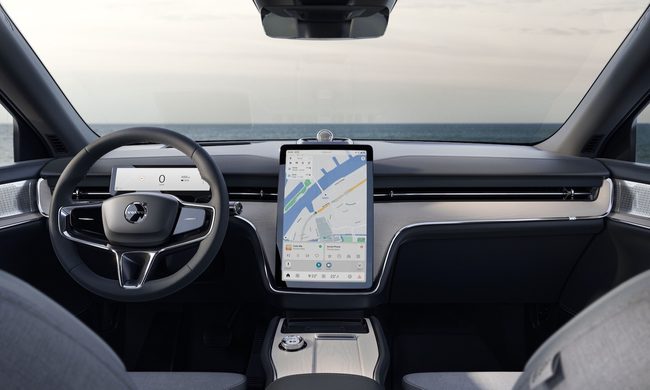
Interior view of the 2024 Volvo EX90.

The line between your smartphone and your car continues to blur. Volvo has announced that it is rolling out an over-the-air software update that brings Apple Music directly to the infotainment systems of more than 2 million vehicles worldwide. Instead of relying on Apple CarPlay or plugging in an iPhone, eligible drivers will be able to stream music natively from their car's built-in system, making Apple Music another integrated feature of Volvo's software experience.

The update is arriving for a wide range of Volvo models, including the EX90, ES90, XC90, S90, V90, XC60, S60, V60, XC40, EX40 and EC40, covering model year 2020 onwards. Availability, however, may vary depending on the vehicle.

Read more
Chery’s latest EV packs flagship tech for the price of a base Tesla, but you can’t buy it
Here's everything packed into Exeed's 2027 Exlantix ES, from its 27-sensor autonomous driving suite to its 860 km range, all starting under $31,000.
Car, Transportation, Vehicle

Chery's premium arm just dropped a sedan that makes you wonder why American EVs cost twice as much for half the tech.

Exeed's 2027 Exlantix ES ships with a driver-assist system called Falcon 700. It is built around an Nvidia Orin-Y chip and a genuinely stacked sensor suite.

Read more
A new AI model wants self-driving cars to think before they swerve
Forget guessing games, this self-driving AI actually shows its work.
Self driving car

Self-driving cars have gotten pretty good at driving. The harder problem is teaching them to drive safely in situations nobody planned for. We have heard horror stories of self-driving cars, behaving erratically in emergency situations, often times delaying first responders from reaching the scene.

A team at Seoul National University, led by professor Jun Won Choi from the Department of Electrical and Computer Engineering, thinks they have cracked part of that puzzle with a new AI model called SafeDrive. The research was recently selected as a highlight paper at CVPR 2026, a distinction that goes only to roughly 3% of all submissions.

Read more