  1. Home
  2. Cars
  3. News

Volkswagen is looking to cut costs, and that may mean smushing the Beetle

Add as a preferred source on Google

Volkswagen is looking to save itself some money. Five billion euros, to be exact. That’s a serious chunk of change, even for a global automaker like VW. Finding a way to shave off that much cost will come from some noticeable changes in how it does business, most visibly the trimming of some vehicle models, and that puts the iconic Beetle in jeopardy.

The information from German publication Der Spiegel suggests that the group will start trimming the costs down by keeping models on the market longer, as well as limiting the number of variants for some models. For starters, the sub-compact Polo will no longer be available as a three-door hatch, making the five-door version the sole available model.

2015 VW Beetle R-Line 2.0T
Image used with permission by copyright holder

VW’s Eos hard-top convertible, already set to end production this year, will now most likely not see a successor take its place. Now it looks like the cost-cutting eye is directed at the Beetle.

Recommended Videos

Back in the late 90’s, the New Beetle was everywhere, whether you liked it or not. It received an update in 2011, but it was never going to make a similar impact. The car simply doesn’t have that significant of a presence on the automotive landscape anymore. It’s also not built on the modular platform that Volkswagen uses on vehicles like the Golf and that independent production line might put it on shaky ground.

Nothing has been set in stone just yet, but there’s no doubt some big changes will come from Volkswagen across all its brands if they’re going to meet that target savings number, so many of these suggestions seem likely. Is the Beetle’s iconic heritage enough to justify keeping it around? Does it still have that strong, if divisive, charm that it once had? More importantly, if the Beetle went away, would anyone really notice?

Alexander Kalogianni
Former Automotive Editor
Alex K is an automotive writer based in New York. When not at his keyboard or behind the wheel of a car, Alex spends a lot of…
Volvo is rolling out Apple Music to over 2 million cars with a simple OTA update
Your Volvo may soon get Apple Music without needing CarPlay
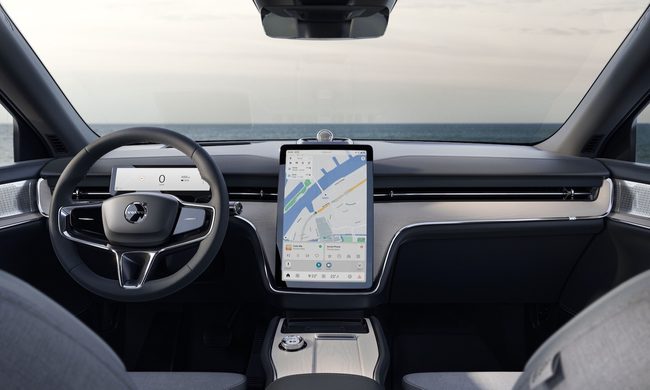
Interior view of the 2024 Volvo EX90.

The line between your smartphone and your car continues to blur. Volvo has announced that it is rolling out an over-the-air software update that brings Apple Music directly to the infotainment systems of more than 2 million vehicles worldwide. Instead of relying on Apple CarPlay or plugging in an iPhone, eligible drivers will be able to stream music natively from their car's built-in system, making Apple Music another integrated feature of Volvo's software experience.

The update is arriving for a wide range of Volvo models, including the EX90, ES90, XC90, S90, V90, XC60, S60, V60, XC40, EX40 and EC40, covering model year 2020 onwards. Availability, however, may vary depending on the vehicle.

Read more
Chery’s latest EV packs flagship tech for the price of a base Tesla, but you can’t buy it
Here's everything packed into Exeed's 2027 Exlantix ES, from its 27-sensor autonomous driving suite to its 860 km range, all starting under $31,000.
Car, Transportation, Vehicle

Chery's premium arm just dropped a sedan that makes you wonder why American EVs cost twice as much for half the tech.

Exeed's 2027 Exlantix ES ships with a driver-assist system called Falcon 700. It is built around an Nvidia Orin-Y chip and a genuinely stacked sensor suite.

Read more
A new AI model wants self-driving cars to think before they swerve
Forget guessing games, this self-driving AI actually shows its work.
Self driving car

Self-driving cars have gotten pretty good at driving. The harder problem is teaching them to drive safely in situations nobody planned for. We have heard horror stories of self-driving cars, behaving erratically in emergency situations, often times delaying first responders from reaching the scene.

A team at Seoul National University, led by professor Jun Won Choi from the Department of Electrical and Computer Engineering, thinks they have cracked part of that puzzle with a new AI model called SafeDrive. The research was recently selected as a highlight paper at CVPR 2026, a distinction that goes only to roughly 3% of all submissions.

Read more