  1. Home
  2. Cars
  3. News

Honda’s CR-Z might lose the hybrid, get a turbo engine and a full sport makeover for in 2018

Add as a preferred source on Google

As excited as we were to see Honda’s Civic Type R finally revealed at the Geneva Auto Show this year, those of us watching from the U.S. couldn’t shake the fact that the super sporty hatchback wasn’t making its way over on our side of the world. The only thing that’s been placating us is the rumor that the new 2.0-liter VTEC slotted in the Type R will be used in a different stateside Civic, but we may also see it powering something we never expected: the CR-Z.

According to a source close to Car and Driver, the American market might get a completely revamped CR-Z that ditches the lackluster hybrid and instead straps in the new 2.0-Liter VTEC turbocharged four-cylinder engine, along with a massive nose-to-tail overhaul. The engine probably won’t pump out the full 305 horsepower and 295 pound-feet of torque as it does in the Type R, but will instead get a still substantial 280 hp.

HPD_CRZ_006
Image used with permission by copyright holder

Body-wise, the new CR-Z will no longer be built on the Fit platform, but will instead be developed on the one used in the new civic with four inches shaved off. Its look will be more in line with the current design language, with a few of the design elements mirroring the new NSX and a few from the Civic Type R as well, giving it a much more aggressive look over its could’ve-been-sporty-but-ultimately-dopey current styling.

Recommended Videos

No matter how reliable the source is, nothing is for certain in these cases, but we’re certainly excited for the prospect of Honda reworking a lackluster hybrid into an affordable performance car with street cred. If what we’re hearing has any truth, then we’ll most likely see a concept of some sort of announcement around this time next year.

Alexander Kalogianni
Former Automotive Editor
Alex K is an automotive writer based in New York. When not at his keyboard or behind the wheel of a car, Alex spends a lot of…
This sleek Chinese EV pairs supercar styling with three AI brains
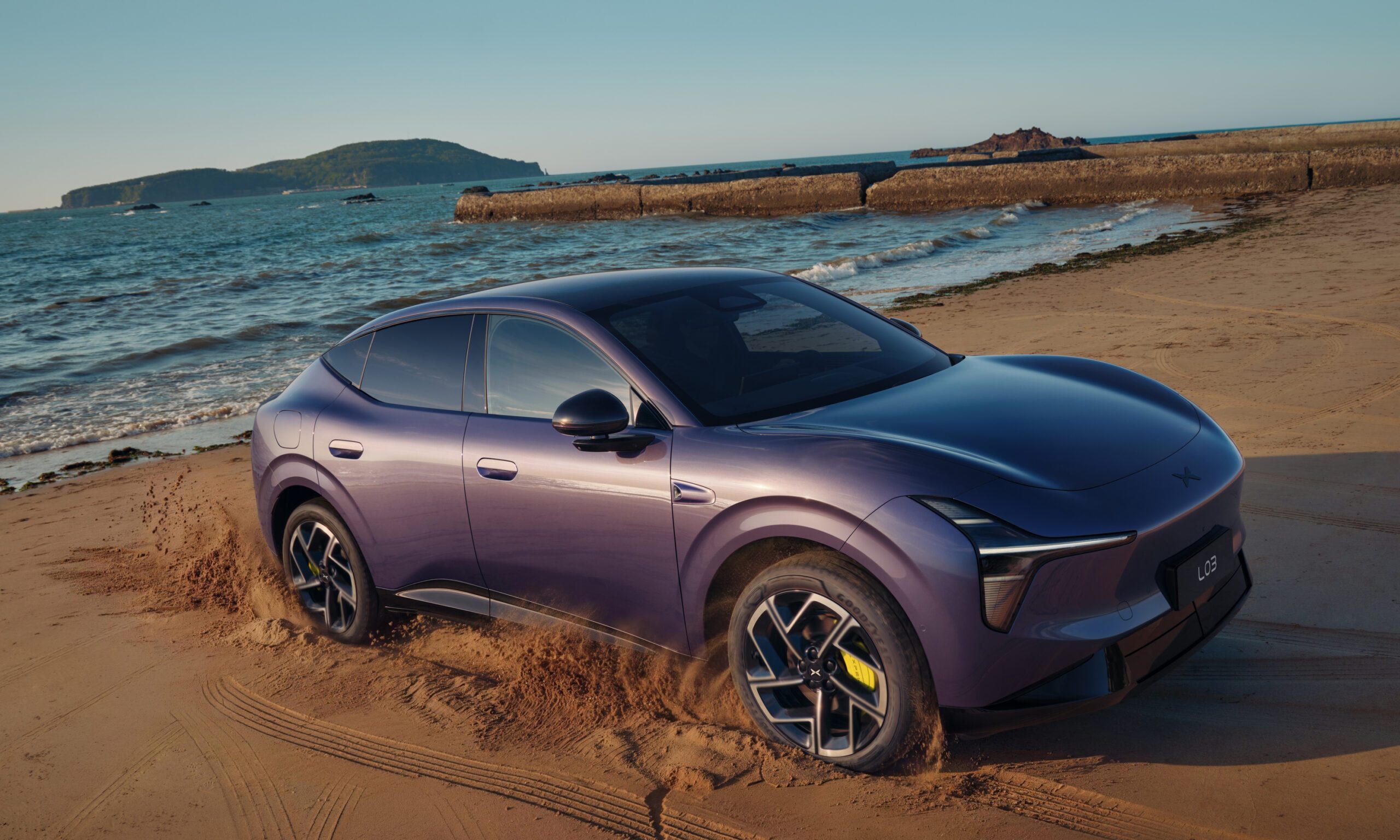
The Xpeng L03 is an AI supercomputer disguised as a stylish family SUV
Xpeng L03

Xpeng’s latest electric vehicle carries enough processing power to make the term "smart car" actually sound more realistic than it actually is. The new Xpeng L03 debuted simultaneously in Europe and China on July 16, with the company presenting it across 65 markets. Available as a fully electric vehicle and an L03 Power X range-extender, the coupe-SUV is Xpeng’s most internationally focused model so far. Market-specific prices and sales dates remain unannounced.

Three AI chips and Google Maps built right in

Read more
A new sodium battery posts wild four-minute charging numbers, but don’t expect it in an EV yet
The breakthrough could improve fast charging and battery life, but the study hasn’t demonstrated those results in a production-sized pack
EV Charger

A new sodium-metal battery has posted a charging number that makes today’s EVs look painfully slow. In laboratory testing, the cell operated at a 15C rate, equivalent to completing a charge or discharge in roughly four minutes.

That doesn’t mean researchers plugged in an electric car and watched it fill up before the driver finished buying coffee. The result came from a small experimental cell using a new quasi-solid electrolyte, while the larger pouch-cell prototype delivered far less dramatic performance.

Read more
The Apple Car may be dead, but it became the foundation of Apple Intelligence
A decade of work on a canceled car project reportedly laid the groundwork for Apple Intelligence.
Apple Intelligence in Apple Car

The Apple Car may have never left the garage, but it apparently gave birth to Apple's AI ambitions. According to Bloomberg's Mark Gurman, Apple's canceled autonomous vehicle project, one that consumed more than a decade of work and over $10 billion before being scrapped in 2024, ended up laying the technological foundation for Apple Intelligence. In a rather ironic twist, one of Apple's most expensive failures may also become one of its most important long-term investments.

The Apple Car forced Apple to think like an AI company

Read more