  1. Home
  2. Cars
  3. Photo Galleries
  4. News

Mazda’s 2016 CX-3 looks exciting, but can it stand out in a jam-packed segment?

Add as a preferred source on Google

In the ever-growing compact crossover segment, it’s tough to stand out. There’s the spunky Kia Soul, the surprisingly capable Jeep Renegade, Honda’s versatile HR-V, and tons of others fighting for their slice of the pie.

Mazda’s upcoming CX-3 is one of the newest entrants to the class, and the brand has just released a slew of new details about the sharply angled five-door.

If you were around for the car’s photographic debut last November, its ‘Kodo’ design language will come as no surprise. The CUV wears the same basic front fascia layout as the Mazda3, Mazda6, CX-5 and CX-9, and the side profile is deliberately sculpted.

The CX-3 will hold less junk in the trunk than its larger ‘CX’ stablemates, and this accentuates the crossover’s long nose. Underneath that sniffer is a 2.0-liter Skyactiv-G four-cylinder that makes 146 horsepower and 146 pound-feet of torque. That power is channeled through a mandatory six-speed automatic, and can be distributed by either front or all-wheel drive.

While the puffed-up hatchback is a bit lacking in performance, it makes up ground on the tech front. Bluetooth connectivity, a rear-view camera, and a ‘Mazda Connect’ infotainment system with seven-inch display come standard on the entry-level Sport model, while heated seats, a powered moonroof, ‘leatherette’ upholstery, and a seven-speaker Bose stereo come with the Touring versions.

The Grand Touring edition adds even more toys, including LED headlights and foglights, 18-inch alloys, and real leather/suede upholstery. Overall, the interior design is a tad asymmetrical, but we can roll with it.

Additionally, an optional ‘GT-iActivsense’ package is available, which tacks on automatic lights, rain-sensing wipers, lane departure warning, and adaptive cruise control to round out a respectable offering of tech for a car at this price point.

And just how much will it cost, you ask? Mazda hasn’t released official numbers yet, but promises the CX-3 will start in the “low $20,000s” when it goes on sale this fall.

Andrew Hard
Andrew first started writing in middle school and hasn't put the pen down since. Whether it's technology, music, sports, or…
Volvo is rolling out Apple Music to over 2 million cars with a simple OTA update
Your Volvo may soon get Apple Music without needing CarPlay
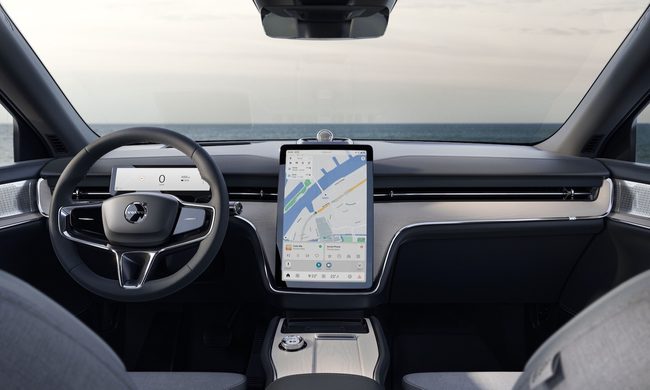
Interior view of the 2024 Volvo EX90.

The line between your smartphone and your car continues to blur. Volvo has announced that it is rolling out an over-the-air software update that brings Apple Music directly to the infotainment systems of more than 2 million vehicles worldwide. Instead of relying on Apple CarPlay or plugging in an iPhone, eligible drivers will be able to stream music natively from their car's built-in system, making Apple Music another integrated feature of Volvo's software experience.

The update is arriving for a wide range of Volvo models, including the EX90, ES90, XC90, S90, V90, XC60, S60, V60, XC40, EX40 and EC40, covering model year 2020 onwards. Availability, however, may vary depending on the vehicle.

Read more
Chery’s latest EV packs flagship tech for the price of a base Tesla, but you can’t buy it
Here's everything packed into Exeed's 2027 Exlantix ES, from its 27-sensor autonomous driving suite to its 860 km range, all starting under $31,000.
Car, Transportation, Vehicle

Chery's premium arm just dropped a sedan that makes you wonder why American EVs cost twice as much for half the tech.

Exeed's 2027 Exlantix ES ships with a driver-assist system called Falcon 700. It is built around an Nvidia Orin-Y chip and a genuinely stacked sensor suite.

Read more
A new AI model wants self-driving cars to think before they swerve
Forget guessing games, this self-driving AI actually shows its work.
Self driving car

Self-driving cars have gotten pretty good at driving. The harder problem is teaching them to drive safely in situations nobody planned for. We have heard horror stories of self-driving cars, behaving erratically in emergency situations, often times delaying first responders from reaching the scene.

A team at Seoul National University, led by professor Jun Won Choi from the Department of Electrical and Computer Engineering, thinks they have cracked part of that puzzle with a new AI model called SafeDrive. The research was recently selected as a highlight paper at CVPR 2026, a distinction that goes only to roughly 3% of all submissions.

Read more