1. Home
  2. Cars
  3. Emerging Tech
  4. News

Toyota jumpstarts robotic elderly care with the HSR robot prototype

Add as a preferred source on Google

The adage “you’re only as old as you feel”  is a two-sided coin. While the saying might be meant to inspire a healthy outlook, some of the hurdles encountered in life’s autumn years tend to sour the message. That’s why Toyota has been developing a prototype helper robot that will support the ever-growing need for long-term elderly care that we will experience in the next few decades.

The World Health Organization predicts that 22 percent of the world’s population will be over 60 years old by the year 2050. To care for these nouveau elderly, Toyota has developed its Human Support Robot (HSR) prototype, the first step in creating a device capable of providing practical assistance to the elderly in their day-to-day lives.

Toyota HSR
Image used with permission by copyright holder

Standing at just over 3 feet tall, the cylindrical HSR can telescope upwards to about 4-and-a-half-feet in height. It rolls on an omnidirectional platform and can perform a number of tasks to assist people with its folding arm and clasping gripper.

Recommended Videos

If having a “clasping gripper” around older folks sounds dubious, no need to run out and sign up for Old Glory Insurance just yet. The helper robot is designed with torque sensors and with compliant control of its joints, meaning they will give way when pushed and will not offer resistance.

Toyota HSR
Image used with permission by copyright holder

The HSR isn’t autonomous yet, but instead is operated either locally or remotely using a tablet interface by a care person. Users can see and hear what the robot sees thanks to several front-mounted cameras and a microphone array. A color display and speakers allows anyone in the care of the helper robot to see and communicate with the operator. When not remotely controlled, the HSR can “fetch” certain recognized objects.

Toyota plans to hold a “hackathon” at its Tokyo-based Mega Web showroom from August 31st to September 2nd. Eight teams will compete to develop an innovative application for the HSR, with the prize being a free development kit. Jumpstarting this sort of innovation now will hopefully mean more articulate, capable, and even autonomous robotic devices in our service in the coming decades.

Alexander Kalogianni
Former Automotive Editor
Alex K is an automotive writer based in New York. When not at his keyboard or behind the wheel of a car, Alex spends a lot of…
A new sodium battery posts wild four-minute charging numbers, but don’t expect it in an EV yet
The breakthrough could improve fast charging and battery life, but the study hasn’t demonstrated those results in a production-sized pack
EV Charger

A new sodium-metal battery has posted a charging number that makes today’s EVs look painfully slow. In laboratory testing, the cell operated at a 15C rate, equivalent to completing a charge or discharge in roughly four minutes.

That doesn’t mean researchers plugged in an electric car and watched it fill up before the driver finished buying coffee. The result came from a small experimental cell using a new quasi-solid electrolyte, while the larger pouch-cell prototype delivered far less dramatic performance.

Read more
The Apple Car may be dead, but it became the foundation of Apple Intelligence
A decade of work on a canceled car project reportedly laid the groundwork for Apple Intelligence.
Apple Intelligence in Apple Car

The Apple Car may have never left the garage, but it apparently gave birth to Apple's AI ambitions. According to Bloomberg's Mark Gurman, Apple's canceled autonomous vehicle project, one that consumed more than a decade of work and over $10 billion before being scrapped in 2024, ended up laying the technological foundation for Apple Intelligence. In a rather ironic twist, one of Apple's most expensive failures may also become one of its most important long-term investments.

The Apple Car forced Apple to think like an AI company

Read more
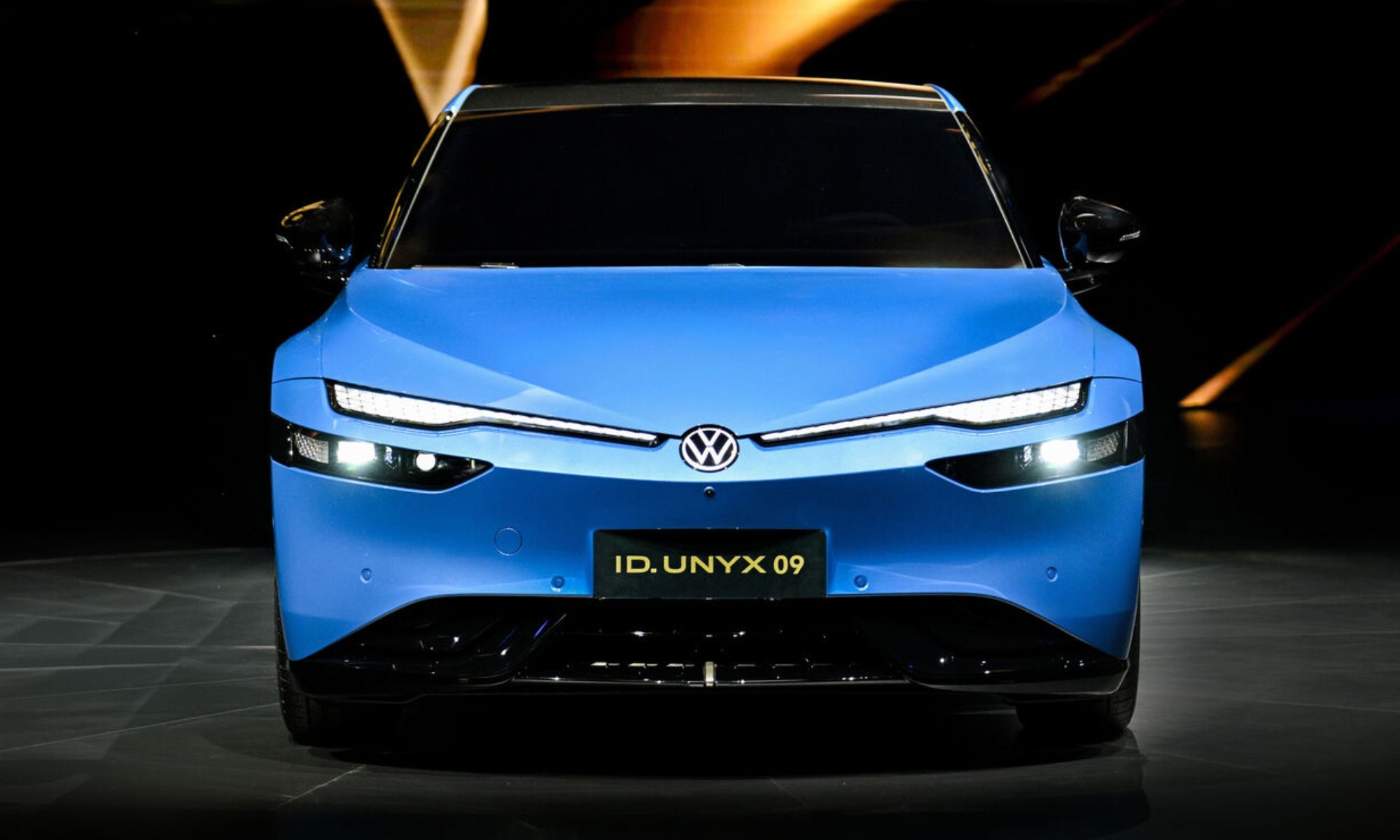
Volkswagen’s ID. Unyx 09 just leaked, and it’s the kind of EV I want to see in the US
VW's partnership with Xpeng is producing exactly what we hoped.
Bumper, Transportation, Vehicle

I've been watching Volkswagen's China lineup quietly get cooler for the past two years, but the ID. Unyx 09 might be the moment it finally gets exciting, not just for Chinese buyers, but for the rest of the world as well. 

Regulatory filings from China's Ministry of Industry and Information Technology, Batch 409, have exposed the full specs of the upcoming sedan ahead of its official launch later this year, and it looks nothing like any VW car I've seen before (via CarNewsChina).

Read more