1. Home
  2. Cars
  3. News

BMW could build the world’s first quad-turbocharged diesel engine for the 7 Series

Add as a preferred source on Google

The outgoing BMW 750d raised eyebrows with a triple-turbocharged 3.0-liter straight-six engine rated at 381 horsepower and a generous 546 foot-pounds of torque, the latter figure being available from as low as 2,000 rpm. For the brand new 2016 7 Series, it is widely believed that BMW will push the envelope even further by developing the world’s first regular-production quad-turbocharged diesel-burning straight-six engine.

The engine is called B57 TOP internally. Technical details are still few and far between so it’s difficult to say whether it will use three conventional exhaust-driven turbos and an electric unit, or simply four old-fashioned exhaust-driven turbos. Similarly, BMW could choose to install two large turbos that kick in at higher rpms and two smaller ones for lower rpms, or it could use four different-sized turbos.

Recommended Videos

Regardless of which configuration is chosen, German enthusiast website Bimmertoday predicts the quad-turbocharged oil-burner will make about 408 horsepower and 590 foot-pounds of torque in its initial state of tune. These figures don’t represent huge increases over the current tri-turbo mill, but the new engine is expected to boast a much wider power band and it will be noticeably more responsive. Additionally, the quad-turbo setup will virtually eliminate turbo lag, especially if it incorporates an electric turbo.

The B57 TOP will exclusively be available with an eight-speed automatic transmission controlled by shift paddles and BMW’s time-tested xDrive all-wheel drive system.

If the report is accurate, the B57 TOP engine will likely make its debut at next year’s edition of the Geneva Motor Show under the hood of the 2016 750d xDrive. It will eventually make its way to the X5 M50d, the X6 M50d, and the next generation of the M550d, and we wouldn’t be surprised to see it power BMW’s upcoming range-topping X7 crossover.

All of the aforementioned models will primarily be designed for buyers in Europe, so whether the super-diesel will join the BMW lineup in the United States is an open question.

Ronan Glon
Ronan Glon is an American automotive and tech journalist based in southern France. As a long-time contributor to Digital…
A new AI model wants self-driving cars to think before they swerve
Forget guessing games, this self-driving AI actually shows its work.
Self driving car

Self-driving cars have gotten pretty good at driving. The harder problem is teaching them to drive safely in situations nobody planned for. We have heard horror stories of self-driving cars, behaving erratically in emergency situations, often times delaying first responders from reaching the scene.

A team at Seoul National University, led by professor Jun Won Choi from the Department of Electrical and Computer Engineering, thinks they have cracked part of that puzzle with a new AI model called SafeDrive. The research was recently selected as a highlight paper at CVPR 2026, a distinction that goes only to roughly 3% of all submissions.

Read more
Your next car’s software update could become its biggest security risk
Your next car could receive updates like your smartphone. That's also becoming a cybersecurity nightmare.
OTA technology allows manufacturers to remotely deliver software updates.

Modern cars are no longer machines that stay the same after they leave the showroom. Increasingly, they're becoming software-defined vehicles that receive new features, bug fixes, and security patches wirelessly, much like smartphones. But while over-the-air (OTA) updates have made vehicle maintenance easier and cheaper, cybersecurity experts are warning that the same technology could also become one of the automotive industry's biggest security challenges.

Researchers and policymakers are now calling for stronger oversight as connected vehicles become increasingly dependent on remote software updates. Their concern isn't just about hackers stealing personal data. It's about someone potentially interfering with the operation of a moving vehicle.

Read more
This sleek Chinese EV pairs supercar styling with three AI brains
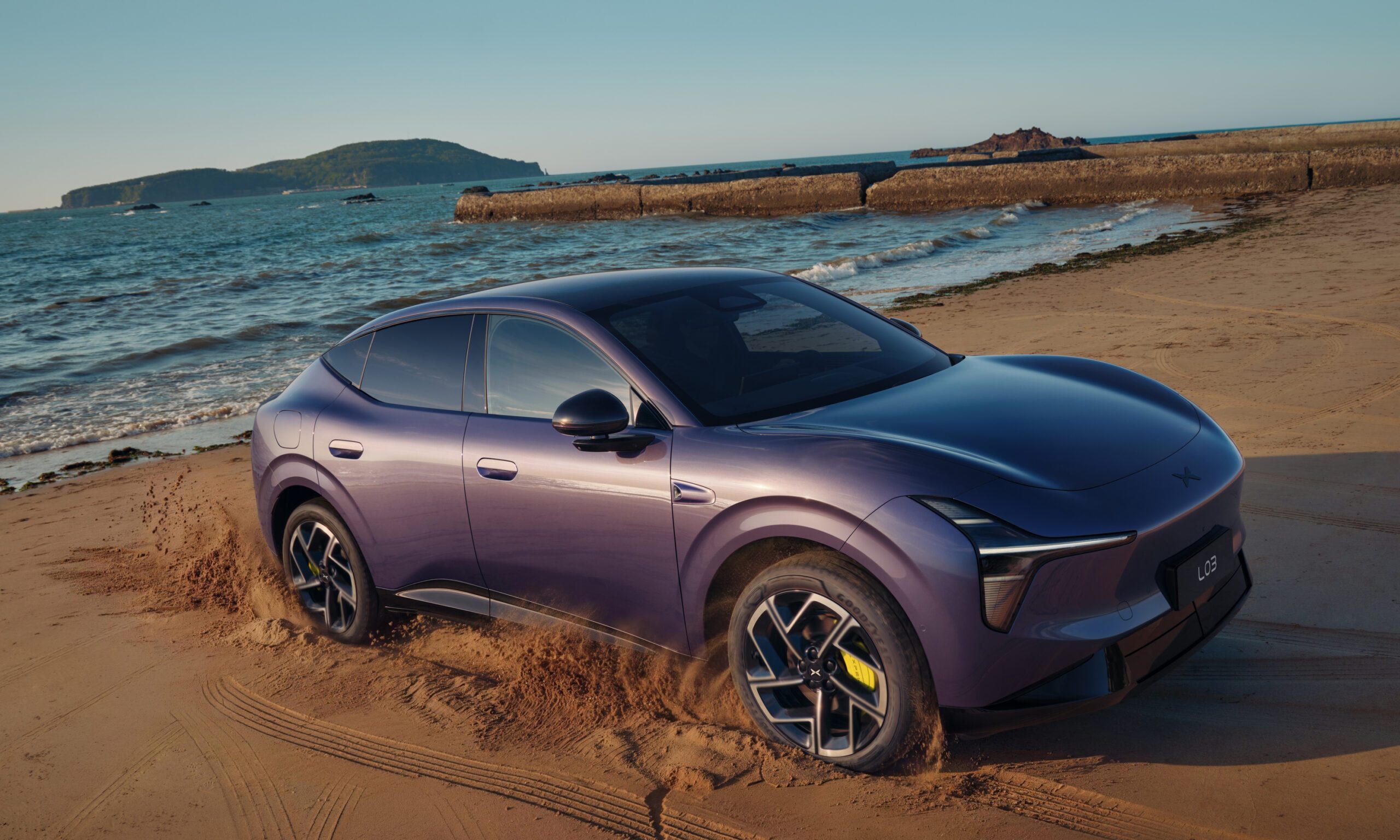
The Xpeng L03 is an AI supercomputer disguised as a stylish family SUV
Xpeng L03

Xpeng’s latest electric vehicle carries enough processing power to make the term "smart car" actually sound more realistic than it actually is. The new Xpeng L03 debuted simultaneously in Europe and China on July 16, with the company presenting it across 65 markets. Available as a fully electric vehicle and an L03 Power X range-extender, the coupe-SUV is Xpeng’s most internationally focused model so far. Market-specific prices and sales dates remain unannounced.

Three AI chips and Google Maps built right in

Read more