  1. Home
  2. Cars
  3. News

Icona Vulcano Titanium to debut at Pebble Beach

Add as a preferred source on Google

The Icona Vulcano sports car first blew its top at the 2013 Shanghai Motor Show, but its Chinese maker plans to debut an updated version at the 2015 Pebble Beach Concours d’Elegance next week.

The Vulcano Titanium is appropriately named, as its body is made from a mixture of titanium and carbon fiber. The result is a club weight of 3,516 pounds, which is still kind of heavy considering the quantity of expensive lightweight materials used.

Recommended Videos

But the Vulcano Titanium could weigh 6,000 pounds and still be fast, considering the engine Icona has installed under its titanium bonnet. It’s a 6.2-liter supercharged V8 from the old, C6-generation Chevrolet Corvette ZR1. The engine was tuned to produce 638 horsepower in the ‘Vette, but here it makes 661 hp.

Icona says it will also offer a 986-hp version, meaning this no-name car will rival the output of a McLaren P1 GTR.

With that much power on tap, performance should be pretty impressive. Icona says performance figures haven’t been finalized, but preliminary estimates include a 0 to 60 mph time of 2.8 seconds, a 0 to 120 mph time of 8.8 seconds, and a top speed of 220 mph. Not bad.

However, it is too bad all of that performance couldn’t be packaged in a more attractive shape. Icona was founded in Turin to provide Italian design and coachwork services to Chinese carmakers, but the Vulcano seems to lack the style the Italian car industry is known for.

The crumpled flanks look like a bad attempt at copying the Ferrari F12 Berlinetta’s unique fenders, while the front end looks like it’s been smashed into a wall, and then covered with auto-parts-store LED strips to hide the damage. At least the McLaren-style doors look good, lending the Vulcano Titanium some proper supercar swagger.

The car also has a complete interior, although Icona isn’t willing to discuss any details on that just yet. We may find out more when the Vulcano Titanium makes its debut at Pebble Beach next week.

Stephen Edelstein
Stephen is a freelance automotive journalist covering all things cars. He likes anything with four wheels, from classic cars…
Volvo is rolling out Apple Music to over 2 million cars with a simple OTA update
Your Volvo may soon get Apple Music without needing CarPlay
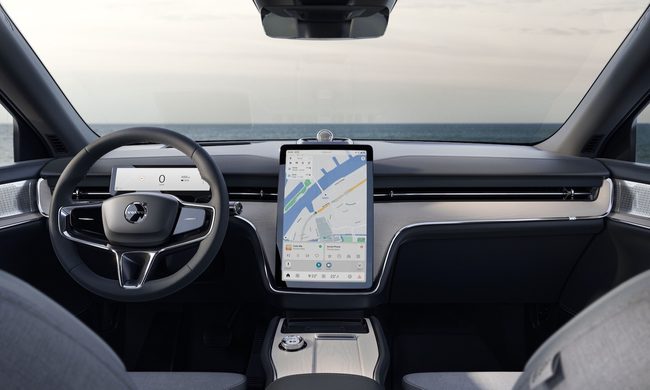
Interior view of the 2024 Volvo EX90.

The line between your smartphone and your car continues to blur. Volvo has announced that it is rolling out an over-the-air software update that brings Apple Music directly to the infotainment systems of more than 2 million vehicles worldwide. Instead of relying on Apple CarPlay or plugging in an iPhone, eligible drivers will be able to stream music natively from their car's built-in system, making Apple Music another integrated feature of Volvo's software experience.

The update is arriving for a wide range of Volvo models, including the EX90, ES90, XC90, S90, V90, XC60, S60, V60, XC40, EX40 and EC40, covering model year 2020 onwards. Availability, however, may vary depending on the vehicle.

Read more
Chery’s latest EV packs flagship tech for the price of a base Tesla, but you can’t buy it
Here's everything packed into Exeed's 2027 Exlantix ES, from its 27-sensor autonomous driving suite to its 860 km range, all starting under $31,000.
Car, Transportation, Vehicle

Chery's premium arm just dropped a sedan that makes you wonder why American EVs cost twice as much for half the tech.

Exeed's 2027 Exlantix ES ships with a driver-assist system called Falcon 700. It is built around an Nvidia Orin-Y chip and a genuinely stacked sensor suite.

Read more
A new AI model wants self-driving cars to think before they swerve
Forget guessing games, this self-driving AI actually shows its work.
Self driving car

Self-driving cars have gotten pretty good at driving. The harder problem is teaching them to drive safely in situations nobody planned for. We have heard horror stories of self-driving cars, behaving erratically in emergency situations, often times delaying first responders from reaching the scene.

A team at Seoul National University, led by professor Jun Won Choi from the Department of Electrical and Computer Engineering, thinks they have cracked part of that puzzle with a new AI model called SafeDrive. The research was recently selected as a highlight paper at CVPR 2026, a distinction that goes only to roughly 3% of all submissions.

Read more