  1. Home
  2. Cars
  3. News

This electric car will boast ‘neo-futuristic’ engine noise thanks to a Roland synthesizer

Add as a preferred source on Google

Getting behind the wheel of a car — especially one with some performance vigor — attacks nearly all of your senses. You see the scenery flying by, you feel the g-forces in your stomach, all while the unmistakable scent of exploding petrol and burning rubber fills your nostrils.

Sound is obviously a huge part of the adventure as well, but it’s one that’s lost on most electric cars. EVs are nearly silent save for a slight mechanical whine and basic road noise, but a Japanese carmaker and a musical equipment manufacturer have teamed up to change that.

Recommended Videos

Roland, along with GLM, maker of the ZZ electric sports car you see above, has developed a unique in-car synthesizer to give ZZ owners something to listen to besides music. We’re not sure exactly what it’ll sound like yet, but the company promises “ingenious neo-futuristic sounds that will give sports car enthusiasts the experience of driving a space ship on the road.” Our best guess is a blend of TIE fighter and the Jetson’s bubble-top aerocar, but whatever the soundtrack may be, it’s bound to be unlike anything else on the road.

Roland sound kit
Image used with permission by copyright holder

The product utilizes Roland’s SuperNATURAL synthesizer technology to produce studio-quality sounds based on vehicle acceleration, deceleration, and motor load variances. Buyers will be able to choose between a variety of different tones when the product arrives this fall.

As for the ZZ itself, it looks like a cross between a Lotus Elise and a Tesla Roadster, and that’s certainly not a bad thing. Performance is right in line with the Roadster as well, as the ZZ will sprint up to 60 mph in a mere 3.9 seconds. The car weighs just 1,874 pounds and produces around 300 horsepower and 306 pound-feet of torque.

Andrew Hard
Andrew first started writing in middle school and hasn't put the pen down since. Whether it's technology, music, sports, or…
Volvo is rolling out Apple Music to over 2 million cars with a simple OTA update
Your Volvo may soon get Apple Music without needing CarPlay
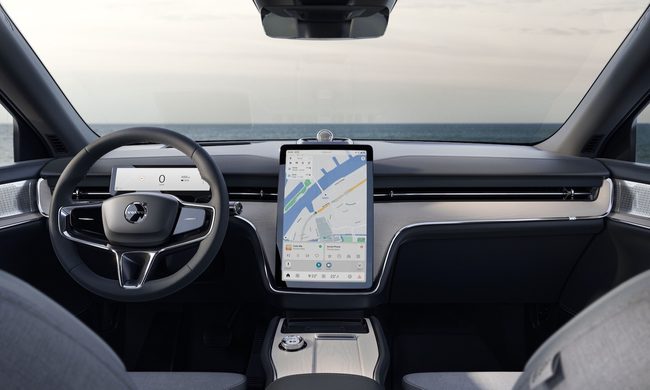
Interior view of the 2024 Volvo EX90.

The line between your smartphone and your car continues to blur. Volvo has announced that it is rolling out an over-the-air software update that brings Apple Music directly to the infotainment systems of more than 2 million vehicles worldwide. Instead of relying on Apple CarPlay or plugging in an iPhone, eligible drivers will be able to stream music natively from their car's built-in system, making Apple Music another integrated feature of Volvo's software experience.

The update is arriving for a wide range of Volvo models, including the EX90, ES90, XC90, S90, V90, XC60, S60, V60, XC40, EX40 and EC40, covering model year 2020 onwards. Availability, however, may vary depending on the vehicle.

Read more
Chery’s latest EV packs flagship tech for the price of a base Tesla, but you can’t buy it
Here's everything packed into Exeed's 2027 Exlantix ES, from its 27-sensor autonomous driving suite to its 860 km range, all starting under $31,000.
Car, Transportation, Vehicle

Chery's premium arm just dropped a sedan that makes you wonder why American EVs cost twice as much for half the tech.

Exeed's 2027 Exlantix ES ships with a driver-assist system called Falcon 700. It is built around an Nvidia Orin-Y chip and a genuinely stacked sensor suite.

Read more
A new AI model wants self-driving cars to think before they swerve
Forget guessing games, this self-driving AI actually shows its work.
Self driving car

Self-driving cars have gotten pretty good at driving. The harder problem is teaching them to drive safely in situations nobody planned for. We have heard horror stories of self-driving cars, behaving erratically in emergency situations, often times delaying first responders from reaching the scene.

A team at Seoul National University, led by professor Jun Won Choi from the Department of Electrical and Computer Engineering, thinks they have cracked part of that puzzle with a new AI model called SafeDrive. The research was recently selected as a highlight paper at CVPR 2026, a distinction that goes only to roughly 3% of all submissions.

Read more