  1. Home
  2. Cars
  3. News

Terradyne’s Gurkha off-roader is ready for guerrilla warfare, zombies, and more

Add as a preferred source on Google

Terradyne is a Canadian company that specializes in building an armored, all-terrain vehicle dubbed Gurkha that’s so rugged it makes the Hummer H1 look cuter than a Toyota Yaris. The off-roader has traditionally been aimed at military forces and law enforcement officials all around the globe, but Terradyne is out to conquer new markets with a toned-down version of it designed for mere civilians.

Appropriately christened Civilian Edition, the toned-down model is based on the Gurkha RPV. It looks like a murdered-out Tonka truck with a tall front end, huge fender flares, military-grade bead lock wheels wrapped by massive off-road tires and a tall belt line. It starts life as a Ford F-550 pickup truck, but the only visual connection between the two behemoths is that the door mirrors are carried over unchanged.

Recommended Videos

The Gurkha is the ultimate embodiment of function-over-form design. It is equipped with small windows that make it easy to hide out of sight in the event of an enemy attack, a solid metal front bumper that facilitates the task of ramming through gates and road blocks, and a generous amount of ground clearance that allows it to take its occupants as far off the beaten path as they need to go to reach safety.

Armored from top to bottom, the RPV’s body is capable of withstanding 7.62-millimeter armor-piercing rounds. Worse comes to worse, it can also drive through over 30 inches of water.

Power is provided by a Ford-sourced 6.7-liter V8 turbodiesel engine that sends 300 horsepower and 660 pound-feet of torque to all four wheels via a six-speed automatic transmission and a two-speed transfer case. Fuel economy checks in at roughly 10 mpg, and the aggressive off-road tires limit the roughly 13,500-pound beast’s top speed to approximately 68 mph. The RPV retains the Blue Oval’s drivetrain warranty because the conversion is approved by Ford.

Built in Ontario, the Terradyne Gurkha RPV Civilian Edition is on sale now with a base price of approximately $278,000. That’s a relatively affordable price for a vehicle that can seemingly withstand guerrilla warfare, natural disasters, zombie attacks, and the apocalypse.

Ronan Glon
Ronan Glon is an American automotive and tech journalist based in southern France. As a long-time contributor to Digital…
This sleek Chinese EV pairs supercar styling with three AI brains
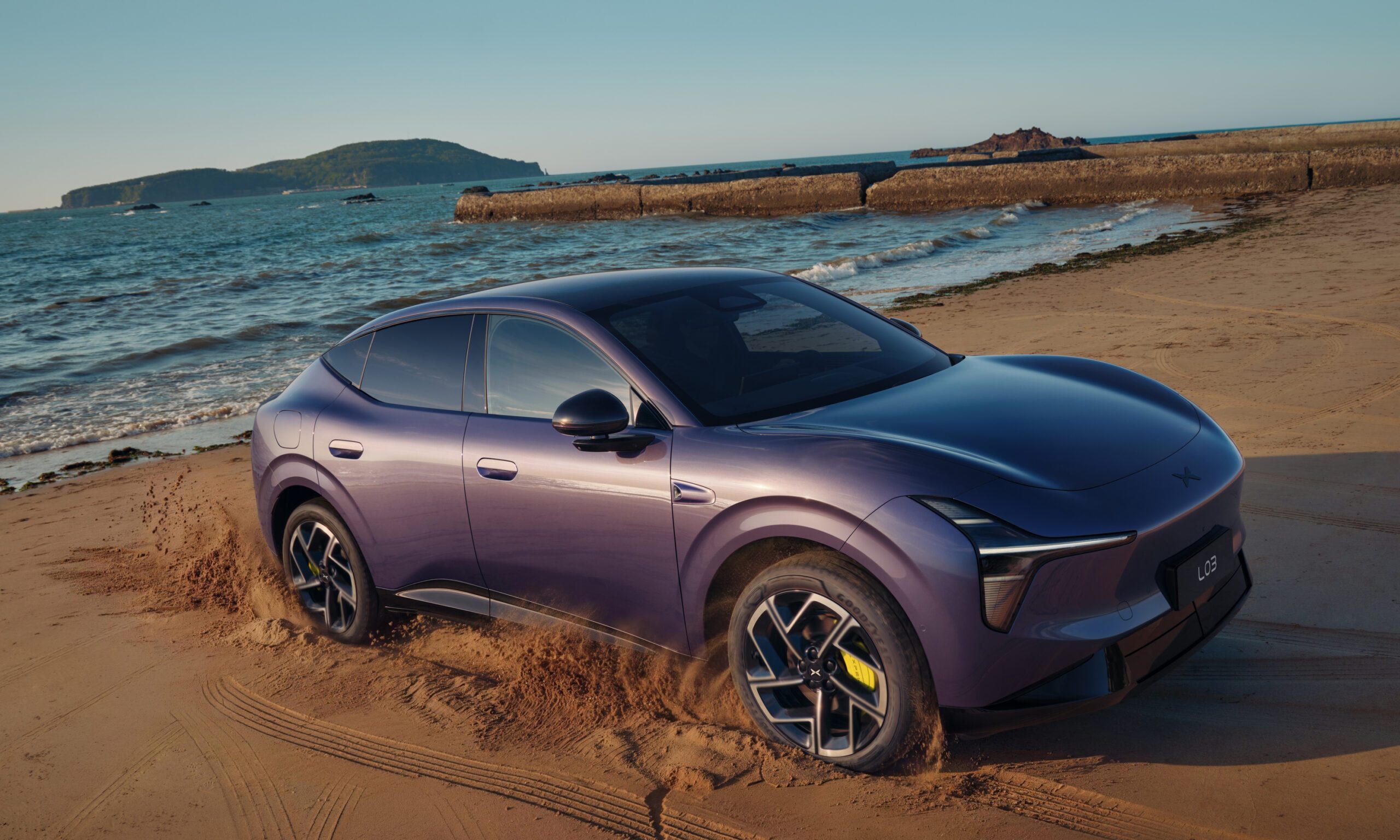
The Xpeng L03 is an AI supercomputer disguised as a stylish family SUV
Xpeng L03

Xpeng’s latest electric vehicle carries enough processing power to make the term "smart car" actually sound more realistic than it actually is. The new Xpeng L03 debuted simultaneously in Europe and China on July 16, with the company presenting it across 65 markets. Available as a fully electric vehicle and an L03 Power X range-extender, the coupe-SUV is Xpeng’s most internationally focused model so far. Market-specific prices and sales dates remain unannounced.

Three AI chips and Google Maps built right in

Read more
A new sodium battery posts wild four-minute charging numbers, but don’t expect it in an EV yet
The breakthrough could improve fast charging and battery life, but the study hasn’t demonstrated those results in a production-sized pack
EV Charger

A new sodium-metal battery has posted a charging number that makes today’s EVs look painfully slow. In laboratory testing, the cell operated at a 15C rate, equivalent to completing a charge or discharge in roughly four minutes.

That doesn’t mean researchers plugged in an electric car and watched it fill up before the driver finished buying coffee. The result came from a small experimental cell using a new quasi-solid electrolyte, while the larger pouch-cell prototype delivered far less dramatic performance.

Read more
The Apple Car may be dead, but it became the foundation of Apple Intelligence
A decade of work on a canceled car project reportedly laid the groundwork for Apple Intelligence.
Apple Intelligence in Apple Car

The Apple Car may have never left the garage, but it apparently gave birth to Apple's AI ambitions. According to Bloomberg's Mark Gurman, Apple's canceled autonomous vehicle project, one that consumed more than a decade of work and over $10 billion before being scrapped in 2024, ended up laying the technological foundation for Apple Intelligence. In a rather ironic twist, one of Apple's most expensive failures may also become one of its most important long-term investments.

The Apple Car forced Apple to think like an AI company

Read more