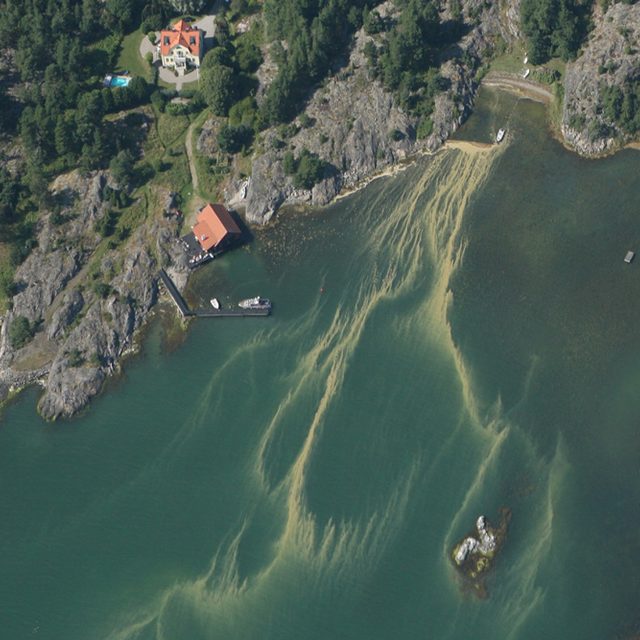
To help combat the unusually high amount of toxic algae found in the Baltic Sea, Swedish design student Fredrik Ausinsch decided to design an innovative drone concept capable of eating algae and turning it into biofuel. Due in large part to the area’s increasingly frequent algal blooms, the Baltic Sea experiences persistently toxic algae accumulation which endangers everything living nearby. If Ausinsch’s invention sees the light of day, the drone would drastically improve marine life in the Baltic Sea while helping to clean up one of the world’s most polluted bodies of water.
Ausinsch came up with the idea and created a series of renderings for the drone while working on a university masters project at the Umea Institute of Design. Essentially, the craft would function similarly to a lawn mower, consuming any algae located directly in front of the craft. As it navigates through a particular area, the drone would visit a companion craft to empty its contents and refuel its engines before continuing on its path. For now, the drone concept intends to operate via a remote control, though you’d have to imagine an autonomous version at some point if it proves successful.
Aptly called the Algae Sea Harvester, the drone intends to feature hydrogen fuel cell technology with an electric-driven pump on either side of the vessel. This allows the craft to not only function quietly while working, but Ausinsch says it also lets it adapt efficiently to its environment. While operating, it emits water for thrust while also discharging heat to dry the algae before sucking it up.
“The algae sea collector is a vision improving an environmental problem using the algae biomass as a future natural resource,” Ausinsch says on his website. “By removing the abundance of algae, the nutritional and toxic substances are reduced and the algae biomass can be a future resource for biofuel production.”
According to the World Wide Fund for Nature, though algal blooms are a necessary part of life in the Baltic Sea, large, consistent blooms produce large amounts of toxins which pose big risks for the area. While it recommends avoiding bloom areas altogether, the WWF also suggests avoiding bathing during a bloom, not drinking affected water, and keeping pets or livestock away from infested areas. Mammals, birds, and local fish also have a high chance of dying after coming in contact with the toxic algae, events which can disrupt the local ecosystem for years.
Considering just how harmful algae buildup is to the Baltic Sea (and any place which experiences algal blooms), Ausinsch’s invention or something like it is an absolute necessity for the impacted region. Though the idea remains in its infancy in terms of development, it likely won’t be long before its inherent benefits are realized and the Algae Sea Harvester becomes that toxin’s biggest nightmare.