  1. Home
  2. Cars
  3. News

Land Rover pioneers driving over a paper bridge to celebrate 45 years of Range Rovers

Add as a preferred source on Google

Jaguar / Land Rover love to celebrate reveals and anniversaries with world firsts as of late. To introduce the new Jaguar F-Pace, the U.K. automaker sent it through the world’s biggest loop-the-loop.

Now, to commemorate the 45th anniversary of Land Rover’s flagship Range Rover, the full-size luxury SUV was driven over a bridge made of paper. The freestanding structure in Suzhou, China, covered 5 meters without glue or bolts to hold it in place.

Recommended Videos

The bridge was hand-built by artist and paper bridge designer, Steve Messam with paper supplied by British manufacturer James Cropper PLC. It took three days to construct in Suzhou, China, which is famous for its bridges and often called the “Venice of the East.”

“Paper structures capable of supporting people have been built before but nothing on this scale has ever been attempted, said Messam. “It’s pushing engineering boundaries, just like the Range Rover, and the ease and composure with which the vehicle negotiated the arch was genuinely breathtaking.”

Land Rover’s Range Rover became the world’s first luxury SUV when it debuted in 1970 and was the first vehicle to drive across the Darien Gap in Central America two years later. In 1989 it was first 4×4 to be fitted with ABS anti-lock brakes and introduced both Electronic Traction Control and electronic air suspension to the segment in 1992. Furthering the trend, the fourth generation Range Rover that launched in 2012 was the first all-aluminum SUV.

Land Rover Experience Chief Instructor Chris Zhou navigated the paper bridge by using the vehicle’s suspension management systems to maintain the delicate structure during its trek. Specifically, All-Terrain Progress Control (ATPC) allowed Chris Zhou to concentrate on steering the vehicle while maintaining a set speed ranging from 1-19 mph without any pedal inputs. This system is traditionally used on wet grass, sand, and other loose surfaces, but it worked perfectly for the paper bridge too.

Miles Branman
Miles Branman doesn't need sustenance; he needs cars. While the gearhead gene wasn't strong in his own family, Miles…
This sleek Chinese EV pairs supercar styling with three AI brains
The Xpeng L03 is an AI supercomputer disguised as a stylish family SUV
Xpeng L03

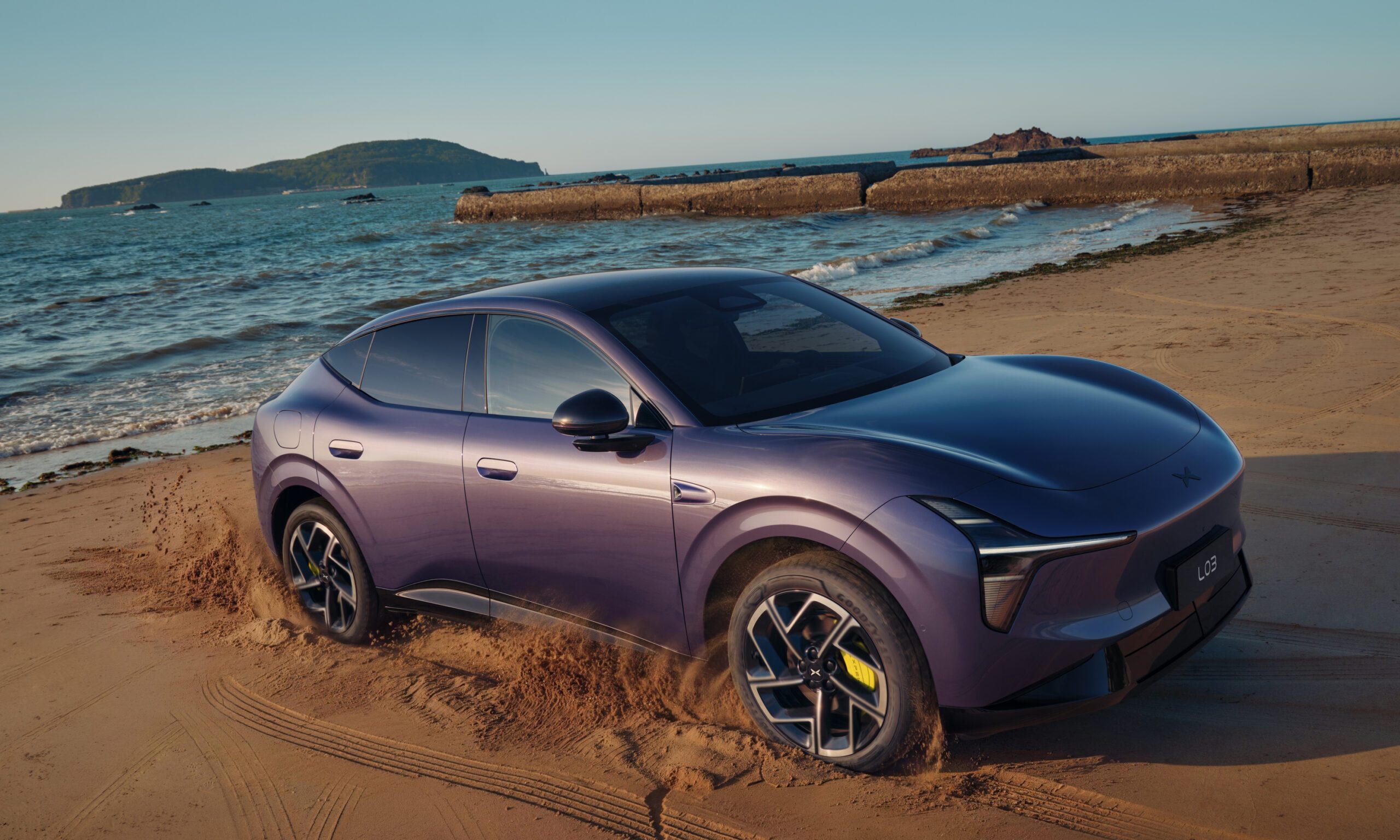
Xpeng’s latest electric vehicle carries enough processing power to make the term "smart car" actually sound more realistic than it actually is. The new Xpeng L03 debuted simultaneously in Europe and China on July 16, with the company presenting it across 65 markets. Available as a fully electric vehicle and an L03 Power X range-extender, the coupe-SUV is Xpeng’s most internationally focused model so far. Market-specific prices and sales dates remain unannounced.

Three AI chips and Google Maps built right in

Read more
A new sodium battery posts wild four-minute charging numbers, but don’t expect it in an EV yet
The breakthrough could improve fast charging and battery life, but the study hasn’t demonstrated those results in a production-sized pack
EV Charger

A new sodium-metal battery has posted a charging number that makes today’s EVs look painfully slow. In laboratory testing, the cell operated at a 15C rate, equivalent to completing a charge or discharge in roughly four minutes.

That doesn’t mean researchers plugged in an electric car and watched it fill up before the driver finished buying coffee. The result came from a small experimental cell using a new quasi-solid electrolyte, while the larger pouch-cell prototype delivered far less dramatic performance.

Read more
The Apple Car may be dead, but it became the foundation of Apple Intelligence
A decade of work on a canceled car project reportedly laid the groundwork for Apple Intelligence.
Apple Intelligence in Apple Car

The Apple Car may have never left the garage, but it apparently gave birth to Apple's AI ambitions. According to Bloomberg's Mark Gurman, Apple's canceled autonomous vehicle project, one that consumed more than a decade of work and over $10 billion before being scrapped in 2024, ended up laying the technological foundation for Apple Intelligence. In a rather ironic twist, one of Apple's most expensive failures may also become one of its most important long-term investments.

The Apple Car forced Apple to think like an AI company

Read more