1. Home
  2. Emerging Tech
  3. News

This sensor-stuffed surfboard fin could help scientists understand Earth’s oceans

Add as a preferred source on Google

There are thousands of buoys and autonomous vehicles spread across the vast oceans and seas of this planet, continuously feeding data on the health of our oceans to an ever growing database. But there’s a problem: little (if any) data exists on anything but the deep ocean.

Oceanographers need data on shallow water conditions, but have so far been unable to figure out a way to deal with the often turbulent waters of this part of the ocean. Why not depend on the people who are found here most, then? Enter the SmartFin.

Recommended Videos

SmartFin is a stabilizing fin with built-in sensors that can be attached to existing surfboards. Among the capabilities of the SmartFin are sensors to measure salinity, pH, temperature, location, and wave characteristics, and data is available in near real-time to researchers.

SmartFin is the brainchild of Dr. Andrew Stern, a former neurologist that has moved on to focus on environmental issues. Stern enlisted the help of surfing technology company BoardFormula, whose founder Benjamin Thompson helped design the fin into something viable for surfing applications.

Surfers with SmartFin just need to open up an app on their smartphone at the end of a surfing session which would connect to the fin and download any available data. From there, the data is uploaded to a cloud database and made available for scientists to use in their studies.

Research on near-shore ocean conditions is considered critical to understand the effects of climate change on our world’s oceans. SmartFin seems like the easiest way to collect this data considering the amount of time surfers spend here, and the group behind the project say that even with the sensors, the fin provides the same stabilization benefits of a regular fin.

SmartFin is working with the Scripps Institute of Oceanography to see if the data collected is useful and of sufficient quality to be used in research applications. Should that prove successful, a larger rollout is planned sometime in 2016.

Ed Oswald
For fifteen years, Ed has written about the latest and greatest in gadgets and technology trends. At Digital Trends, he's…
OpenAI just made GPT-5.5 Instant more fun to talk to, and users may actually notice
The company says its most-used ChatGPT model is getting better at advice, decision-making, and everyday conversations.
Man using ChatGPT on a laptop

For years, AI companies have competed by talking about benchmarks, reasoning scores, and coding performance. OpenAI's latest ChatGPT update takes a different approach. Instead of focusing on raw intelligence, the company is making its most popular AI model more enjoyable to talk to.

OpenAI says GPT-5.5 Instant now better understands what users want

Read more
Claude can now join your Slack channels and work alongside your team
Laptop running Claude Fable

For years, AI assistants have been siloed. You open ChatGPT, Claude, Gemini, or Copilot, type a prompt, get an answer, and move on. Anthropic's new Claude Tag feature takes a different approach. Instead of making employees jump into a separate AI chat every time they need help, it brings Claude directly to where many teams already spend their day: Slack.

Add Claude to a channel, grant it access to needed tools, and tag @Claude for help — whether analyzing data, writing reports, reviewing code, or investigating incidents. But Claude Tag isn't just another chatbot integration. Its key differentiator is that Anthropic positions it as a digital coworker for your team, enabling seamless collaboration where multiple users can jointly interact with the same AI within their work environment.

Read more
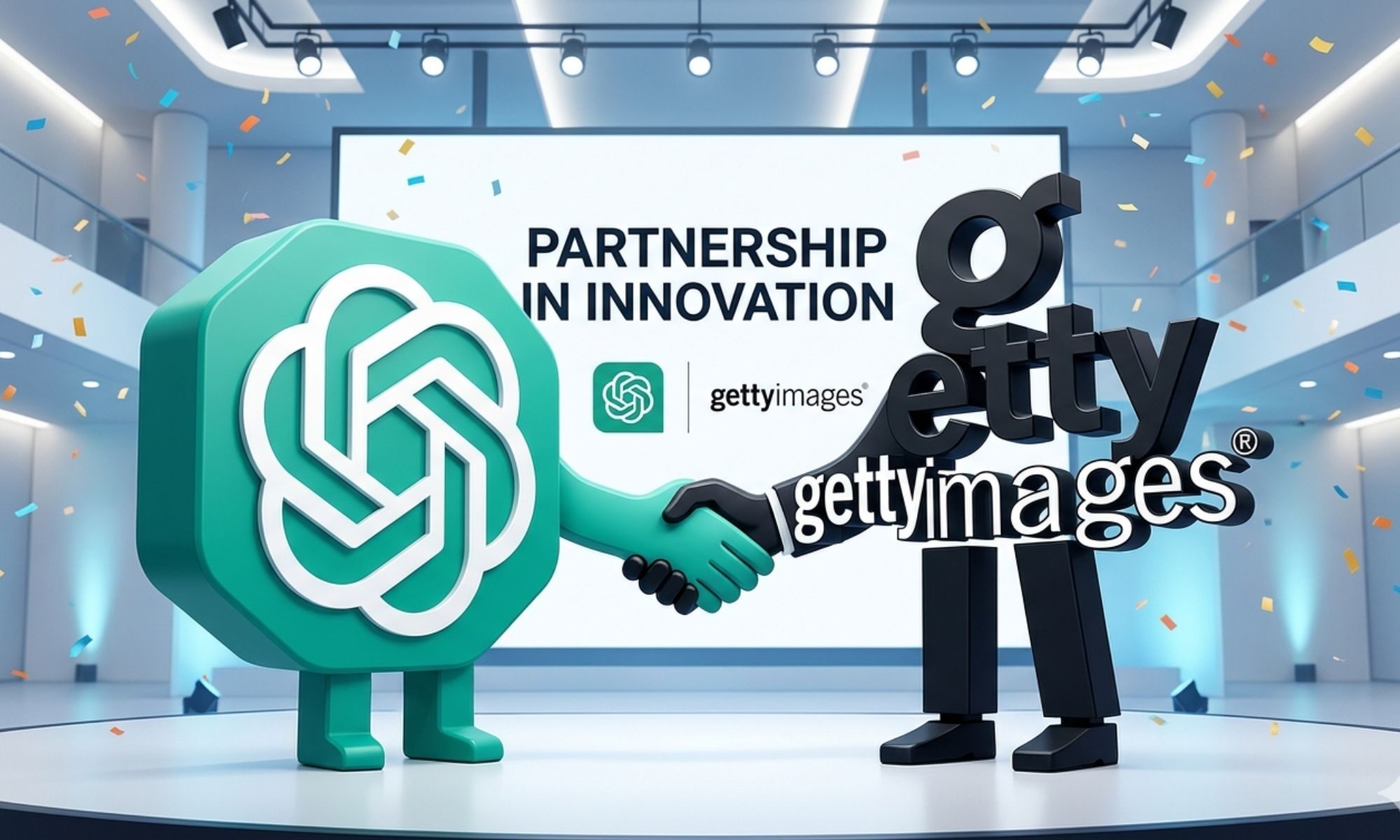
Getty Images accused AI of wholesale theft. It’s now an official ChatGPT image partner.
Advertisement, Shop, Clothing

The AI industry's most fascinating stories often come from unlikely alliances, and this is certainly one of them. Getty Images, a company that has spent years raising concerns about how AI models are trained and how creative work is used, is now officially partnering with OpenAI.

The new agreement will allow Getty Images' licensed content to appear across ChatGPT's search and discovery experiences. That means users may begin seeing Getty's professionally licensed photos and visual assets integrated into ChatGPT responses, adding more visual context to searches and AI-generated answers. Getty says the goal is to make AI-powered search more useful and trustworthy by relying on high-quality, licensed content rather than the murky sourcing practices that have sparked countless debates across the AI industry.

Read more