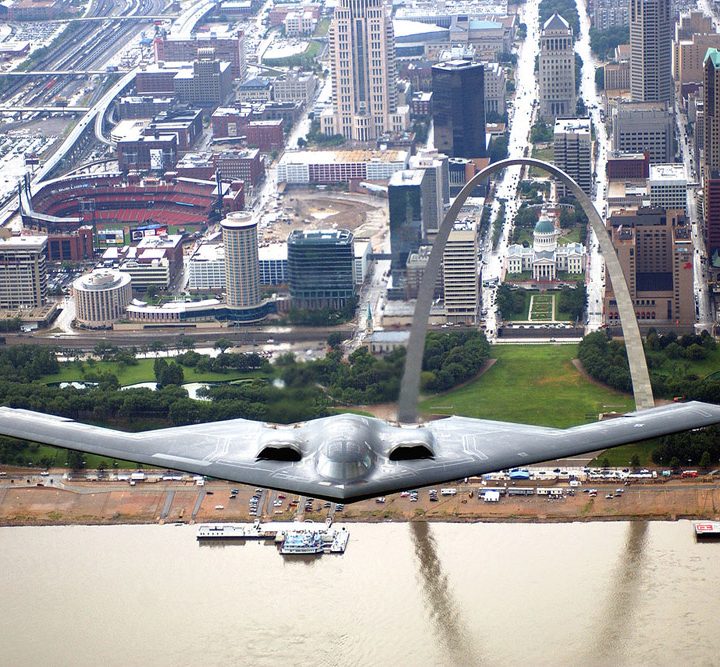
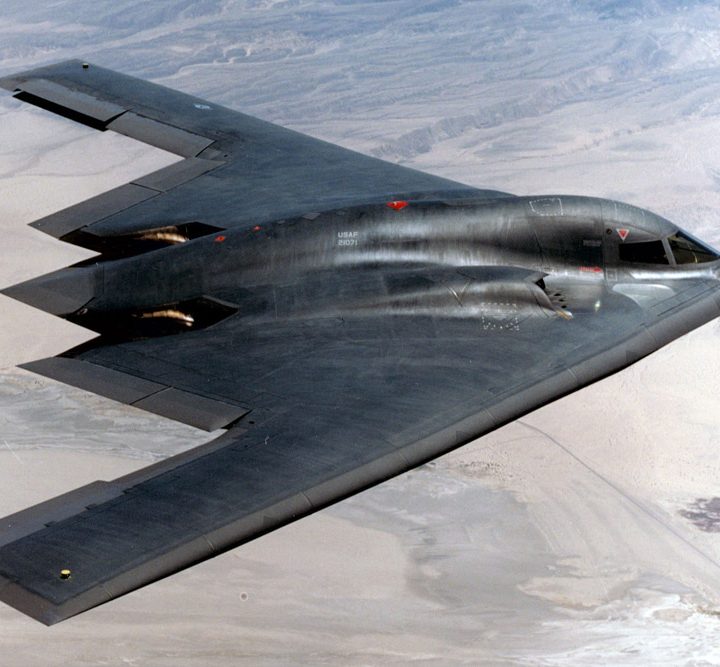
Speaking at the Air Force Association’s Air Warfare Symposium earlier this morning in Orlando, Florida, Air Force Secretary Deborah Lee James unveiled the eagerly awaited first look at the agency’s next-generation stealth bomber. Dubbed the B-21 Long Range Strike Bomber, the rendering shared of the futuristic aircraft looks strikingly similar to the department’s iconic B-2 Spirit — smooth black exterior, sleek design, and the emblematic swept-back wing formation. Since no physical models currently exist of the B-21, the unveiled rendering was based solely on initial design concepts by the manufacturing company, Northrop Grumman.
Though the Air Force called the aircraft the B-21 Long Range Strike Bomber, it did say it would be turning to its airmen to come up with a suitable name before it joins the air fleet. A companion press release published on the Air Force’s website did also point out that the moniker B-21 is a salute to the how it’s the first bomber manufactured during the 21st century, so it’s likely this part of its title remains after the naming process. The official name is expected to be announced at an organization conference later this year.
“This aircraft represents the future for our airmen, and (their) voice is important to the process,” said James at the unveil. “The airman who submits the selected name will help me announce it at the (Air Force Association) conference this fall.”
During the announcement, James commented on the B-21’s familiar appearance, saying “the B-21 has been designed from the beginning based on a set of requirements that allows the use of existing and mature technology.” Taking into considerating the fact Northrop Grumman manufactured the original B-2 Spirit, it’s not the least bit surprising to see the team reveal a comparable-looking aircraft. As of now, Northrop Grumman has only just entered the engineering and manufacturing development phase for the B-21 with the Air Force saying it expects to see its capabilities by the mid-2020s.
“The LRS-B is critical to national defense and is a top priority for the Air Force,” said James after awarding Northrop Grumman the LRS-B contract. “We face a complex security environment. It’s imperative our Air Force invests in the right people, technology, capability, and training to defend the nation and its interests — at an affordable cost.”
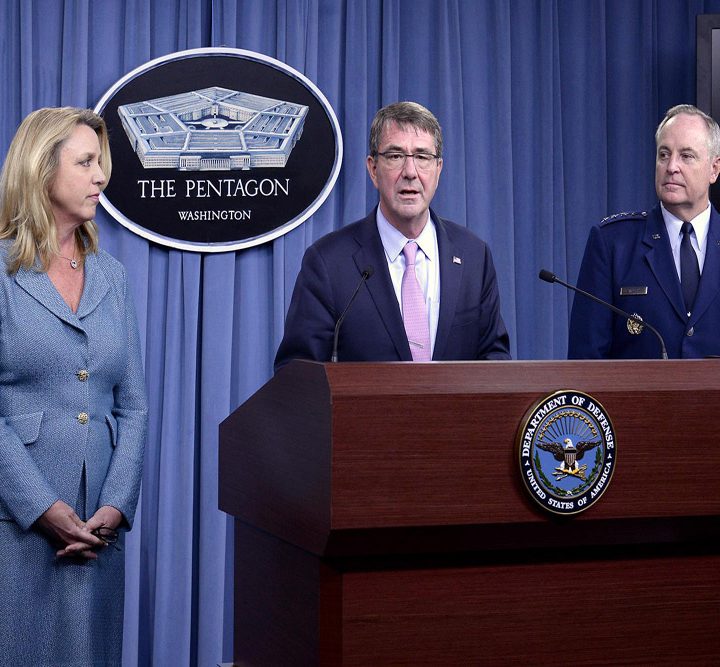
Despite the fun and games for the U.S. Air Force and Northrop Grumman, not all interested parties were particularly pleased with the government’s award decision. Despite James’ assertion the Air Force went with what was most “affordable,” Boeing and Lockheed Martin (the other partnership vying for the lucrative, potentially $80 billion contract) contended the selection process was “fundamentally flawed.”
Perhaps the two were a bit salty to have missed out on such a massive payday, but a published press release from Boeing fiercely calls out the Air Force’s process saying it failed to “properly reward” either one for promising to mitigate rising development costs. Moreover, Boeing felt the Air Force didn’t adequately evaluate Northrop’s inherent ability to successfully deliver on the contract. Citing the fact Boeing and Lockheed are an industry-leading team, the release boasts the duo presented the government with “the best possible LSR-B” at a price that bucks the trend of being outrageously expensive.
However, the Government Accountability Office (GAO) denied Boeing and Lockheed’s protest on February 16, allowing Northrop to get back to designing the innovative aircraft after a three-month delay. Since the official Air Force reveal of the B-21 came just ten days after the GAO’s formal ruling, it’s no wonder the department only had the means of revealing a mere artistic rendition. Northrop responded to the decision, saying “this confirms the U.S. Air Force conducted an extraordinarily thorough selection process and selected the most capable and affordable solution.”
While work has officially begun on the B-21, both Northrup Grumman and the Air Force have remained mum on what exactly the LSR-B’s capabilities might look like once it takes to the skies. Some of the more obvious predictions point towards it boasting an array of stealth-related features while others say it will likely have the ability to carry nuclear weapons and might even operate without a pilot.
From the mouth of the Air Force itself, the B-21 allows the department to “operate in tomorrow’s high-end threat environment” and provides it a vehicle that has the power to strike anywhere in the world. With Northrop hard at work on making the craft a reality, expect the Air Force to provide an update on the progress during the official name unveil this fall.